What Makes GCr15 Bearing Steel Ideal for Pellet Mill Roller Shells?
In the pellet manufacturing industry, the roller shell is one of the mechanically stressed components in the entire production line. It endures continuous compressive forces, abrasive friction, and elevated temperatures during every operating cycle. Choosing the right material for roller shells is therefore not just a matter of preference — it directly determines machine uptime, pellet quality, and maintenance costs. Among the materials available, Bearing Steel GCr15 has emerged as the dominant choice for high-performance pellet mill roller shells, and understanding why requires a close look at its metallurgical properties and real-world behavior under load.
Understanding GCr15 Bearing Steel: Composition and Metallurgical Properties
GCr15 is a high-carbon chromium bearing steel standardized under the Chinese GB/T 18254 specification, widely recognized internationally as equivalent to AISI 52100 or DIN 100Cr6. Its name reflects its core alloying formula: "G" stands for bearing steel, "Cr" indicates chromium, and "15" denotes approximately 1.5% chromium content. The full chemical composition typically falls within the following ranges:
| Element |
Content Range |
Role in Steel |
| Carbon (C) |
0.95% – 1.05% |
Hardness and wear resistance |
| Chromium (Cr) |
1.40% – 1.65% |
Hardenability and corrosion resistance |
| Manganese (Mn) |
0.25% – 0.45% |
Strengthens matrix structure |
| Silicon (Si) |
0.15% – 0.35% |
Deoxidation and strength |
| Sulfur (S) / Phosphorus (P) |
< 0.025% each |
Controlled for purity and toughness |
This precise composition results in a steel with outstanding uniformity and fine carbide distribution after proper heat treatment, which is critical for components that must resist rolling contact fatigue and abrasive wear simultaneously — exactly the conditions inside a pellet mill.
Key Mechanical Advantages for Pellet Mill Applications
Exceptional Hardness After Heat Treatment
After quenching and low-temperature tempering, GCr15 achieves a surface hardness of 58–65 HRC. This level of hardness is essential for roller shells, as the working surface must resist indentation and groove formation caused by fibrous biomass, feed materials, and mineral additives being forced through the die holes. The high and consistent hardness across the shell surface means that wear is distributed evenly, extending service life significantly compared to lower-grade steels.
Superior Wear Resistance Under Cyclic Loading
Pellet mill roller shells rotate continuously under high compression against the die surface. This creates a cyclic fatigue loading environment. GCr15's fine, uniformly dispersed carbide network in a martensitic matrix provides resistance to both abrasive wear and rolling contact fatigue. Compared to ordinary carbon steels or lower-alloy alternatives, GCr15 roller shells can last 30–50% longer in standard pellet production conditions, reducing the frequency of shell replacements and associated downtime.
Good Dimensional Stability During Operation
Dimensional accuracy is critical for pellet mill roller shells. Any deformation in the shell geometry directly affects the gap between the roller and die, which in turn influences pellet density, consistency, and output quality. GCr15 maintains dimensional stability under thermal and mechanical stress, particularly when properly tempered to reduce residual stresses after quenching. This ensures that the roller shell retains its manufactured geometry throughout its service life.
Heat Treatment Process for GCr15 Roller Shells
The performance of GCr15 in pellet mill roller shells depends heavily on the heat treatment process applied during manufacturing. A suboptimal heat treatment will fail to unlock the steel's full potential and may result in premature cracking or excessive wear. The standard process sequence for GCr15 roller shells includes the following stages:
- Spheroidizing Annealing: Performed at 780–800°C to produce a globular carbide microstructure, improving machinability before final shaping.
- Hardening (Quenching): Heated to 830–860°C, then oil-quenched to achieve martensitic transformation and target hardness above 62 HRC.
- Low-Temperature Tempering: Conducted at 150–180°C for 1–3 hours to relieve quench stresses while retaining hardness at 58–64 HRC.
- Cryogenic Treatment (Optional): Some manufacturers apply sub-zero treatment at –70 to –100°C to convert retained austenite, further improving dimensional stability and wear life.
Careful control of quenching speed, tempering temperature, and holding time is essential to avoid quench cracking — a risk in high-carbon steels — while achieving the target mechanical properties across the full cross-section of the shell.
GCr15 vs. Other Common Roller Shell Materials
Several materials are used for pellet mill roller shells in different applications. Understanding how GCr15 compares helps procurement and engineering teams make informed decisions.
| Material |
Hardness (HRC) |
Wear Resistance |
Toughness |
Cost Level |
| GCr15 (52100) |
58–65 |
Excellent |
Moderate |
Medium |
| 20CrMnTi (Case Hardened) |
58–62 (surface) |
Good |
High |
Medium |
| 42CrMo (Alloy Steel) |
48–55 |
Moderate |
Very High |
Medium |
| High Chromium Cast Iron |
55–65 |
Very High |
Low |
Low–Medium |
GCr15 stands out as the balanced option for demanding pellet mill environments. High chromium cast iron offers comparable wear resistance but is brittle under impact loads, making it unsuitable for mills processing abrasive or irregular feedstocks. Case-hardened steels like 20CrMnTi offer better toughness but cannot match GCr15's through-hardness, which matters when shells are reground during refurbishment.
Practical Considerations When Selecting GCr15 Roller Shells
Shell Hole Pattern and Surface Design
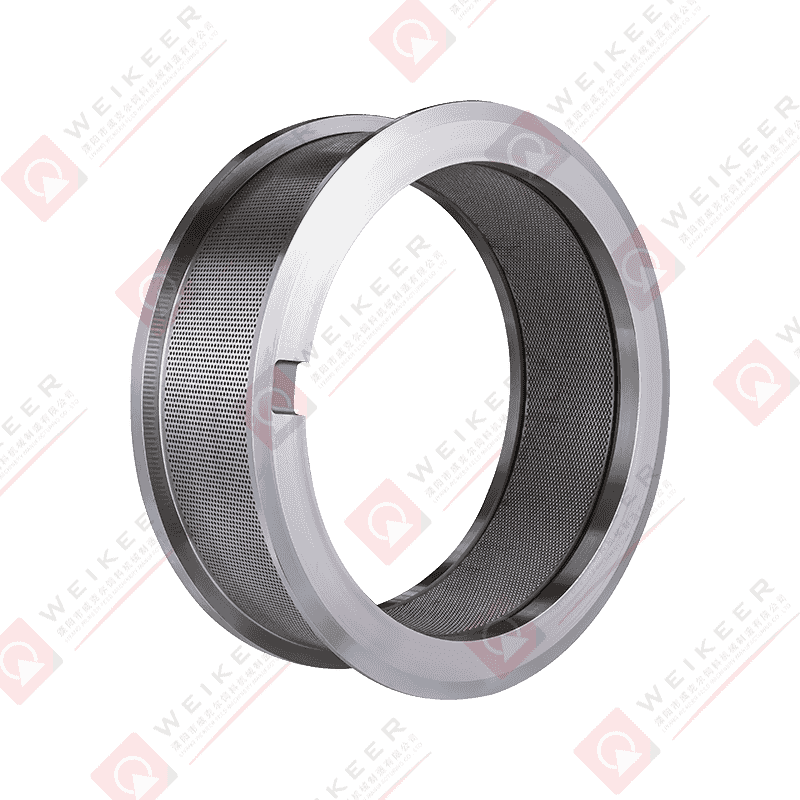
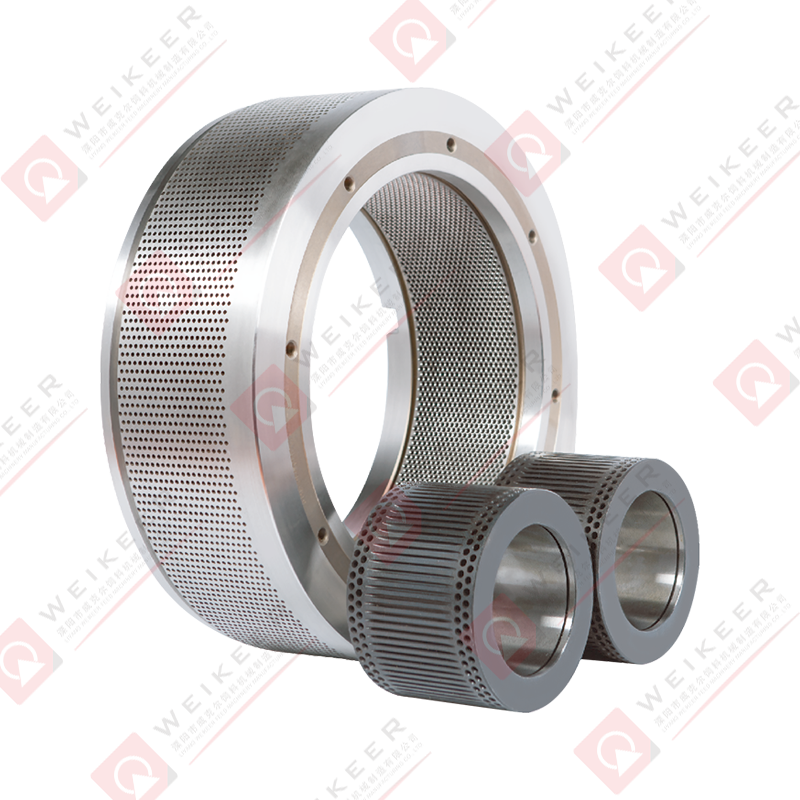
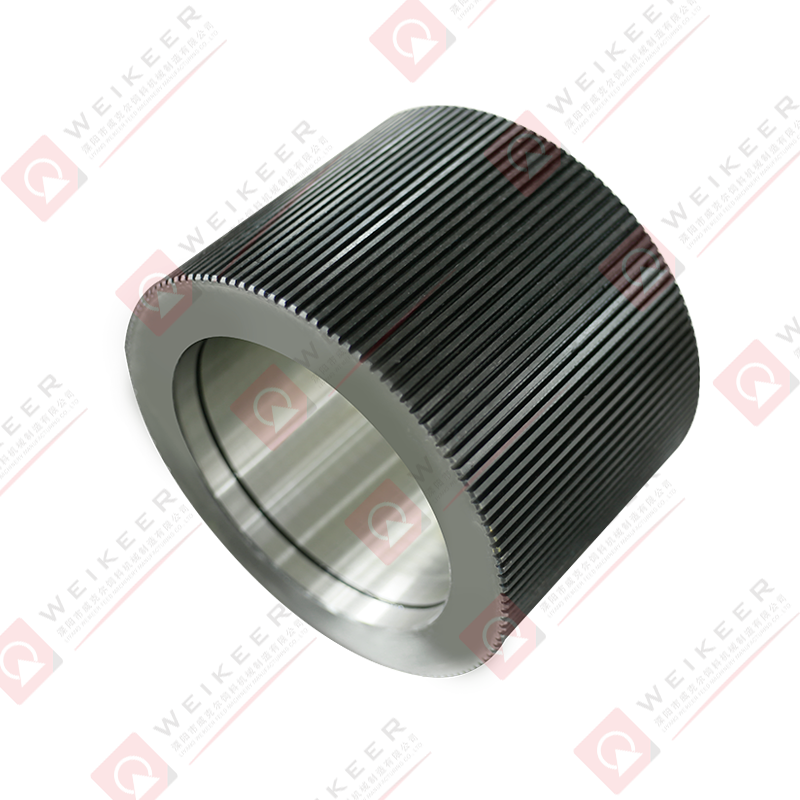
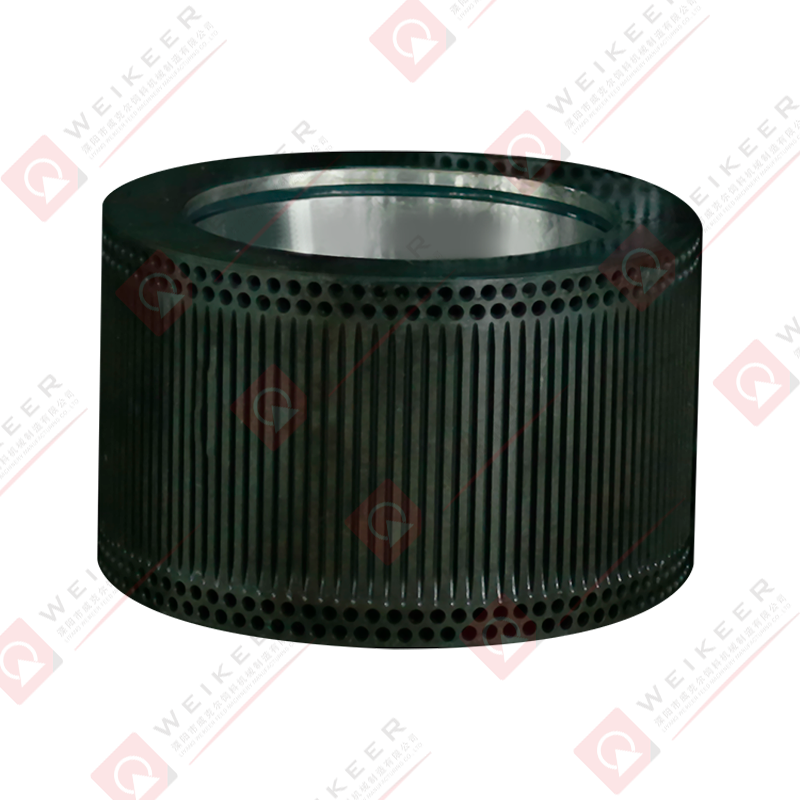
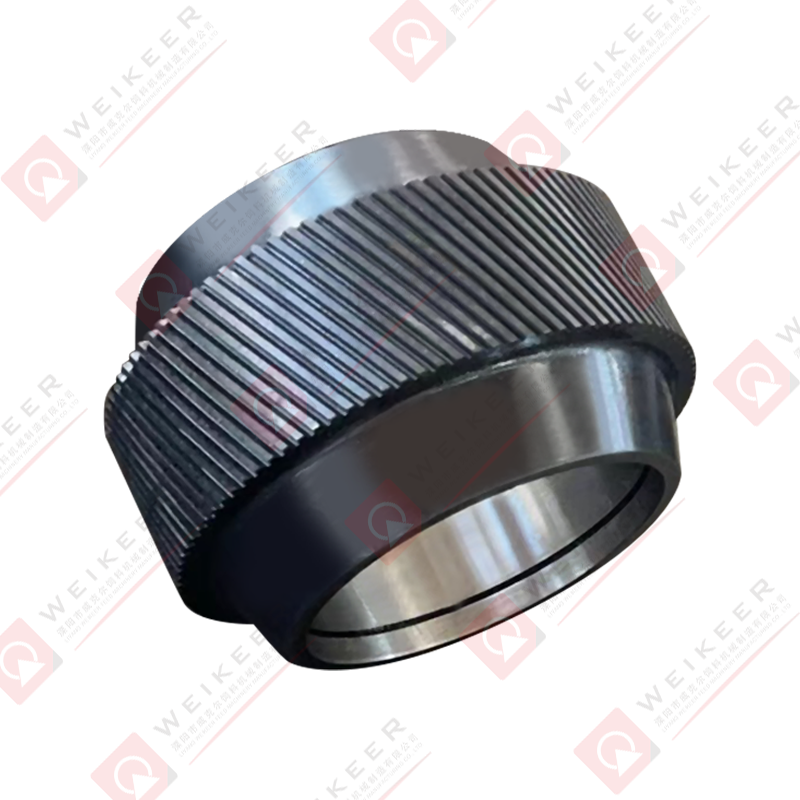
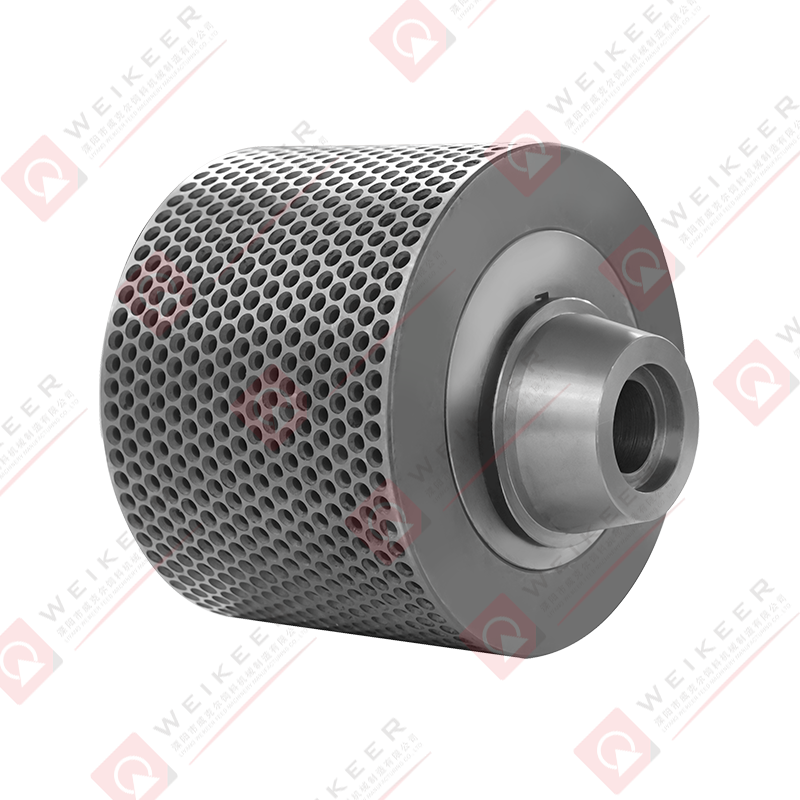
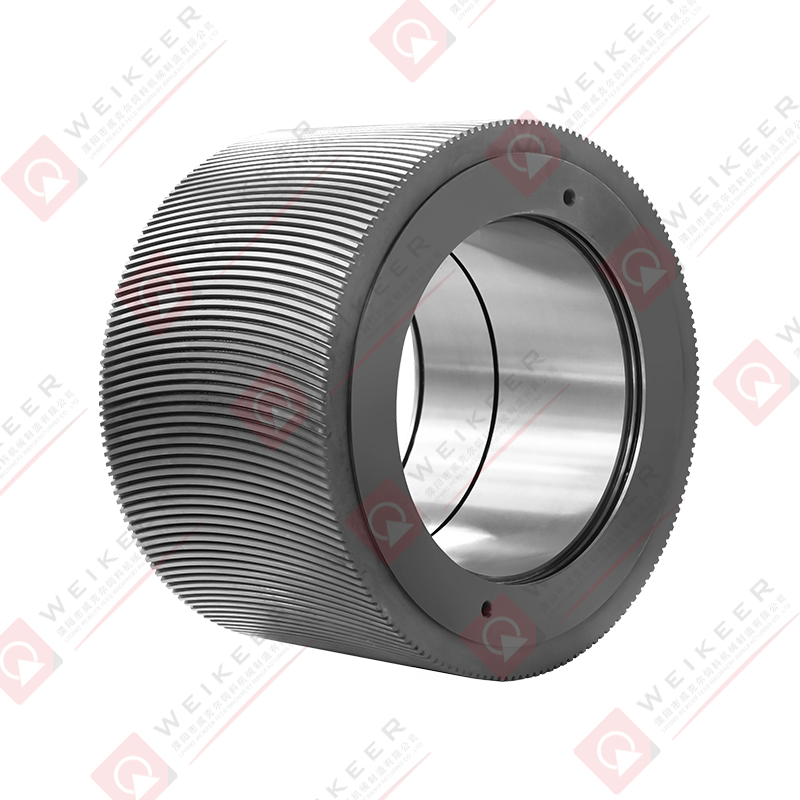
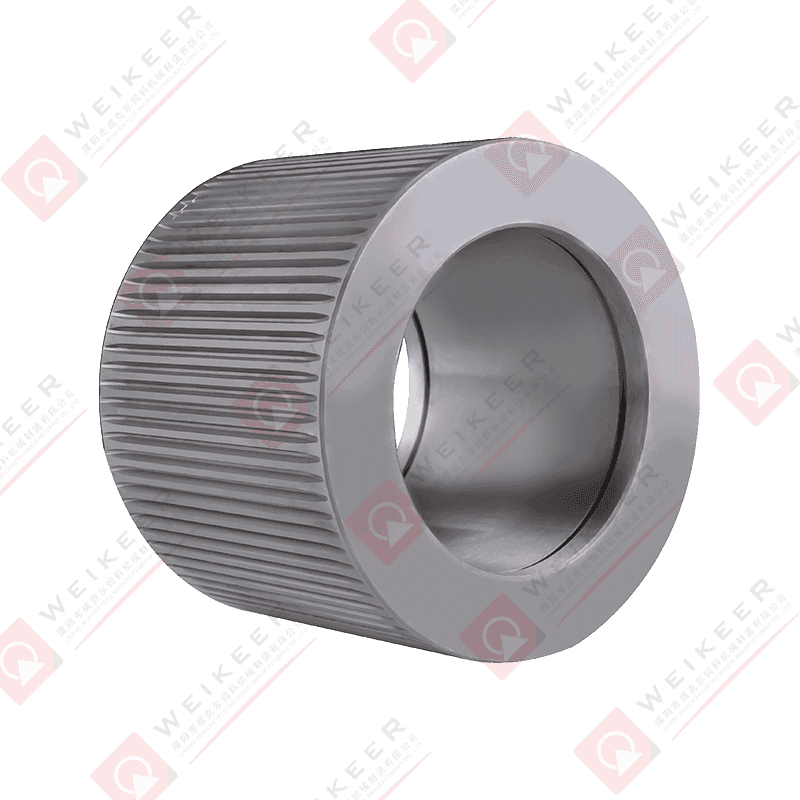
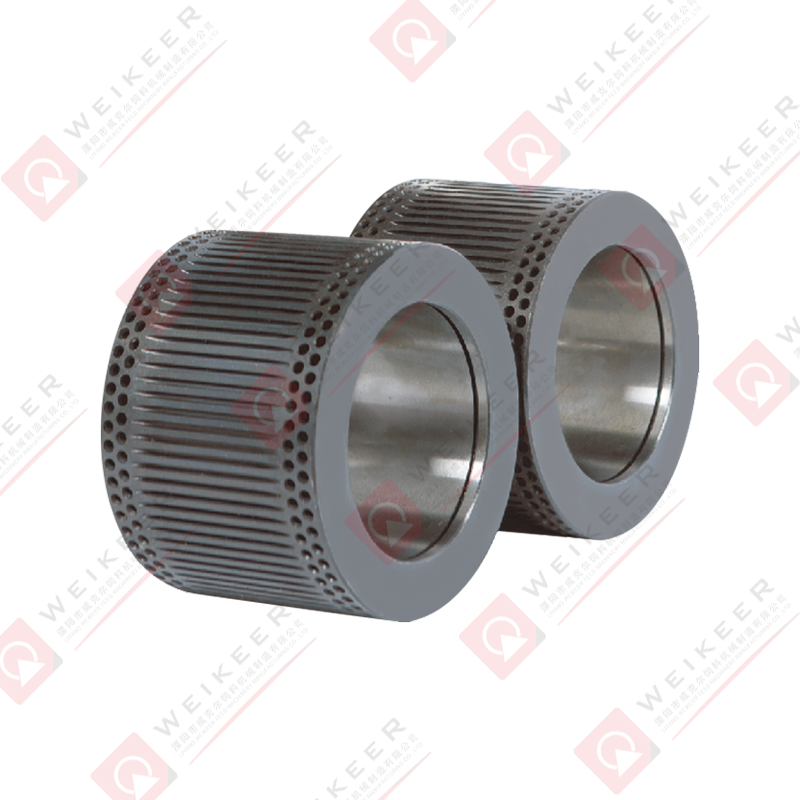
The performance of a GCr15 roller shell also depends on its surface geometry. Shells are available in corrugated, slotted, honeycomb, and smooth surface patterns, each suited to different materials and pellet sizes. For wood biomass pellets, corrugated or slotted shells provide better grip and feeding efficiency. For animal feed, honeycomb or fine-slot patterns are commonly used. Since GCr15 has machinability in the annealed state, complex surface patterns can be precisely machined before final heat treatment, ensuring dimensional accuracy is preserved.
Interference Fit and Installation Tolerances
GCr15 roller shells are typically mounted onto the roller core using a press fit or hydraulic expansion method. The interference fit must be precisely calculated based on the shell's inner diameter, wall thickness, and operating temperature range. Since GCr15 has low thermal expansion relative to some other alloys, fit calculations should account for the operating thermal environment to prevent either slipping during use or cracking during installation.
Inspection and Quality Verification
When sourcing GCr15 roller shells, buyers should request material certifications confirming chemical composition, hardness test results (typically via Rockwell C scale), and nondestructive testing (NDT) records such as ultrasonic or magnetic particle inspection. These tests verify internal soundness and detect any quench cracks or inclusions that could to premature failure under cyclic loading in the pellet mill.
Maintenance and Service Life Extension
Even the highest-quality GCr15 roller shells require proper maintenance to reach their full service life potential. The following practices are widely recommended by pellet mill operators:
- Regular roller gap adjustment: Maintaining the correct gap between the roller shell and die prevents localized overloading and uneven wear patterns.
- Lubrication of roller bearings: Although the shell itself requires no lubrication, the internal bearings supporting the roller must be adequately greased to prevent heat buildup that could affect shell geometry.
- Shell rotation: Rotating the shell periodically (where design permits) distributes wear evenly across the working surface.
- Regrinding worn shells: GCr15 shells with moderate surface wear can be reground to restore surface geometry, effectively extending usable life by one additional cycle before replacement is required.
- Feedstock consistency: Maintaining uniform moisture content and particle size in the feedstock reduces shock loads on the roller shell surface and minimizes stress concentration at surface features.
Conclusion: GCr15 Remains the Engineering Benchmark for Pellet Mill Roller Shells
The widespread adoption of Bearing Steel GCr15 in pellet mill roller shell manufacturing is the result of decades of industrial experience and material science validation. Its combination of high surface hardness, wear resistance, dimensional stability, and compatibility with precision machining and heat treatment processes makes it uniquely suited to the demanding mechanical environment of pellet production. Whether the application involves wood biomass, animal feed, or agro-industrial residues, GCr15 roller shells consistently outperform alternatives in service life and reliability. For engineers and procurement specialists evaluating roller shell materials, GCr15 remains the established benchmark against which all other options are measured.



 русский
 Español
 عربى
عربى 中文简体
中文简体