What Is an Anchor Ring Die in a Cat Litter Pellet Mill?
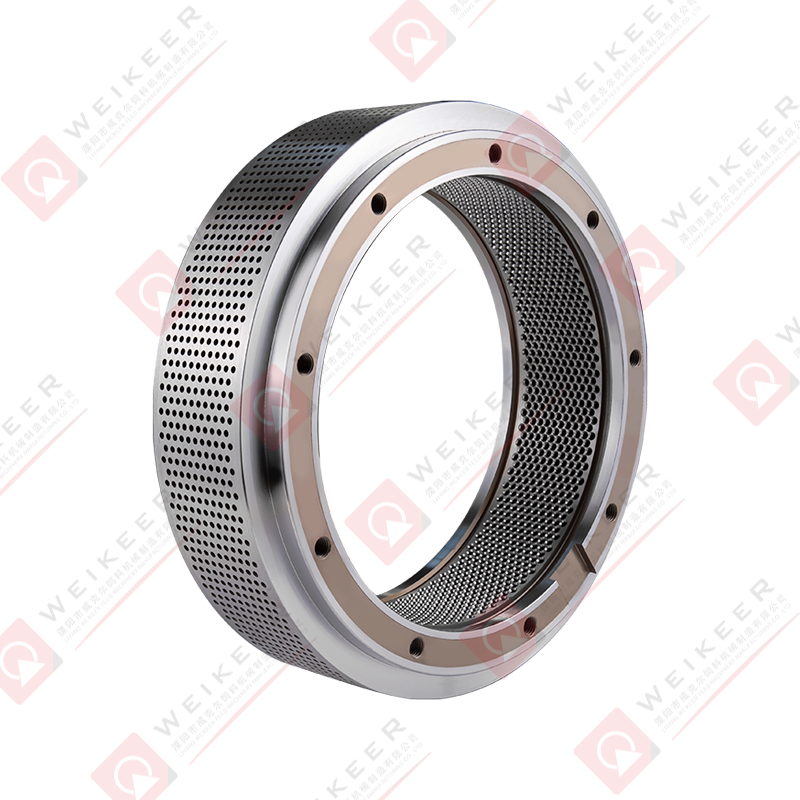
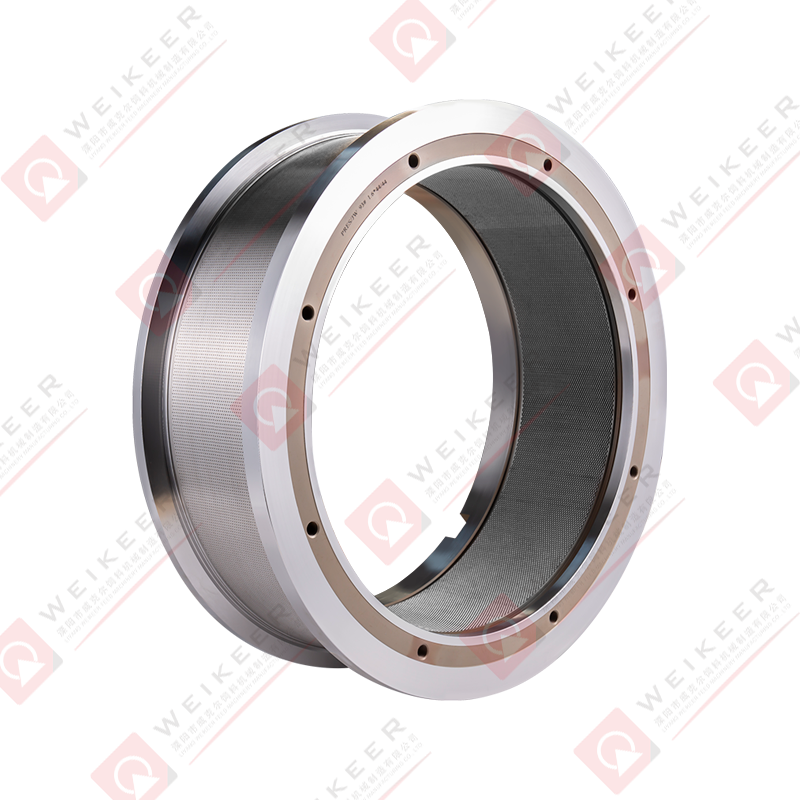
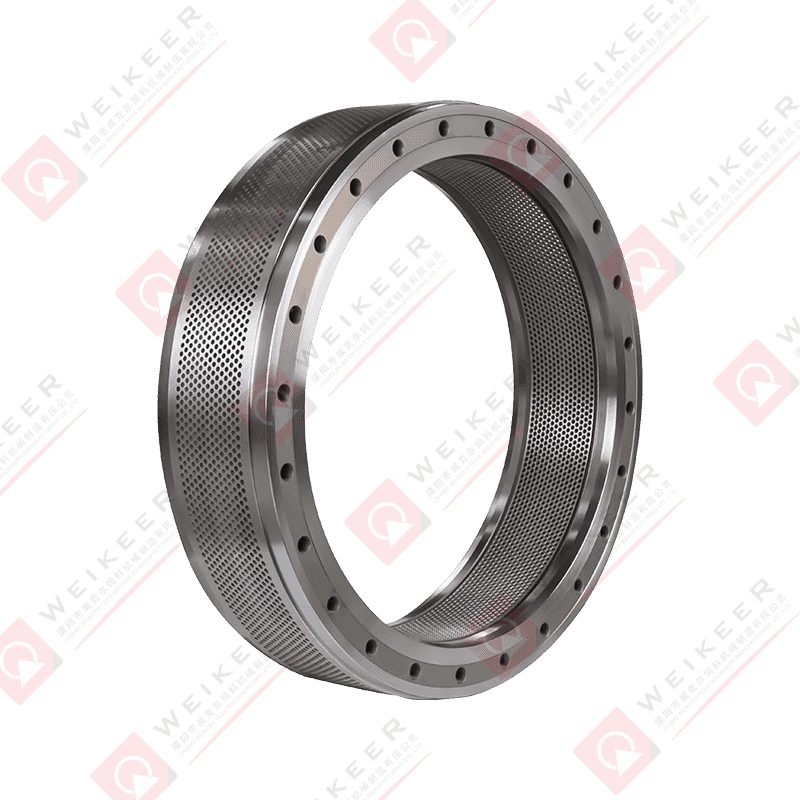
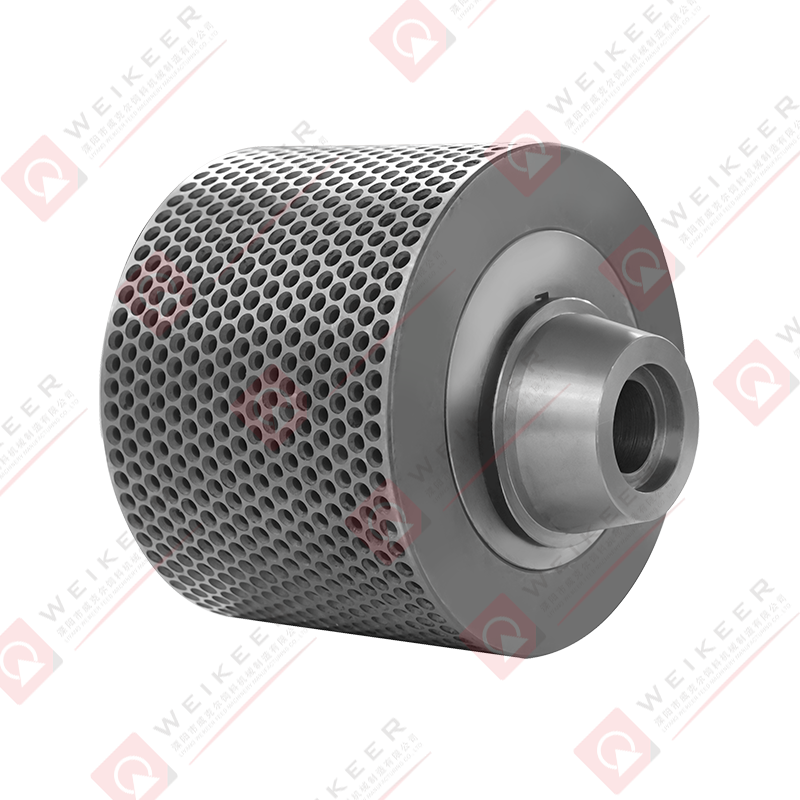
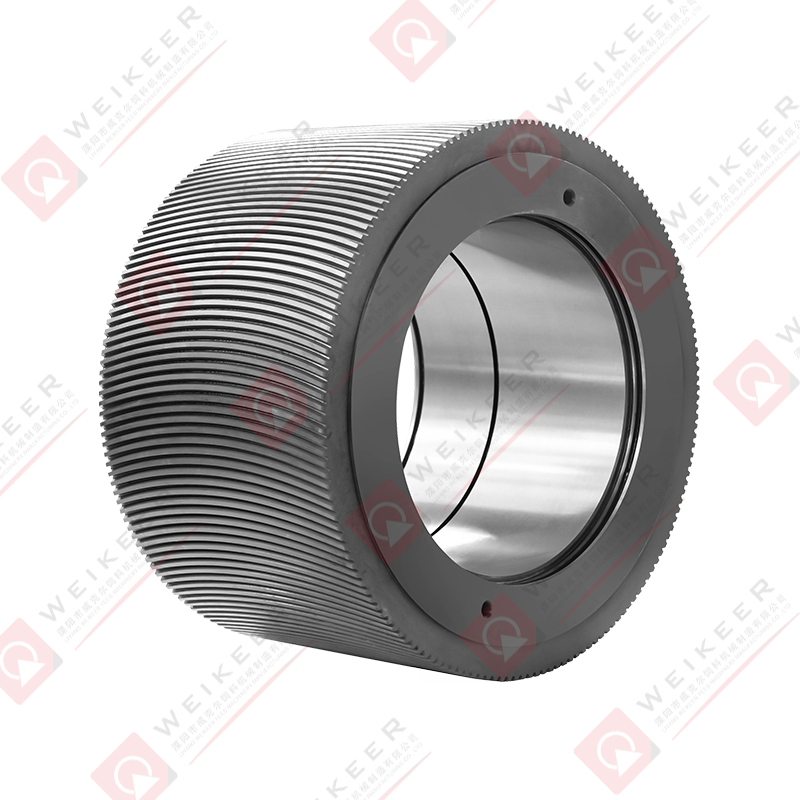
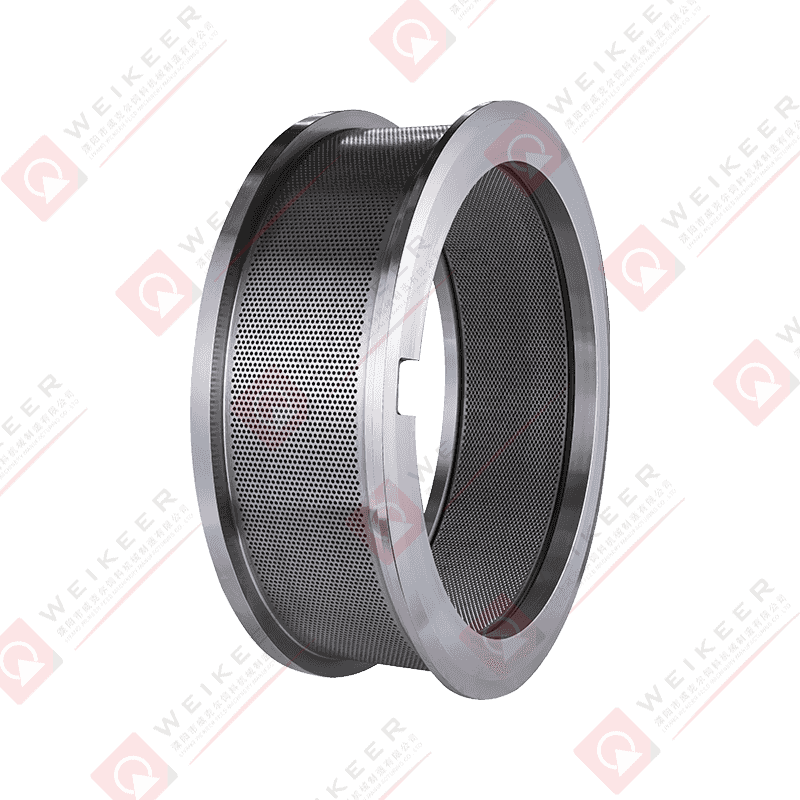
An anchor ring die — sometimes written as "annular ring die" or referred to in manufacturing contexts as a ring die assembly — is the core forming component in a pellet mill used to produce cat litter pellets. It is a thick cylindrical steel ring with hundreds of precisely drilled die holes passing radially through its wall. Raw material, typically a compressed wood fiber, bentonite clay, tofu-based soybean residue, or silica blend, is fed into the interior of the rotating ring. Rollers press the material through the die holes from the inside outward, extruding it into cylindrical strands that are cut to length by external knives as they exit the outer surface of the die. The result is the uniform cylindrical or short-rod pellet familiar in clumping and non-clumping cat litter products on the market today.
The anchor ring die is the component that directly determines pellet quality, production efficiency, and operating cost in a cat litter pellet mill. Its material, hole geometry, compression ratio, and surface treatment define the density, hardness, moisture absorption rate, and dust level of the finished pellets. Because cat litter pellets must simultaneously be hard enough to survive packaging and handling without crumbling, yet porous enough to absorb liquid rapidly and allow clumping, the die specifications must be selected and maintained with precision. A worn or incorrectly specified ring die produces pellets that are either too soft and generate excessive dust, or too dense and absorb too slowly — both commercially unacceptable outcomes.
How the Ring Die Works Inside the Pellet Mill
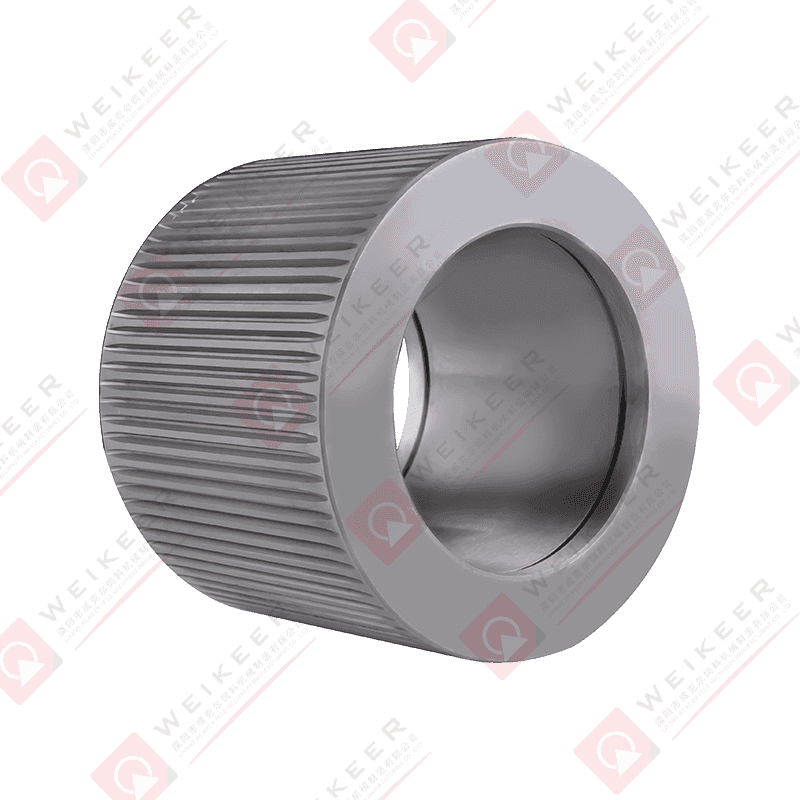
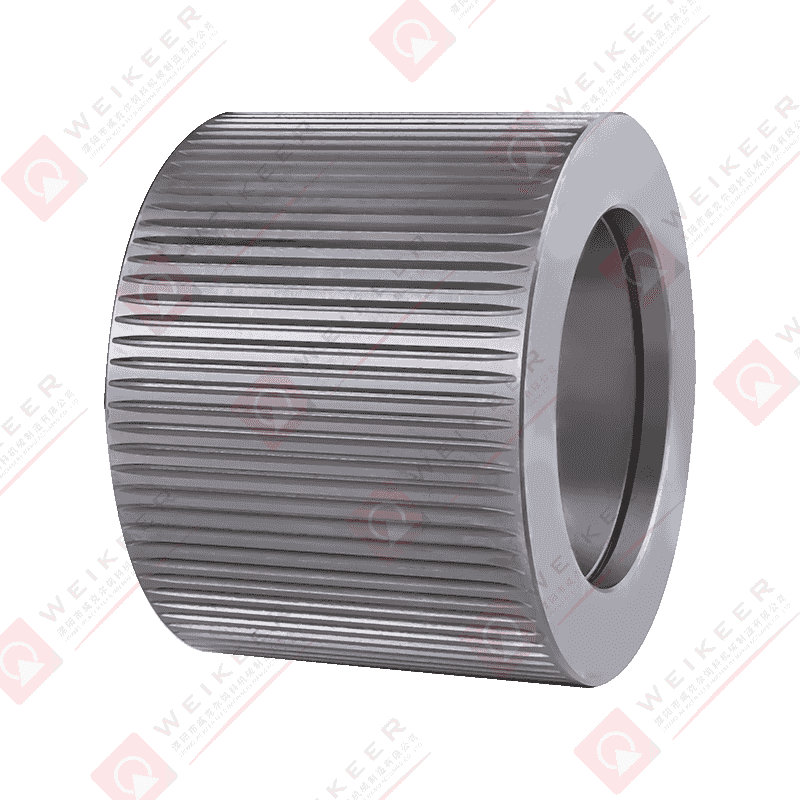
Inside a ring die pellet mill, the die rotates driven by the main motor through a gearbox. Two or three press rollers are positioned inside the ring, fixed on a stationary roller shaft. As the die rotates, the gap between the inner surface of the die and the roller surface forces the feed material — conditioned with moisture and heat — into the die holes. The compression forces involved are substantial: for wood fiber cat litter, the radial pressure at the roller-die interface can exceed 200 MPa depending on the material formulation and die compression ratio.
The feed material enters the die holes in a plastic, semi-compressed state. As it is pushed progressively deeper through the hole by the roller pressure, friction with the hole wall increases its temperature and pressure, causing the natural lignin binders in wood-based materials to activate or the clay particles in bentonite litter to compact and bond. The pellet exits the outer face of the die in a hot, slightly plastic state and stiffens rapidly as it cools after being cut. The mechanical properties of the finished pellet — hardness, bulk density, and porosity — are therefore determined partly by the die's compression ratio and hole geometry, and partly by the feed moisture and temperature at the moment of pressing.
Key Dimensional Specifications of a Cat Litter Ring Die
The ring die for cat litter production is specified by a set of dimensional parameters that must be matched to both the pellet mill model and the raw material being processed. Understanding these specifications is essential when ordering a replacement die or designing a new production line.
Die Diameter and Width
The outer and inner diameters of the ring die are determined by the pellet mill model. Common die outer diameters for cat litter production range from 250 mm on small-capacity machines to 520 mm, 650 mm, and 762 mm on large industrial models. The die width — the axial dimension — determines the effective working area and therefore the production capacity for a given die diameter. Wider dies produce more throughput but require more uniform material distribution across the roller width to avoid uneven wear.
Hole Diameter and Pellet Size
The die hole diameter directly sets the finished pellet diameter. Cat litter pellets are typically produced in diameters ranging from 2.0 mm to 8.0 mm depending on the product type. Wood fiber cat litter commonly uses 2.0 mm to 4.0 mm holes. Tofu cat litter — made from soybean fiber — uses 3.0 mm to 5.0 mm holes. Bentonite cat litter granules are often produced at 2.5 mm to 4.0 mm. The hole is drilled with a specific entry taper or inlet chamfer that eases material entry and reduces compression force at the initial engagement point. After the tapered inlet, the hole transitions to a straight bore — the "effective length" — which provides the compression length that determines pellet density.
Compression Ratio
The compression ratio (L/D ratio) is the ratio of the effective hole length to the hole diameter. It is the single important parameter governing pellet density and hardness for a given material. A higher L/D ratio produces denser, harder pellets with lower porosity. A lower L/D ratio produces softer pellets with higher porosity. For wood fiber cat litter, L/D ratios of 4:1 to 6:1 are typical, producing pellets hard enough for handling but porous enough for rapid liquid absorption. For bentonite-based litter requiring higher mechanical strength, L/D ratios of 6:1 to 9:1 may be used. Selecting an inappropriate compression ratio for the raw material results in either pellet breakage during the pressing cycle or pellets too dense to perform as expected in use.
Ring Die Materials and Surface Treatments
The material and surface condition of the ring die determine its service life, wear behavior, and compatibility with different cat litter formulations. Cat litter raw materials vary widely in abrasiveness — silica sand litter is extremely abrasive, bentonite clay is moderately abrasive, and wood fiber is comparatively gentle — and the die material must be matched accordingly.
| Material / Treatment |
Hardness (HRC) |
Best For |
Typical Service Life |
| Alloy steel (x46Cr13) |
52–56 |
Wood fiber, tofu cat litter |
500–800 hours |
| Stainless steel (316L) |
28–32 |
Corrosive or food-grade applications |
300–500 hours |
| High-alloy tool steel (D2) |
58–62 |
Abrasive materials, bentonite, silica |
800–1,200 hours |
| Nitrided alloy steel |
60–65 (surface) |
General cat litter, balanced wear life |
700–1,000 hours |
| Tungsten carbide lined holes |
70–75 (hole surface) |
Highly abrasive silica or mineral litter |
1,500–2,500 hours |
Nitriding — a thermochemical surface hardening treatment — is one of the practical and cost-effective upgrades for ring dies producing moderate-abrasion cat litter formulations. The nitrogen diffusion process creates a hardened surface layer 0.1 mm to 0.5 mm deep on both the die hole walls and the outer die surface without changing the bulk dimensions of the die. This preserves the tight dimensional tolerances of the hole diameter while dramatically increasing wear resistance at the surfaces that experience the friction. For producers switching between wood fiber litter and more abrasive bentonite-based products on the same machine, a nitrided die provides a cost-effective compromise between the service life of standard alloy steel and the higher cost of tungsten carbide inserts.
Signs of Ring Die Wear and When to Replace
Ring die wear is gradual and progressive, but its effects on pellet quality and machine performance become measurable well before catastrophic failure occurs. Monitoring these indicators allows producers to schedule die replacement during planned maintenance rather than responding to unplanned downtime.
- Increasing pellet diameter: As the die holes wear, their diameter increases beyond specification. If pellet diameter exceeds the upper tolerance limit, the die holes have worn beyond their useful life even if the die appears visually intact.
- Declining pellet hardness: Worn die holes have reduced effective length and compromised surface friction, both of which reduce the compression applied to the pellet. If pellet hardness drops below specification with unchanged feed conditions, die wear is the likely cause.
- Increased motor current at constant throughput: A worn die requires the rollers to apply greater force to push material through the enlarged, less efficient holes. Rising motor amperage at constant production rate indicates increasing die resistance, often due to uneven hole wear creating blockages in some zones while others are oversized.
- Cracking around hole clusters: Fatigue cracks developing between adjacent die holes indicate that the die wall has been weakened by cumulative stress cycling. This is a safety-critical condition — continued operation risks catastrophic die fracture, which can cause severe damage to the mill and injury to personnel. Replace immediately upon detection of any crack longer than 5 mm.
- Uneven pellet length distribution: If pellet length becomes increasingly variable despite consistent knife adjustment, the outer face of the die has worn unevenly, creating localized areas where pellets exit at different protrusion lengths before being cut.
Breaking In a New Ring Die Correctly
A new ring die requires a break-in procedure before being run at full production speed and throughput. Skipping this step is one of the common causes of premature die failure in cat litter production. A new die has machined hole surfaces that are microscopically rough at the microscale despite appearing smooth. Running the die at full pressure before the hole walls have polished through initial use concentrates stress at surface irregularities, causing micro-fractures that propagate over time and reduce the die's actual service life well below its rated life.
The standard break-in procedure begins with running the die for 1 to 2 hours at 40–50% of rated throughput using a mixture of the production raw material blended with approximately 10–15% oily grinding agent — typically a mixture of fine sawdust, vegetable oil, and fine sand. This abrasive mixture polishes the hole surfaces progressively while the lower throughput reduces peak compression forces. After the initial break-in period, throughput is increased in steps of approximately 20% every 30 to 60 minutes until full production rate is reached. Motor current and pellet quality should be monitored at each step. If motor current spikes or pellet quality degrades at any step, hold at the previous throughput level for a further period before attempting to increase again.
Selecting the Right Ring Die for Your Cat Litter Formulation
When specifying a ring die for cat litter production, the raw material formulation must drive every specification decision. The following checklist provides a practical framework for buyers and production engineers evaluating ring die options:
- Define the raw material abrasiveness: Wood fiber and tofu soybean fiber are low-to-moderate abrasion materials suitable for standard alloy or nitrided steel dies. Bentonite clay and silica-based formulations require high-alloy tool steel or tungsten carbide-lined holes to achieve acceptable die life.
- Confirm the target pellet diameter and density: Specify the required finished pellet diameter and the target bulk density in kg/m³. These two values, combined with the raw material's compressibility characteristics, allow a die manufacturer to calculate the appropriate L/D ratio for the compression ratio needed.
- Match the die dimensions to the pellet mill model: Ring die dimensions — outer diameter, inner diameter, and width — are not universal. They are specific to the pellet mill manufacturer and model. Always provide the mill model number and existing die part number when ordering a replacement to ensure dimensional compatibility with the roller assembly and drive flange.
- Specify the hole pattern and open area ratio: The open area ratio — the percentage of the die face occupied by hole openings — affects both production capacity and die structural strength. A higher open area increases throughput but reduces the metal between holes, lowering fatigue resistance. For cat litter dies running abrasive materials, an open area ratio of 20–28% is a practical range that balances capacity with structural integrity.
- Request material certification and heat treatment records: Reputable die manufacturers provide documentation confirming the steel grade, heat treatment process, and achieved surface hardness for each die. Dies without material certification carry unknown risk of premature failure due to substandard steel or inadequate heat treatment — a risk that is not visible until the die fails prematurely in service.



 русский
 Español
 عربى
عربى 中文简体
中文简体