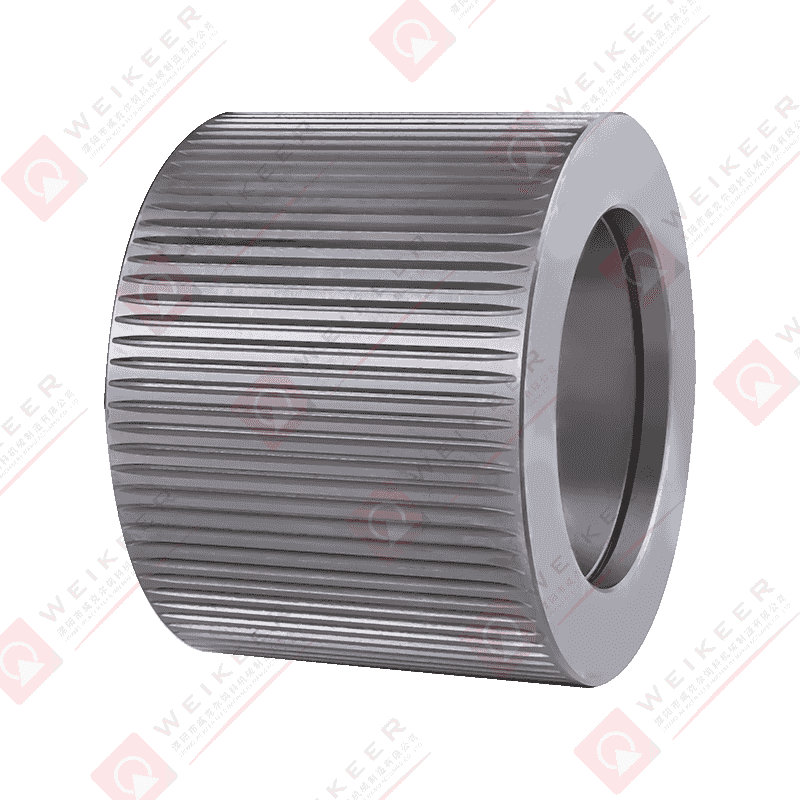
As an experienced pellet die manufacturer, we know that the animal feed pellet die is the heart of any feed mill. It shapes the mash, controls throughput and determines how much energy your pellet press consumes. Yet it is often the least understood component on the line. This guide is written from the workshop floor, not a sales brochure. We want to help feed mill managers and maintenance teams make confident decisions when selecting, installing and caring for animal feed pellet dies.
What Is an Animal Feed Pellet Die?
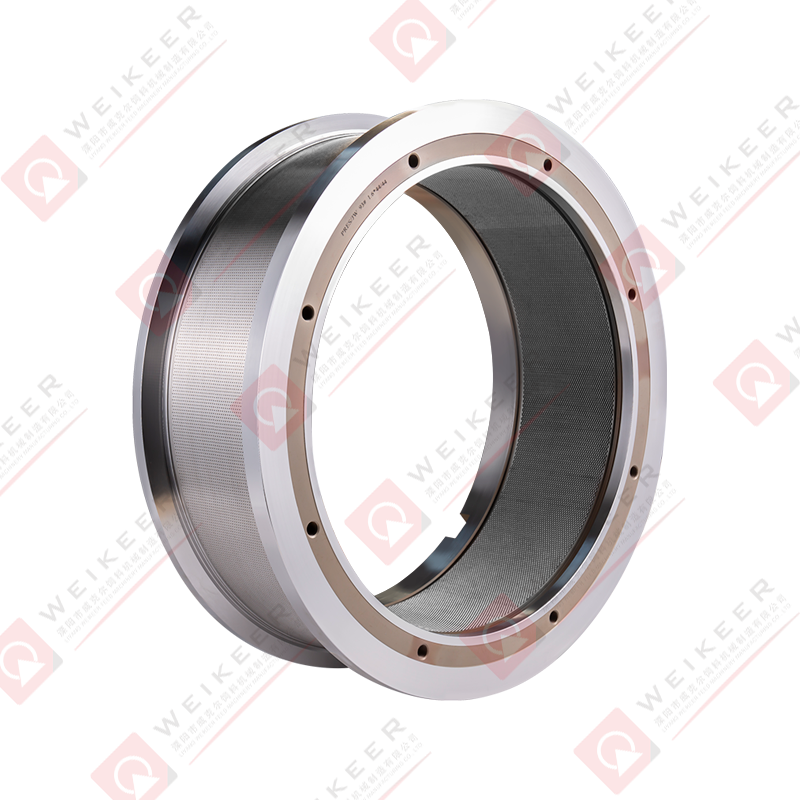
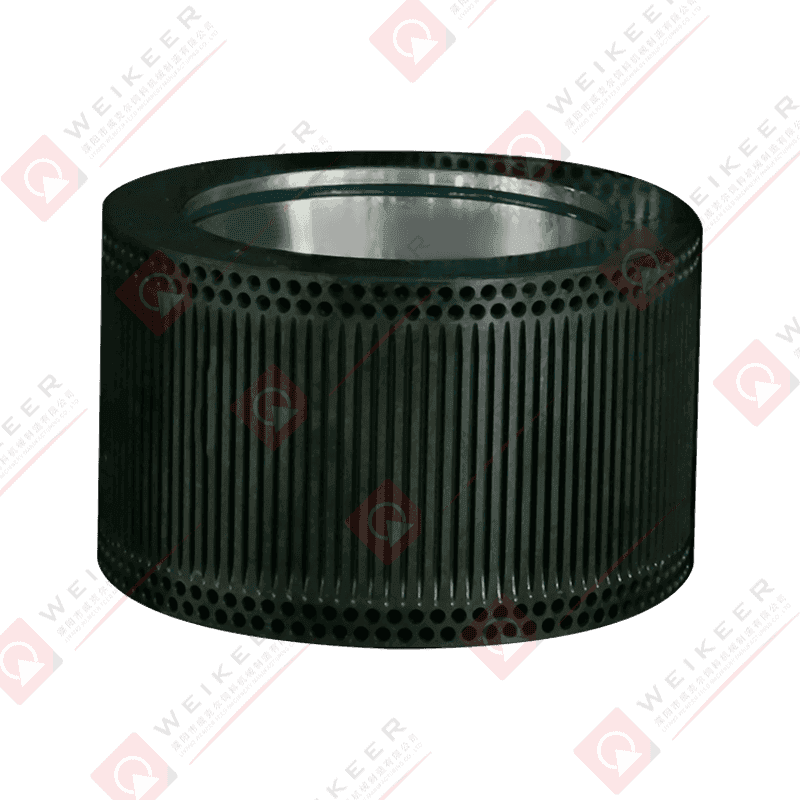
An animal feed pellet die is a thick-walled, cylindrical ring with thousands of precision-drilled holes. Inside the pellet mill, the die rotates while two or three press rollers squeeze conditioned mash through the holes. The friction and pressure compact the feed into dense, cylindrical strands that are then cut to length by a stationary knife. The die therefore defines the cross-section, diameter, density and surface quality of every pellet leaving the mill.
Although the concept sounds simple, the performance of a die depends on a careful balance of metallurgy, hole geometry, compression ratio and manufacturing precision. A slight difference in hole angle or surface finish can be the difference between a smooth 12-hour production shift and a frustrating day of blockages and fines.
Key Selection Criteria for Animal Feed Pellet Dies
Choosing the right die is not about picking the cheapest option. It is about matching the die to your recipe, your mill type and your target pellet quality. These are the factors we review with every customer who contacts us for a custom order.
Die Material and Heat Treatment
The die body must resist abrasive wear from ingredients such as corn, soybean meal and minerals. Most modern feed dies are made from stainless steel or low-alloy steels with a carburized case. The hardness profile matters more than surface hardness alone: a die needs a tough core to absorb shock loads and a hard shell to resist hole wall wear. At our factory, we use CNC machining and controlled heat treatment to create a consistent microstructure across the die ring.
Hole Geometry and Compression Ratio
The compression ratio is the effective length of the hole divided by its diameter. A higher ratio creates more friction, denser pellets and harder pellets, but it also reduces throughput and can make the feed overheat. A lower ratio gives higher output but softer, more fragile pellets. For animal feed, ratios commonly range from about 9:1 to 14:1 depending on the formula. Many dies also use a taper at the intake side to help the mash enter the hole smoothly and reduce wear.
Die Thickness and Hole Pattern
Die ring thickness must be sufficient to withstand the radial and tangential stresses generated by the rollers. Thicker dies are more rigid and offer a longer wear life, but they also increase the compression ratio if the hole length increases. The hole pattern should be uniform to keep the load on each hole balanced. Poorly balanced patterns can lead to localized wear, vibration and premature failure of the die or bearings.
Application-Specific Design
Poultry feeds, pig feeds and aqua feeds place different demands on the die. Aqua feed often needs a smaller diameter and a higher compression ratio so that the pellet stays intact under water. Pig and poultry feeds generally run at higher capacities and need a robust die with a slightly more open compression ratio. This is why we produce dedicated dies for each application rather than offering a single universal product.
If you want to understand more about how die selection influences the final product, we recommend reading our article on factors that influence pellet hardness.
Common animal feed die specifications we produce for different applications
| Application |
Typical Hole Diameter |
Compression Ratio |
Preferred Material |
| Broiler feed |
3.0–3.5 mm |
9:1–11:1 |
Stainless steel |
| Layer feed |
3.0–4.0 mm |
9:1–12:1 |
Stainless steel |
| Pig feed |
3.5–4.5 mm |
10:1–13:1 |
Stainless steel |
| Aqua feed (sinking) |
2.0–3.0 mm |
12:1–15:1 |
High-alloy stainless steel |
| Ruminant feed |
4.5–6.0 mm |
8:1–10:1 |
Stainless steel or alloy steel |
Anchorear or Screw Type: Which Die Mounting Design Is Right for You?
Animal feed pellet dies are generally mounted to the pellet mill drive hub in one of two ways: by an anchor-ear arrangement or by countersunk screws. Both designs have been proven over decades of feed production, but each has its own advantages in specific mill configurations.
Anchorear Type Dies
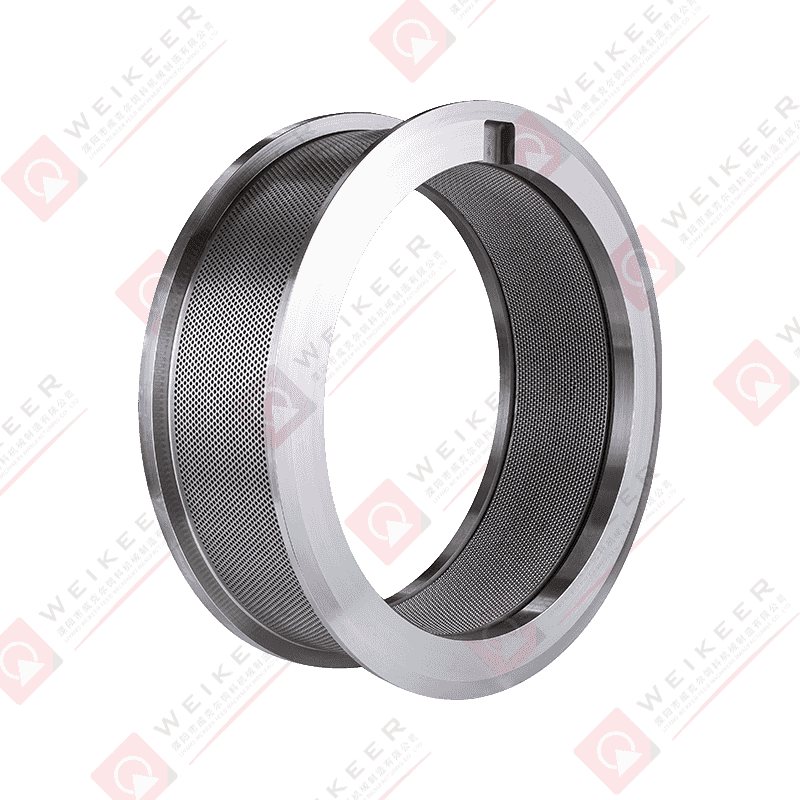
Anchorear dies use a locating ear or key that locks into the drive hub. This design is simple, fast to install and very reliable for medium and large ring dies. It is common on many European and Asian pellet mills because it eliminates the need for a large number of fasteners. If your mill is designed for an ear-type hub, changing the die is quick and requires little torque control.
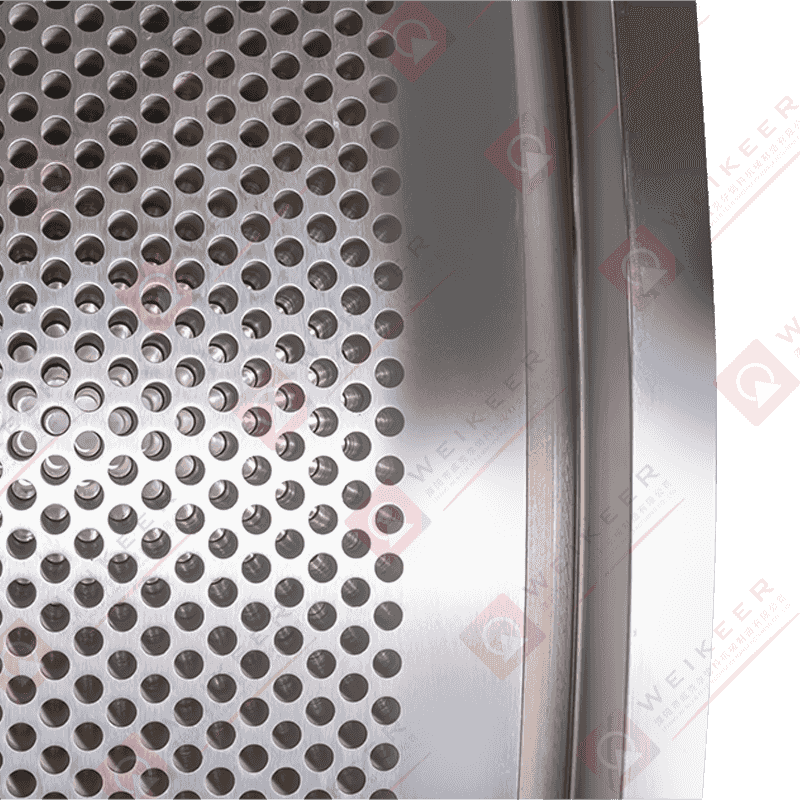 Anchorear Ring Die for Livestock and Poultry Pellet MillsThis ear-type ring die offers quick tool-free installation and reliable performance for medium to large pellet mills, making it a practical choice for feed lines prioritizing fast die changes and stable operation.View Product →
Screw Type Dies
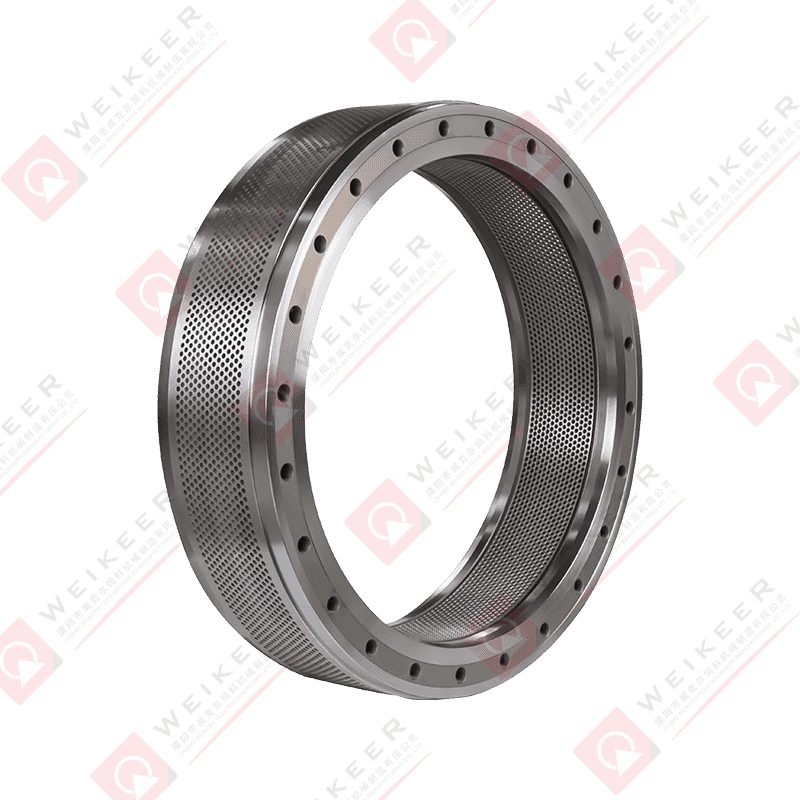
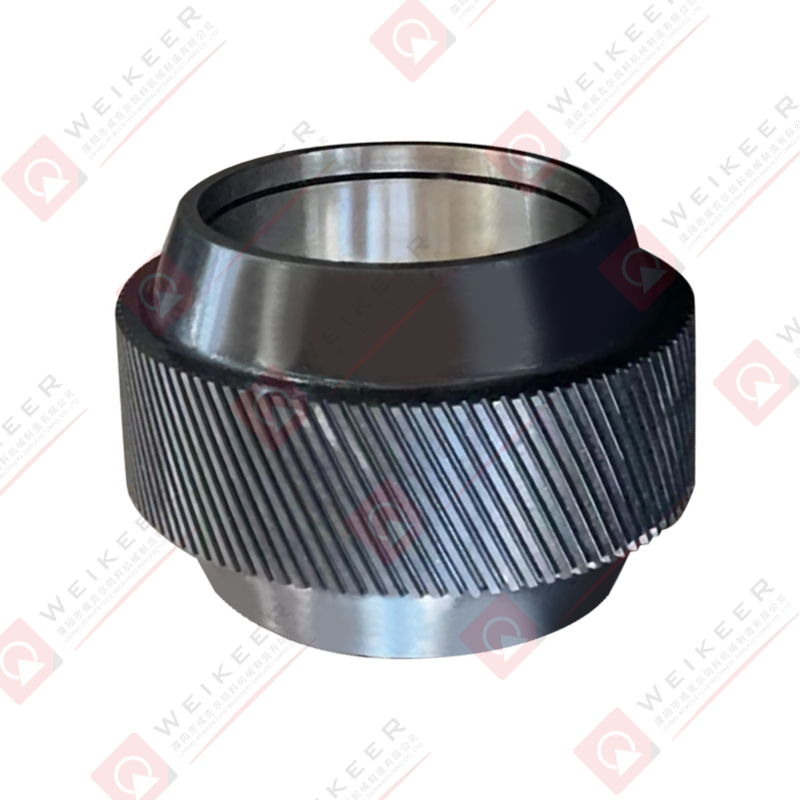
Screw type dies are fixed to the hub with counterbored screws instead of an ear. The compact outer profile allows the die to be installed in a slightly tighter housing, and the screw arrangement can be advantageous for high-speed machines that are sensitive to imbalance. The trade-off is a longer installation procedure because each screw must be cleaned, torqued and checked. Screw type dies are also popular in biomass and specialty feed lines, but they work well in animal feed production too.
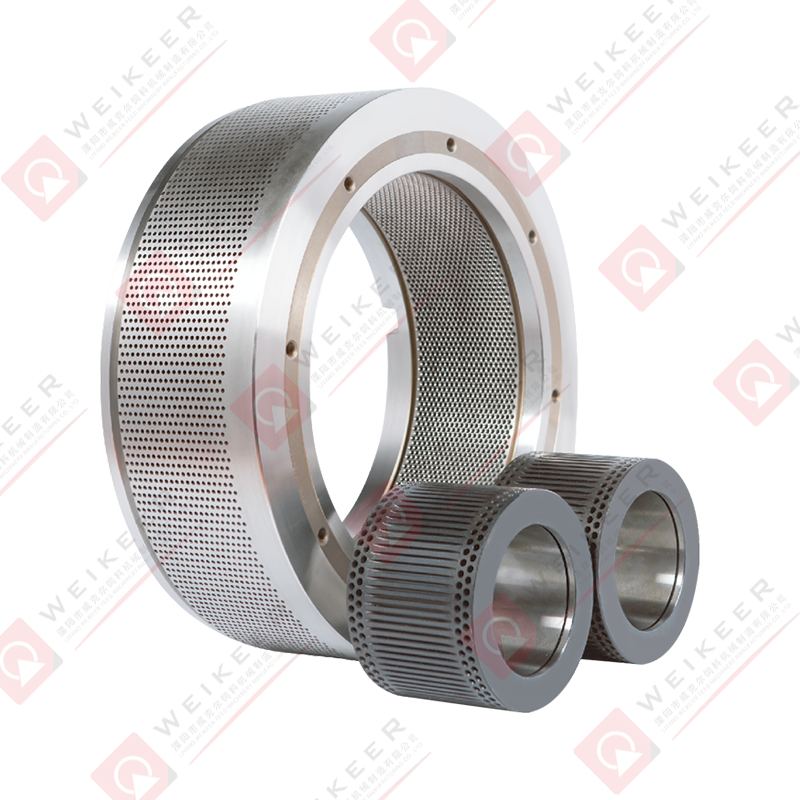 Screw Type Ring Die for Livestock and Poultry Pellet MillsThis screw-fixed ring die features a compact profile suited for high-speed machines sensitive to imbalance, and is also effective in biomass and specialty feed production alongside animal feed applications.View Product →
Match Your Die with the Right Press Roller
A pellet die never works alone. The press roller is the other half of the same team. The roller surface pushes the feed into the die holes, so its material, hardness and surface pattern directly affect traction, wear and energy consumption. If the roller is too hard or too soft relative to the die, you will see excessive die wear or poor pellet output.
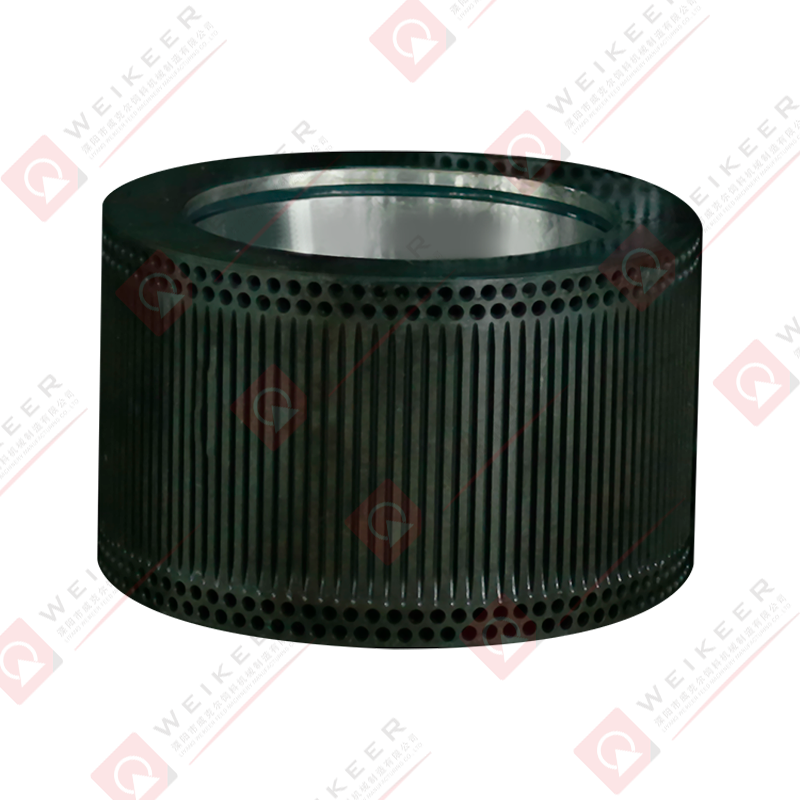
For animal feed applications, we often recommend a roller with a closed corrugation and dimpled surface. This pattern increases gripping power while avoiding the excessive stress that sharp corrugations can create on the die face. The roller should also match the wear characteristics of the die; many mills use a harder roller to extend the service life of the more expensive die.
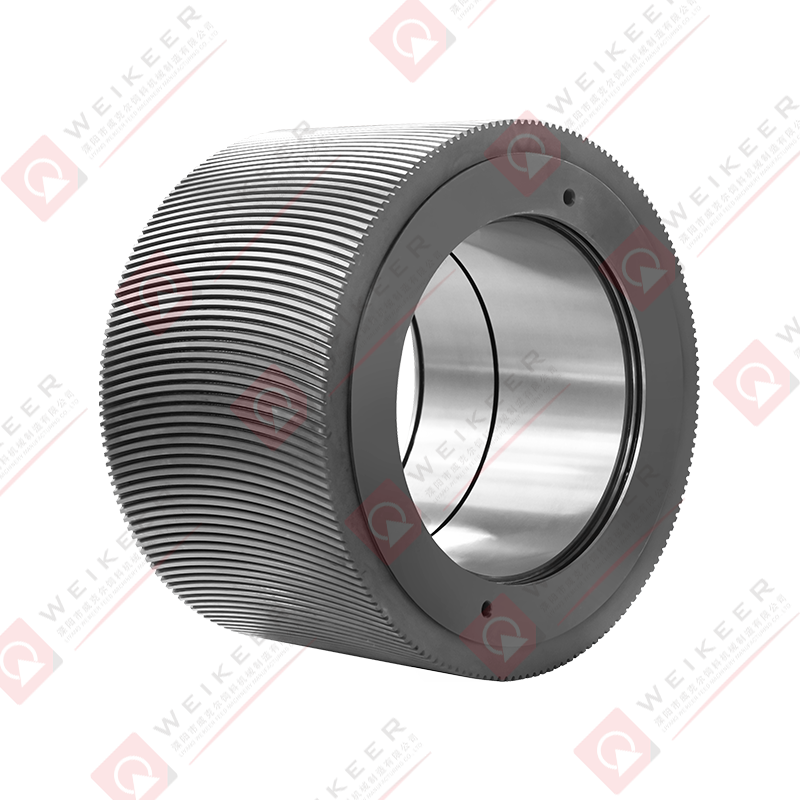
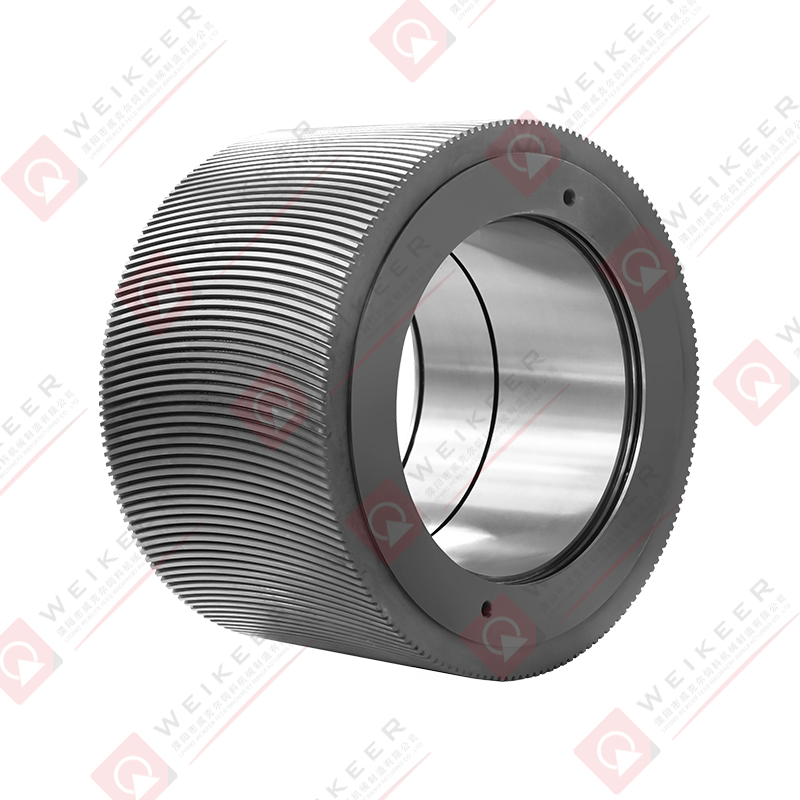
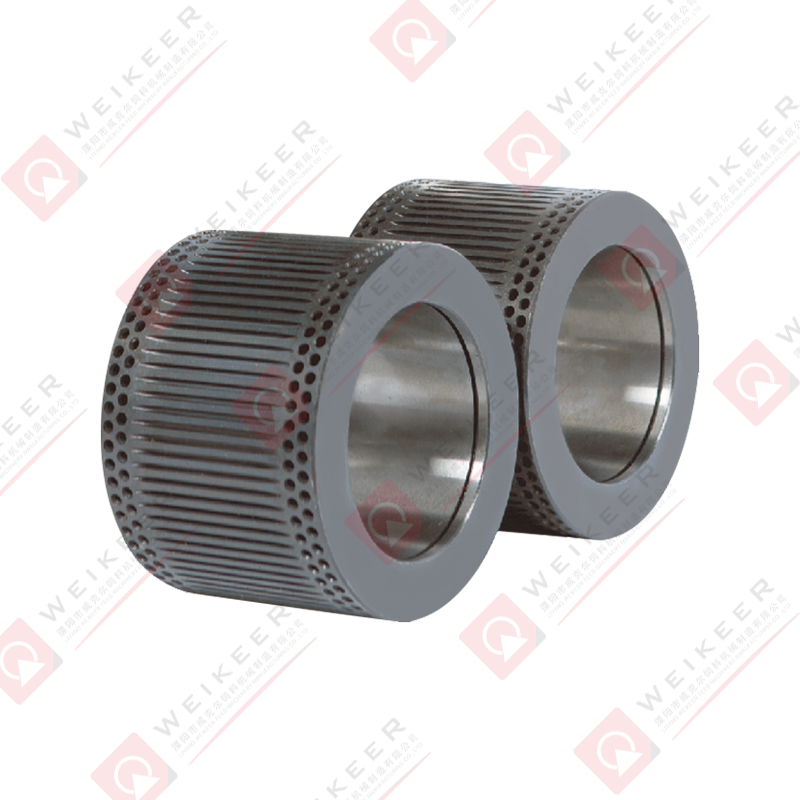 Closed Corrugation Dimpled GCr15 Pellet RollerThis roller combines closed corrugation and dimpled surfaces with GCr15 bearing steel for enhanced traction and durability, working well with matching dies to reduce wear and improve pellet output.View Product →
Maintenance Tips to Extend the Life of Animal Feed Pellet Dies
Even the best die will fail early if it is not maintained properly. Based on our after-sales support experience, here are the most effective habits for extending die life in a feed mill.
- Rotate the die regularly. Most dies wear faster on one side. Reversing the die at set intervals balances the wear and can almost double the usable life.
- Clean the holes thoroughly at the end of each run. Stubborn fines left in the bore can harden and accelerate corrosion, and then cause blockages on the next start.
- Check the roller-to-die clearance daily. Too little clearance causes metal-to-metal contact and rapid die damage; too much clearance reduces throughput and increases slip.
- Maintain proper steam conditioning. The moisture and temperature of the mash directly affect how much friction the die has to create. Overly dry feed is hard on the die and produces dusty pellets.
- Store spare dies in a clean, dry, oiled place, ideally standing flat on a wooden rack to avoid distortion.
Why a Specialist Manufacturer Matters
A replacement die may look the same from the outside, but the internal geometry and heat treatment decide how long it will last and how well it will perform. A specialist die manufacturer starts with the feed recipe, the mill model and the production target, and then machines the die accordingly. That is the approach we have followed since 1996, when our company began making ring dies and rollers in Liyang, China.
Our factory covers 13,000 square meters and is equipped with CNC ring die machining centers and dedicated heat treatment equipment. We employ experienced engineers who can help you confirm the correct compression ratio, hole pattern and metallurgy for your animal feed line. We also offer custom drilling layouts for unusual die sizes and specialty feeds.
All our stainless steel dies are manufactured with clean, sharp holes and a smooth bore surface, which reduces start-up friction and helps the mash flow evenly. We test clearances with calibrated rollers to ensure that each die matches the hub and roller configuration of your mill. If you send us your worn die or dimension drawing, we can usually provide a replacement that fits without modification.
Choosing the right animal feed pellet die is not a one-time purchase; it is a continuous partnership between your mill, your recipe and the die maker. We have shared the essentials—material, hole geometry, compression ratio, die mounting style, roller matching and maintenance—so that you can ask the right questions before you invest. If you would like to discuss your exact die size, compression ratio or production output, our team will be glad to help with a technically sound recommendation.



 русский
 Español
 عربى
عربى 中文简体
中文简体