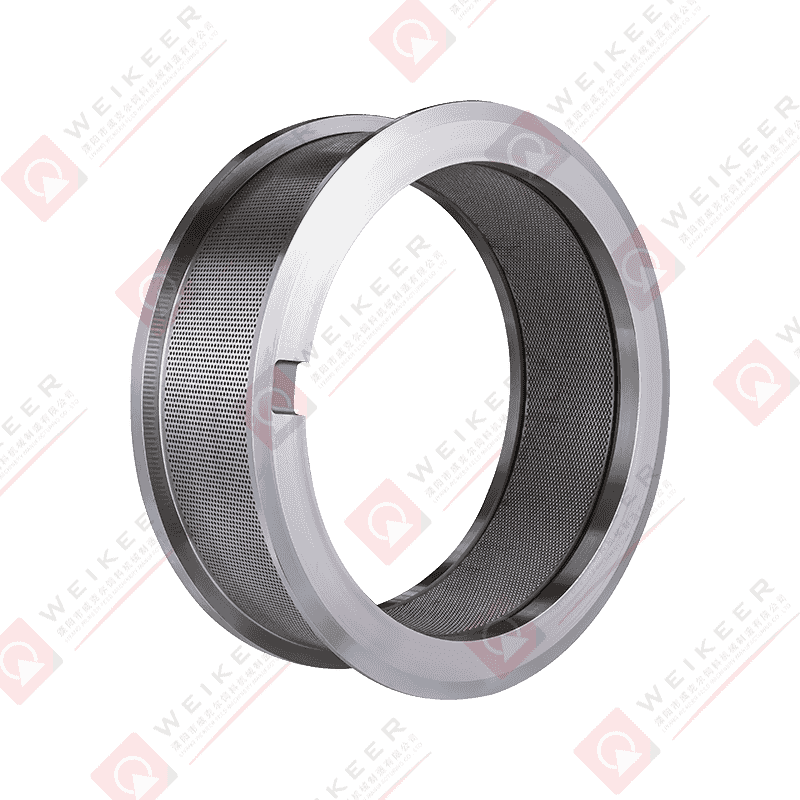
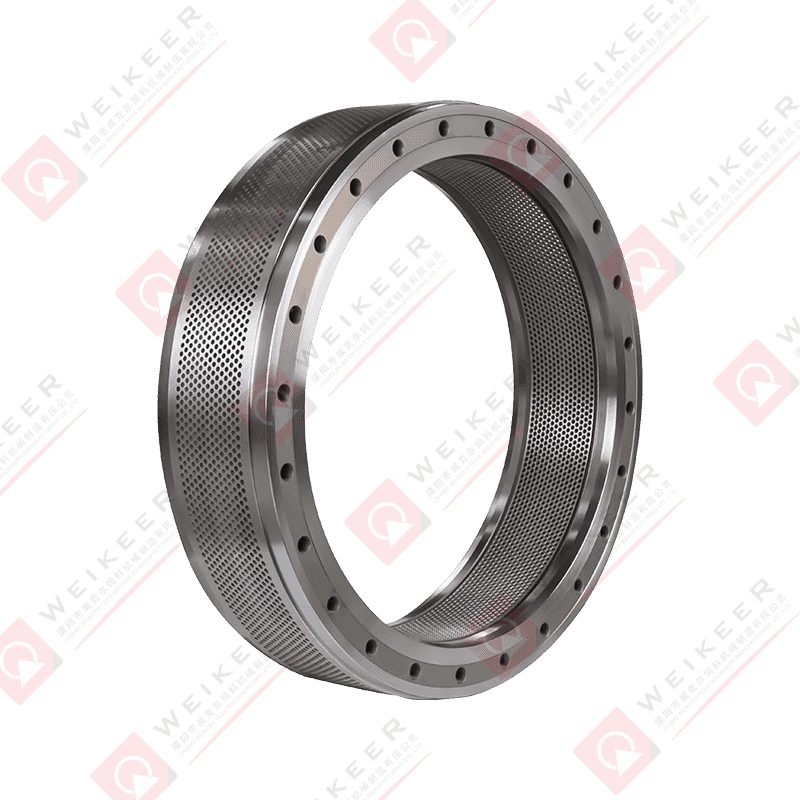
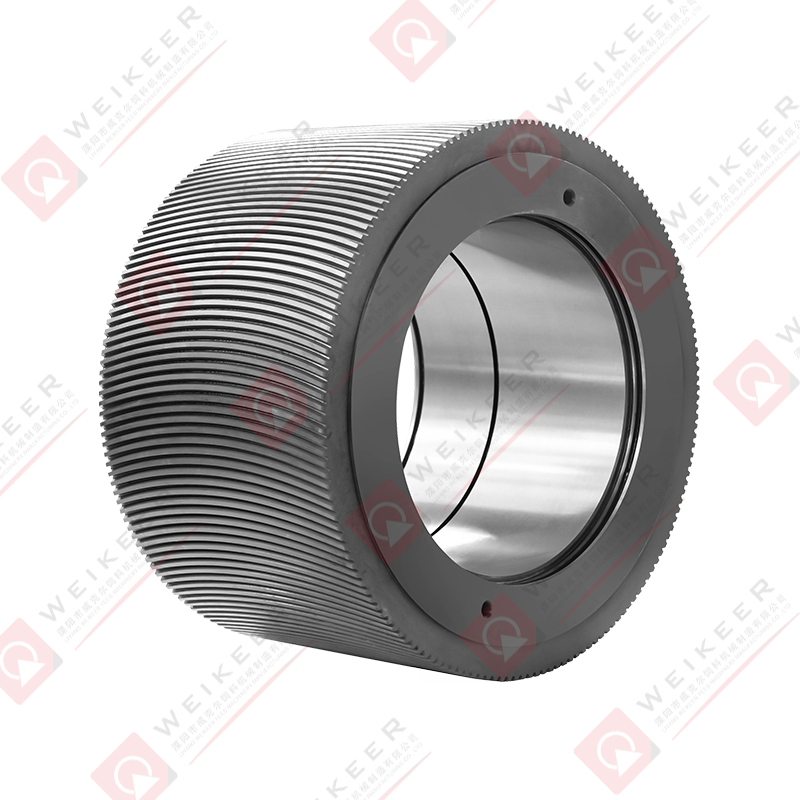
Choosing a supplier of 100Cr6 diagonal groove pellet rollers is a decision that goes far beyond comparing prices. The roller sits at the heart of the pelletizing process, and its material, heat treatment, and surface geometry directly affect throughput, die life, and final pellet quality. In this guide, we share the practical knowledge we have gained as a manufacturer of pellet mill rollers and ring dies since 1996, so you can evaluate potential suppliers with confidence.
What Is a 100Cr6 Diagonal Groove Pellet Roller?
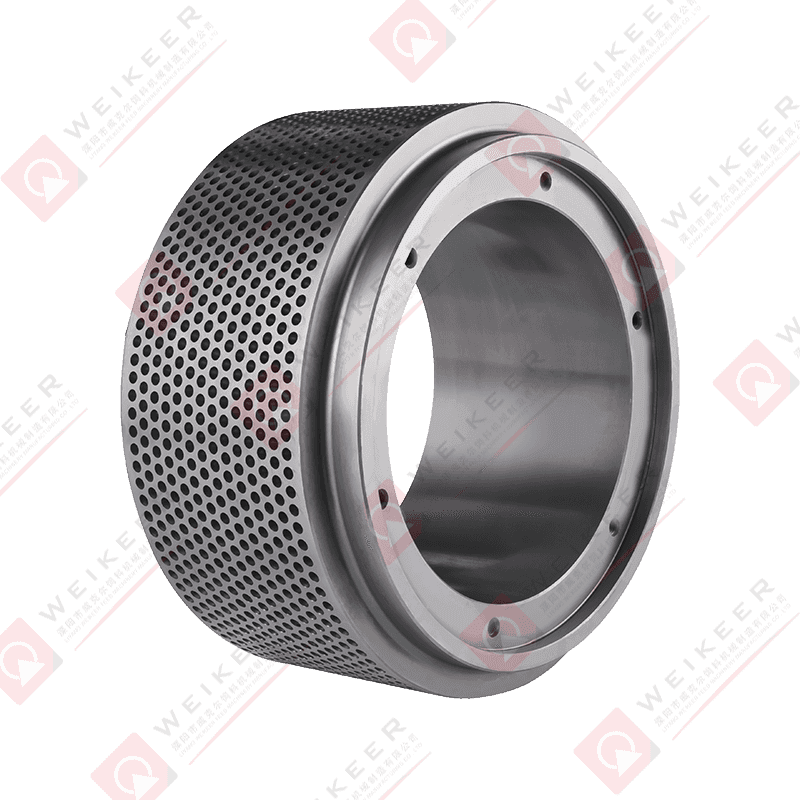
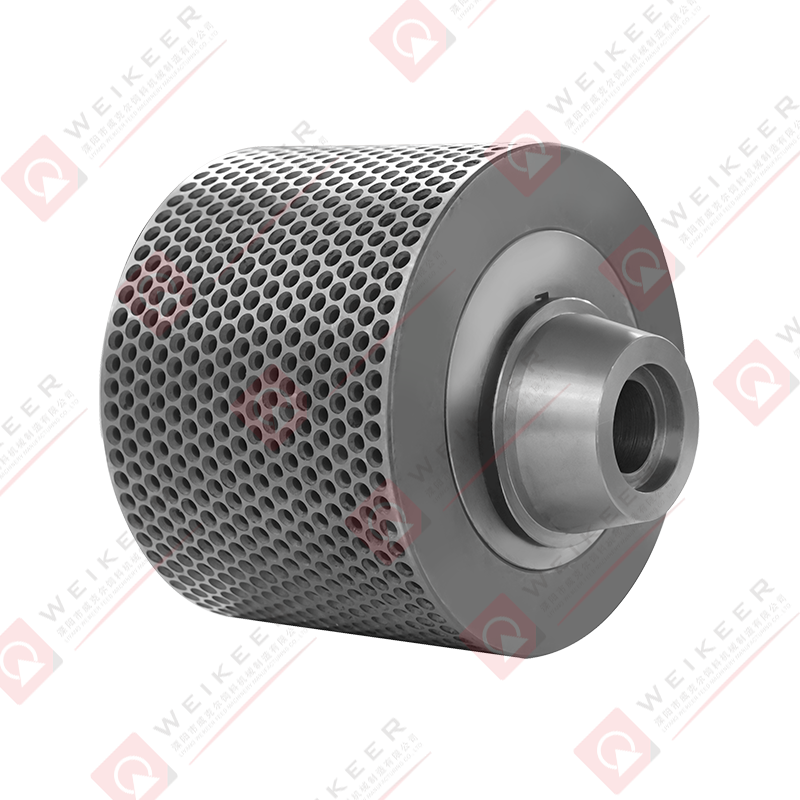
A pellet roller, also called a press roller, is the cylindrical component that presses raw material against the inner wall of a rotating ring die. The material is forced through the die holes and emerges as dense, uniform pellets. Because this happens under high pressure and continuous friction, the roller is a wear part that must be replaced regularly.
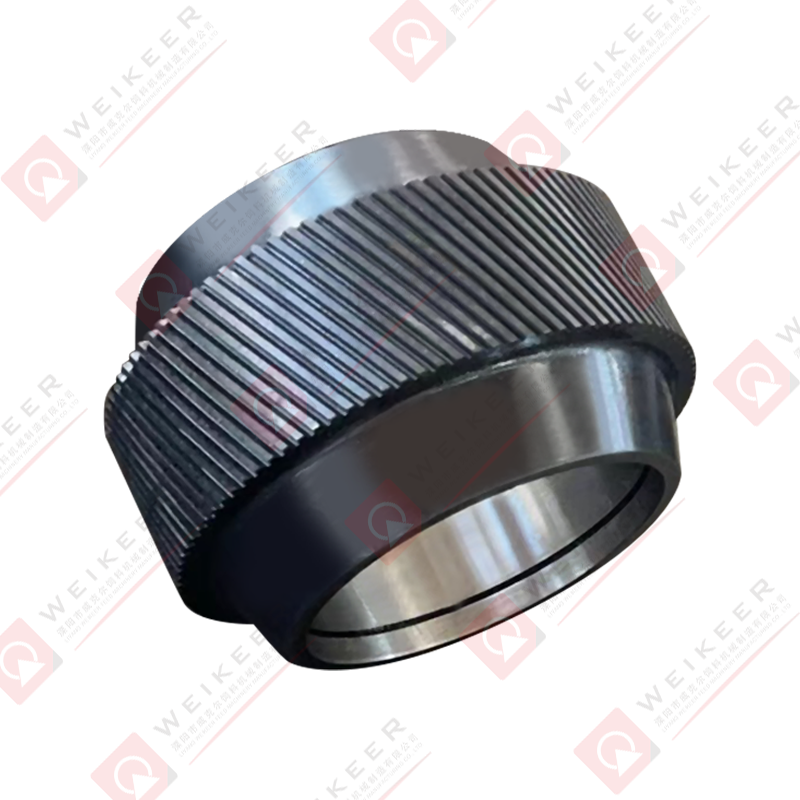
100Cr6 is a high-carbon chromium steel. In our production system, we treat it as a spring steel grade because of its strong fatigue resistance and its ability to retain a hard, wear-resistant working surface after heat treatment. The hardness layer formed during quenching gives the roller its durability, while the toughness of the base material protects it from impact and shock loads during operation.
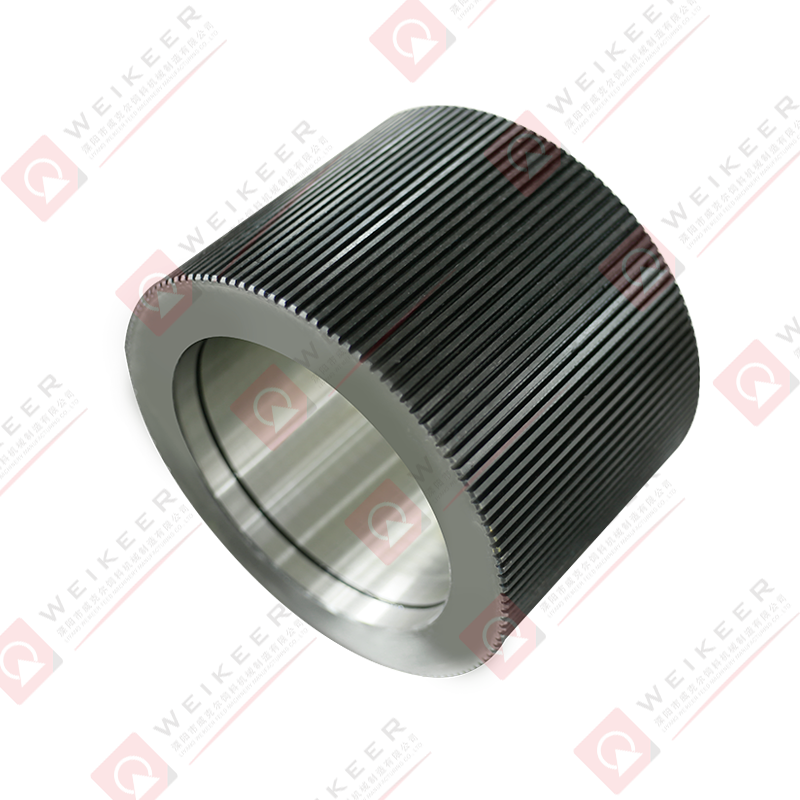
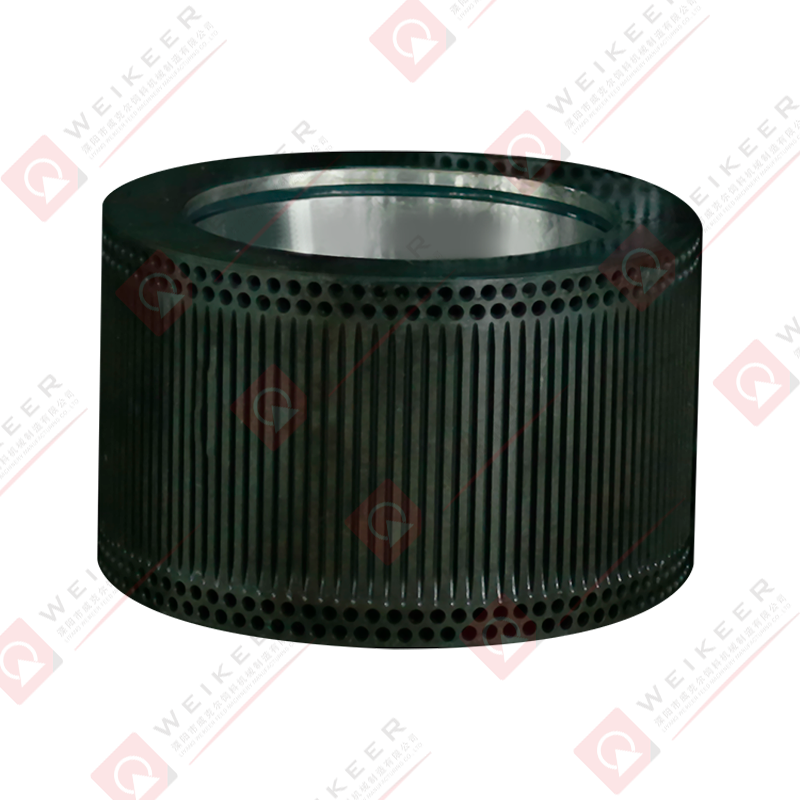
The diagonal groove refers to the channels machined across the roller face at a precise angle. This angled surface improves the grip on the raw material, reduces slippage between the roller and the ring die, and helps maintain an even flow of material into the die holes. For many feed and biomass producers, the diagonal groove pattern is the first choice because it performs consistently across a wide range of moisture and fiber levels.
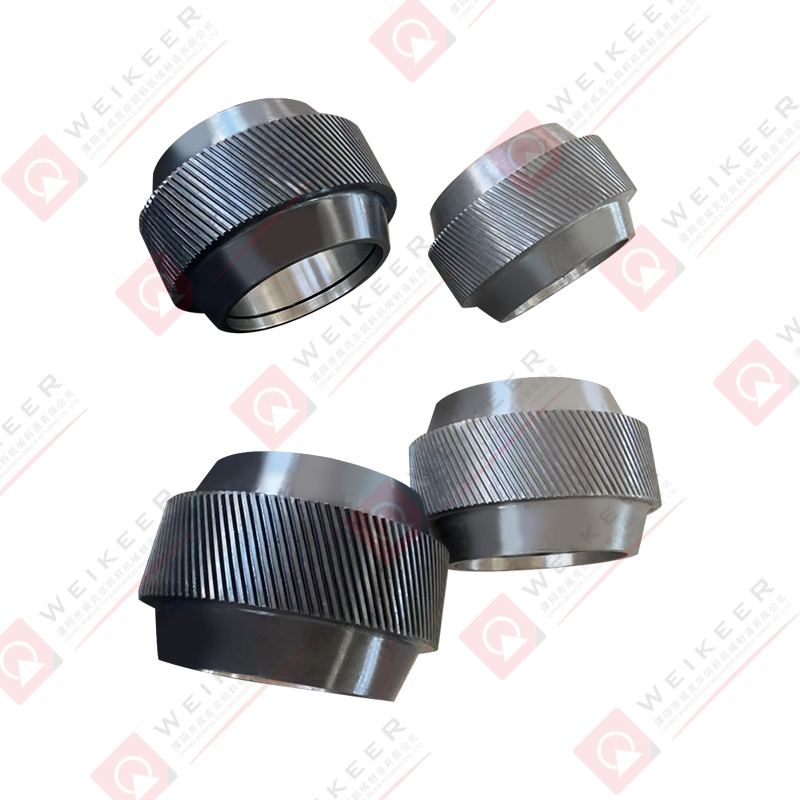 100Cr6 Diagonal Groove Pellet Roller for Feed and BiomassThis roller uses a diagonal groove pattern to reduce slippage and maintain even material flow. Made from spring steel, it suits demanding feed and biomass operations with varying moisture and fiber levels.View Product →
How Diagonal Groove Compares with Other Roller Surface Patterns
Roller surface design is an engineering decision, not a cosmetic detail. The correct pattern improves pressing efficiency, reduces energy use, and prolongs the service life of both the roller and the ring die.
Common press roller surface patterns and their typical applications
| Roller surface pattern |
Main characteristic |
Typical application |
| Diagonal groove |
Angled channels provide secure grip and even material intake |
Feed and biomass pellets with variable moisture and fiber levels |
| Curved corrugation |
Smoother profile with moderate grip and gentle compression |
Products sensitive to over-compression |
| Closed corrugation and dimpled |
Combination of raised and recessed features for aggressive grip |
High-wear conditions and hard-to-pellet materials |
| Dimpled |
Recessed pockets reduce contact pressure |
Low-density and fibrous raw materials |
In practice, the choice of surface pattern is often dictated by the formulation. If the material is coarse, fibrous, or prone to sliding, diagonal groove rollers usually deliver steadier performance. If the material is soft and compressible, a gentler pattern may be preferable.
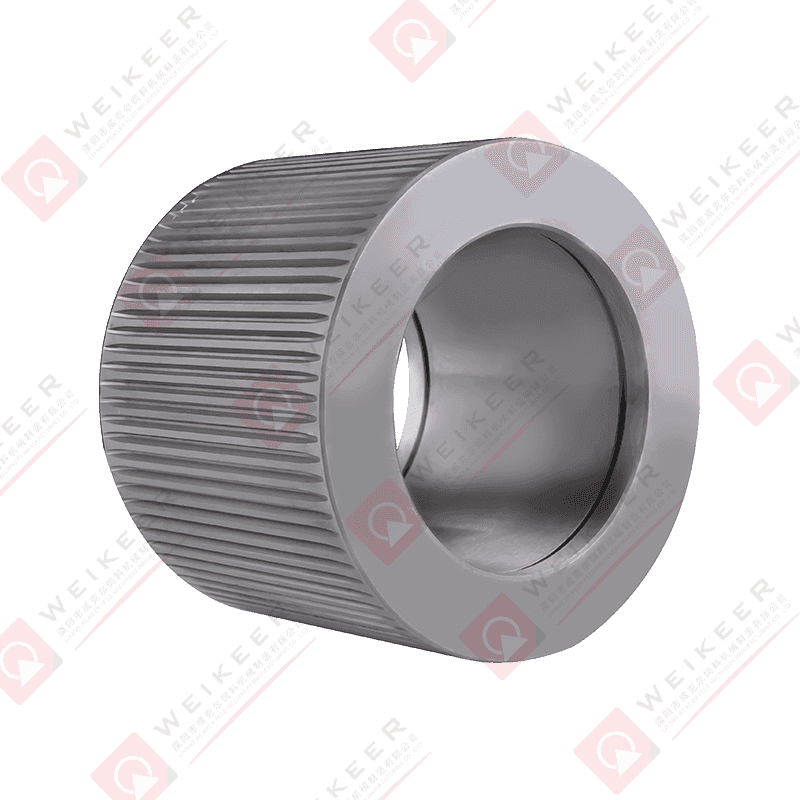
Material grade also matters. For operations that want the same diagonal groove geometry but need the highest possible surface hardness, we also produce diagonal groove rollers in GCr15 bearing steel. GCr15 offers a slightly different balance of hardness and wear performance, and the right choice depends on your equipment, formula, and target output.
Diagonal Groove GCr15 Bearing Steel Pellet RollerThis roller combines diagonal groove geometry with GCr15 bearing steel for high surface hardness and wear performance. It offers an alternative balance of strength and durability for demanding pelletizing conditions.View Product →
Manufacturing and Heat Treatment: Where Quality Is Decided
The performance of a 100Cr6 diagonal groove pellet roller is determined more by process control than by the raw material alone. Heat treatment, in particular, decides whether the roller will withstand sustained load or fail early.
Our heat treatment line is built around HZQL equipment, which gives us precise control over quenching and tempering temperatures. After heat treatment, the roller reaches the specified hardness while retaining enough toughness for daily operation. Tempering also helps release internal stress that accumulates during quenching. As we explained in an earlier technical review of residual stress release in GCr15 diagonal groove rollers, the same metallurgical principles apply when we process 100Cr6 components.
Once heat treatment is complete, the diagonal grooves are machined on CNC equipment to ensure consistent depth, angle, and pitch. Small variations in groove geometry create vibration, accelerate die wear, and lead to uneven pellet quality. That is why we measure every finished roller carefully and keep machining parameters under strict control.
What to Look for in a 100Cr6 Diagonal Groove Pellet Roller Supplier
Not every supplier has the same level of control over the production process. When you evaluate a potential partner, we suggest focusing on four areas:
- Material traceability. Ask whether the 100Cr6 steel is sourced from reputable mills and whether material certificates are available.
- Heat treatment capacity. In-house heat treatment allows tighter control and more consistent results than outsourcing this critical step.
- Machining precision. CNC equipment is a positive sign, but it is also worth asking how groove geometry is checked and recorded.
- Application experience. A supplier with hands-on knowledge of different feed ingredients and pelletizing conditions can help you select the right material and surface pattern.
After-sales support is another important factor. A reliable supplier is willing to discuss your raw materials, recommend a specific roller configuration, and follow up after the roller is installed to confirm performance.
Our Experience as a 100Cr6 Diagonal Groove Pellet Roller Manufacturer
Weikeer (Liyang Weikeer Feed Machinery Manufacturing Co., Ltd.) has produced pellet mill dies, rollers, and related accessories since 1996. Our factory is located near Tianmu Lake in Liyang, China, with a production area of more than 7,000 square meters. The company employs over 100 people, including 26 technical specialists, and exports products to more than 200 countries and regions.
We have invested in a CNC HTT KH-4-100 ring die machining center and HZQL heat treatment equipment to strengthen our manufacturing capabilities. Our processes are constantly benchmarked against European standards, which helps us maintain a reputation for high quality, high efficiency, and low energy consumption.
When you order 100Cr6 diagonal groove pellet rollers from us, you are working directly with the manufacturer. That means fewer miscommunications, faster responses, and more room for custom specifications.
Pairing Your Roller with the Right Ring Die
A roller and a ring die work as a matched set. Even a precisely manufactured 100Cr6 diagonal groove roller cannot compensate for a worn or mismatched die. When contacting us, it is helpful to know the brand and model of your pellet mill, along with the die hole size and open area of your current setup.
We manufacture both anchor-type and screw-type stainless steel ring dies for aqua feed, livestock and poultry feed, complex fertilizer, cat litter, and biomass pellets. By matching the correct die with a high-quality roller, you can extend service life and lower your cost per ton of finished pellets.
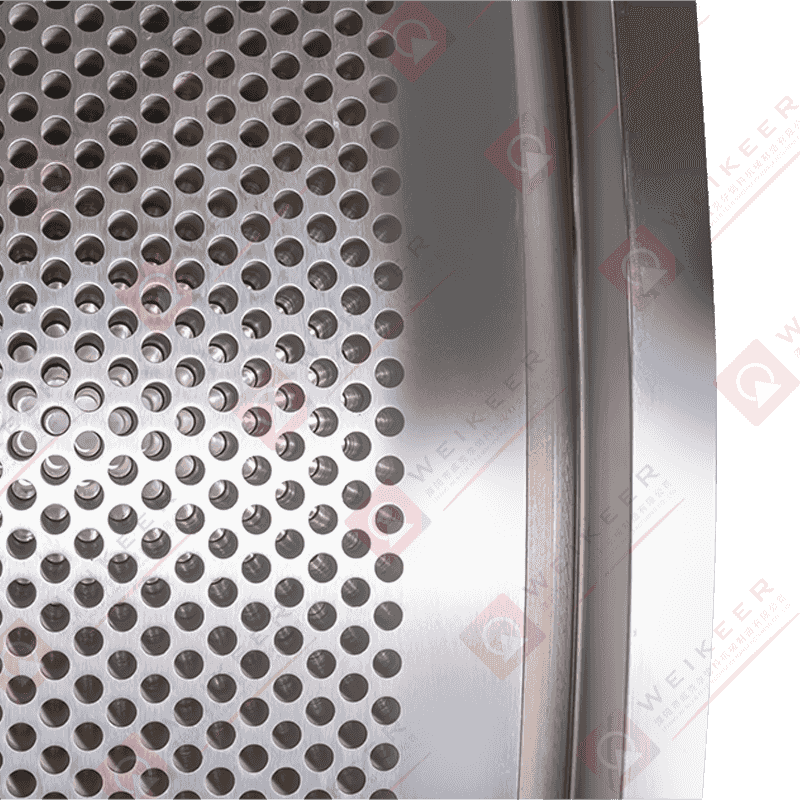 Livestock and Poultry Pellet Mill Anchor Ring DieThis stainless steel ring die produces consistent pellets for cattle, pigs, sheep, and poultry. It fits multiple mill models and is designed to maximize output while reducing energy consumption.View Product →
Selecting the right supplier of 100Cr6 diagonal groove pellet rollers comes down to technical capability, production discipline, and honest communication. Look beyond the brochure and ask about heat treatment, machining precision, material sourcing, and real application experience. If you would like to test our experience with your own formulation, contact the Weikeer team for a technical discussion or a quote.



 русский
 Español
 عربى
عربى 中文简体
中文简体