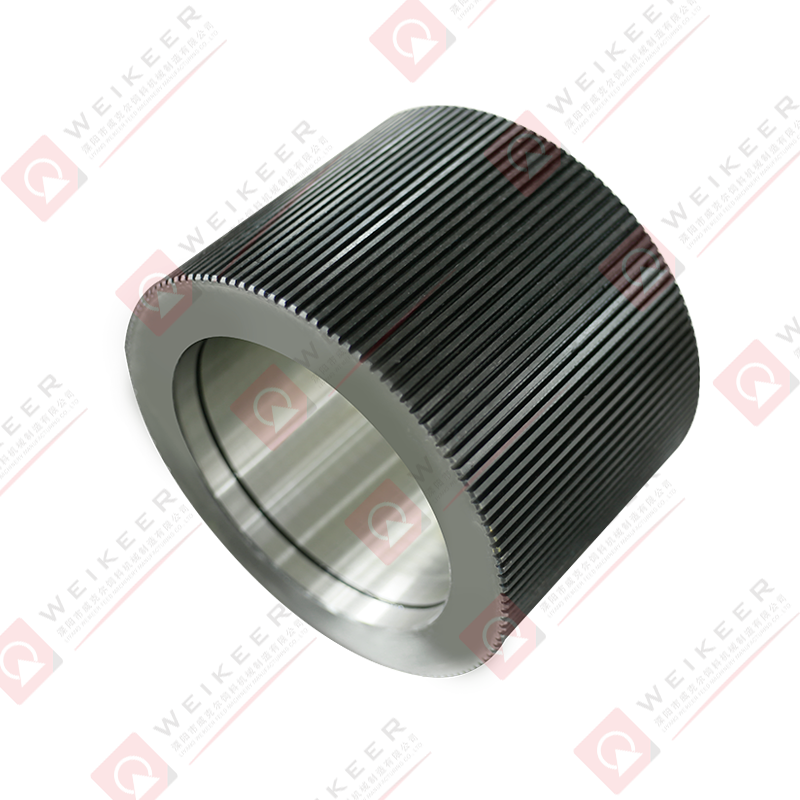
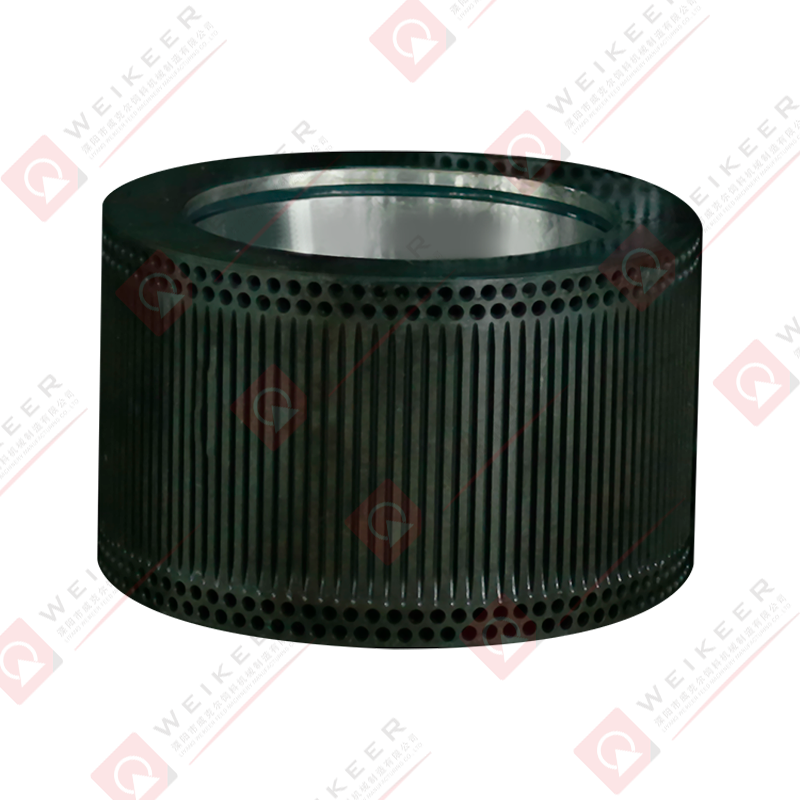
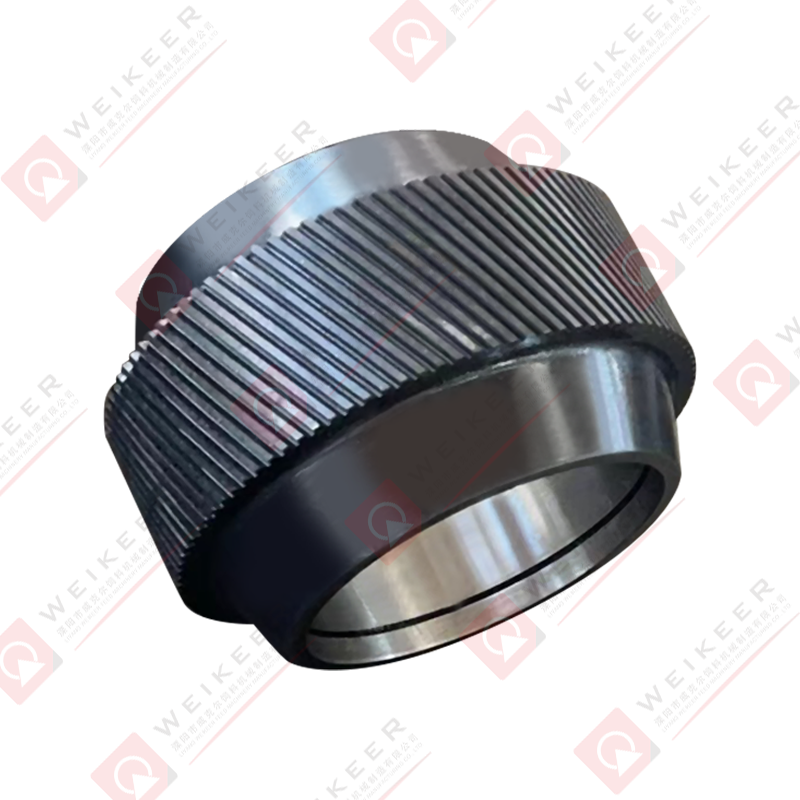
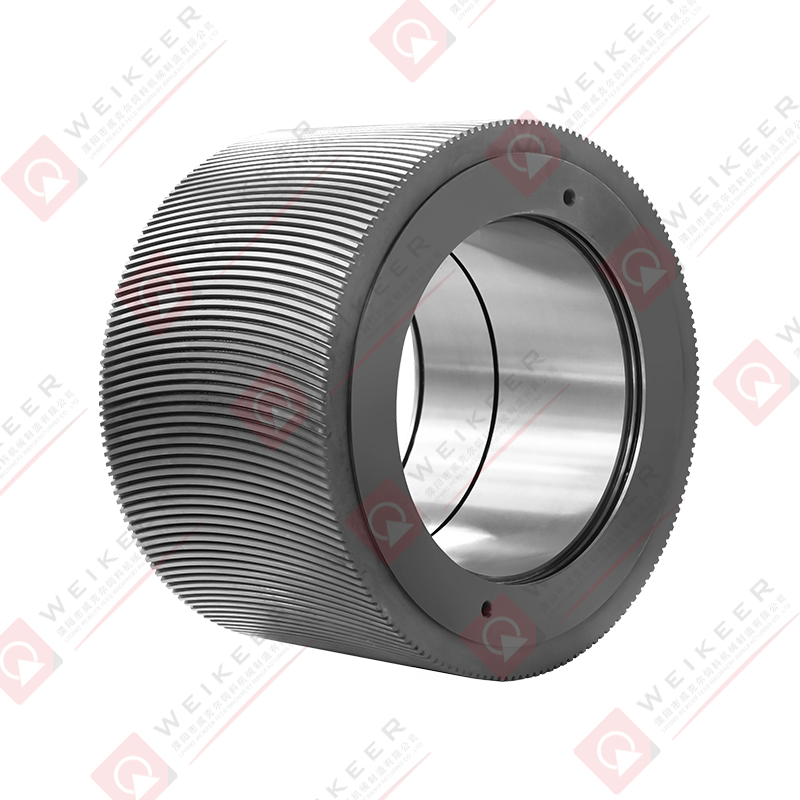
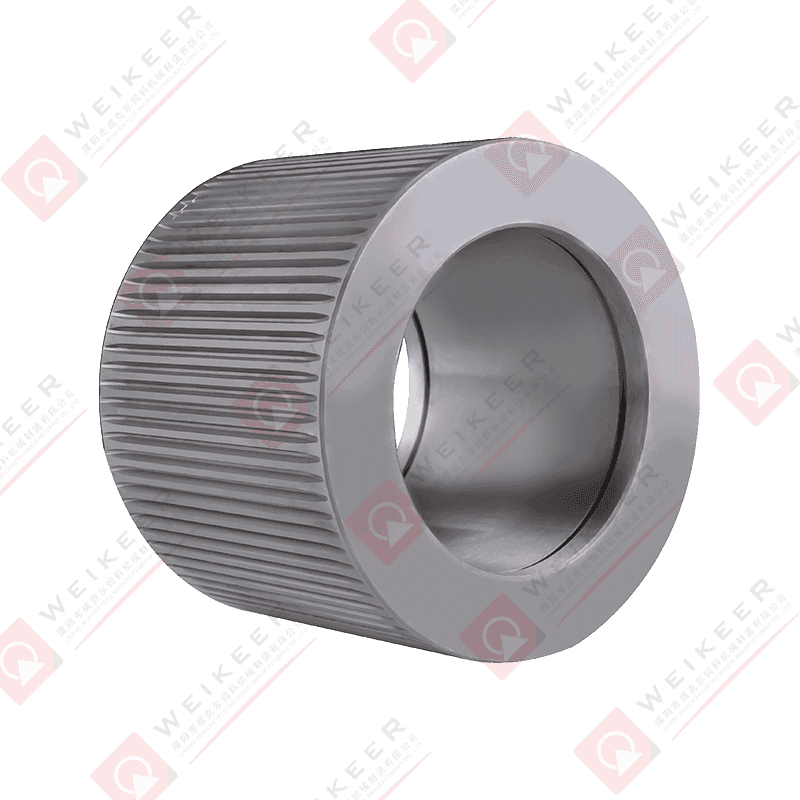
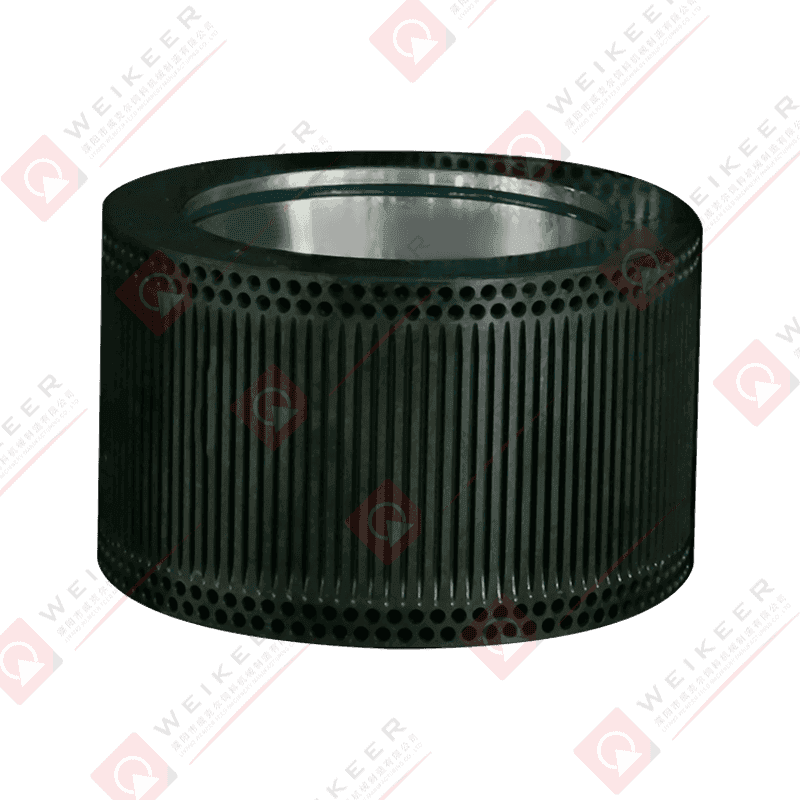
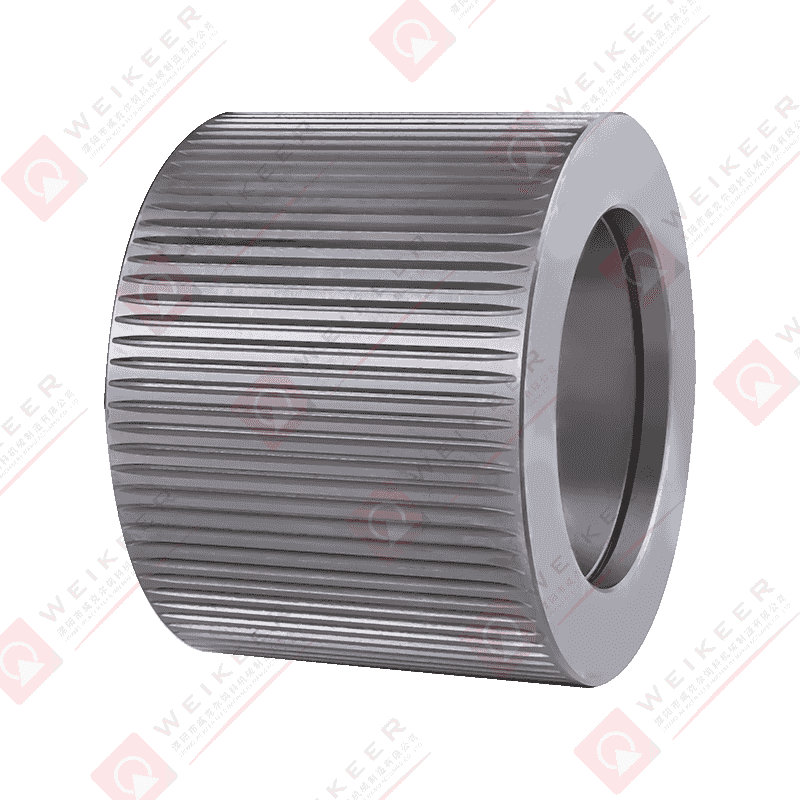
When a pellet mill roller cracks, pits, or simply wears out in less than three months, most production supervisors replace the part and keep moving. Few stop to ask why the previous roller failed so early. In feed, biomass, and fertilizer production, roller failure usually comes down to material grade and surface geometry. The 100Cr6 diagonal groove pellet roller is a frequent choice because it balances wear resistance with impact toughness, while the diagonal groove layout actively grips the feed and reduces slip.
Liyang Weikeer Feed Machinery Manufacturing Co., Ltd. has been producing pellet mill dies and rollers since 1996. Its 100Cr6 diagonal groove pellet roller is a leading product in the company's spring steel roller line, designed for producers who need consistent compression across the die surface.
Why 100Cr6 diagonal groove pellet rollers are a reliable choice
100Cr6 is a high-carbon chromium spring steel commonly used for wear parts and tooling. After quenching and low-temperature tempering, the surface hardness typically reaches HRC 58–62, while the core retains enough ductility to absorb shock. This combination is critical inside a pellet mill, where rollers face repeated high-pressure contact with the die. Compared with 20CrMnTi or GCr15, 100Cr6 offers higher elastic limits and better resistance to fatigue spalling.
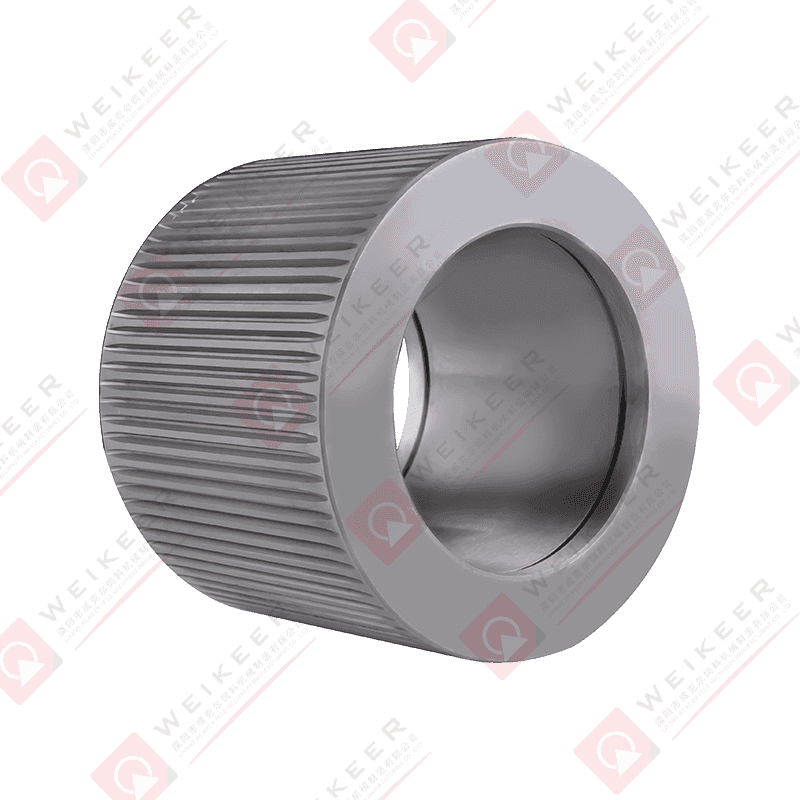
The diagonal groove pattern adds another layer of reliability. Because the grooves run at an angle, material is pulled into the rolling gap more smoothly. Unlike lateral corrugation, which creates a single contact band, diagonal grooves distribute pressure across a wider area. Many feed mills report steadier amperage and fewer flow variations after switching to this geometry.
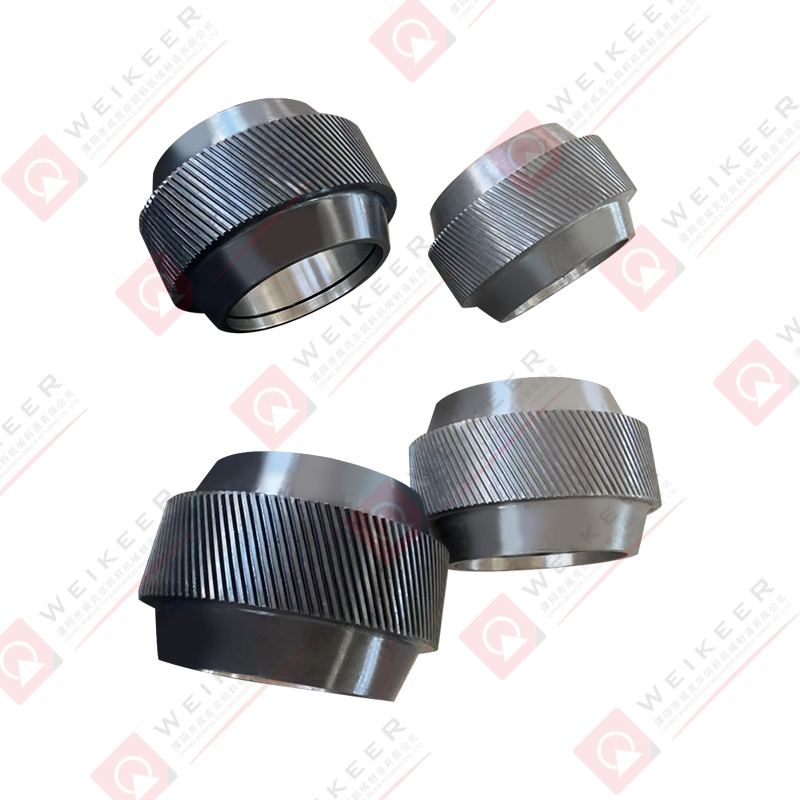 100Cr6 Diagonal Groove Pellet Roller for Stable Material FlowThis 100Cr6 steel roller features diagonal grooves that distribute pressure evenly, reducing flow variations. It offers a more predictable option for high-fiber or variable-moisture operations compared to smooth or dimpled rollers.View Product →
For operations dealing with high-fiber ingredients or variable moisture, this makes the 100Cr6 diagonal groove roller a more predictable option than a standard smooth or dimpled roller.
How diagonal groove geometry affects pelletizing performance
Diagonal grooves change how the material meets the roller surface. The angle of the groove determines how forcefully material is pulled into the nip area. If the groove approaches the axial direction, material tends to be pushed flat. If it approaches the circumferential direction, the grabbing force drops too early. A well-designed diagonal angle feeds material toward the die holes at a steady rate, which improves particle density and surface appearance.
Groove depth also needs to adapt to the raw material. For aqua feed, which contains starch and fine particles, a shallower groove with moderate friction works best. For wood or straw biomass pellets, the material is fibrous and springy, so deeper diagonal grooves keep the feed stable. These parameters are not universal; a factory should recommend the geometry based on your actual feed recipe. You can read more about this in our article on optimizing press roller design.
How roller and die mating affects service life
The roller is not an independent component. Its performance depends on proper clearance with the ring die. If the gap is too small, friction heat climbs, which can damage the bearing or soften the groove surface. If the gap is too large, the material layer becomes thick and the roller skids, lowering output. A practical starting point is to adjust the clearance based on the die hole diameter and the particle size, usually within a few tenths of a millimeter.
Another issue that often goes unnoticed is whether the roller and die contact line is uniform. If the roller axis is not parallel to the die bore, only one end of the roller touches the die. This concentrates wear on a small area and shortens the roller's life. That is why a manufacturer with CNC machining capability matters more than a lower price tag.
Key manufacturing steps for a 100Cr6 diagonal groove pellet roller
Turning a 100Cr6 blank into a finished diagonal groove roller requires several controlled steps. Rough turning is followed by heat treatment. In quenching, the heating rate and holding time must be carefully managed to avoid decarburization and overheating. The tempering temperature then sets the final balance of hardness and toughness. Under-tempering leads to brittle surfaces; over-tempering reduces hardness and wear resistance.
After heat treatment, the roller goes through grinding and groove machining. A CNC machine such as the HTT KH-4-100 allows the groove depth, pitch, and angle to be held within tight tolerances. Then come surface treatment and final inspection, which typically cover hardness, roundness, dynamic balance, and visual quality. Any drift in these steps will appear as poor roller performance on the production floor.
What to look for when selecting a roller factory
For maintenance managers and purchasing staff, evaluating a roller factory comes down to a few practical questions:
- Can the factory provide a material certificate and hardness report for the 100Cr6 grade?
- How are groove tolerances measured? Does the factory use a CMM or dedicated gauges?
- Does the factory accept small-batch custom orders or machining from drawings?
- What is the typical lead time, and does the factory run its own heat treatment?
- Can the factory supply dimension drawings for multiple press mill mounting configurations?
These details separate a component supplier from a solution provider. Liyang Weikeer has more than 300 employees, fixed assets above CNY 30 million, and export experience covering over 200 countries, which indicates the capacity to handle batch orders and varied standards.
You can begin by reviewing the full line of 100Cr6 spring steel rollers to understand the available surface options.
How to guarantee compatibility with your existing pellet mill
Not all pellet mill rollers share the same mounting structure. Shaft diameter, bearing housing width, and locking method are the critical dimensions that determine whether a roller can be installed directly. For common pellet mill brands, Weikeer has existing tooling and drawings, but the exact model and batch still need to be confirmed. For non-standard equipment, the factory can measure a sample and create a machining drawing. As long as you provide the old roller or a 2D drawing, production can begin.
When requesting a quote, it helps to include the pellet mill model, die inner diameter, roller outer diameter and width, bearing size, and a photo of the current roller face. This gives the factory the information it needs to avoid dimensional errors that can cause vibration or misalignment.
Typical applications and maintenance recommendations
The 100Cr6 diagonal groove roller performs best in the following situations:
- Biomass pellet lines using corn straw, husk, or other high-fiber materials.
- Poultry and livestock feed production where particle size consistency matters.
- Organic fertilizer or fermented material forming with fluctuating moisture.
- High-output compound fertilizer granulation where downtime is costly.
In terms of maintenance, remove and clean the roller every time you change the die. Check the groove surface for signs of metal fatigue. If grooves appear shallow or hairline cracks develop, replace the roller before it fails completely. Also, lubricate the roller bearings on a regular schedule. Insufficient lubrication causes shaft wear and uneven roller rotation.
Going back to the original problem: a short roller life is rarely a matter of bad luck. It is usually a mismatch between material, design, and application conditions. The 100Cr6 diagonal groove roller offers a balanced way forward because it combines a high elastic limit with a groove geometry that actively handles the material. To realize that potential, the roller must come from a factory that controls every stage, from heat treatment to final inspection. Liyang Weikeer Feed Machinery Manufacturing Co., Ltd. is set up for exactly that need.



 русский
 Español
 عربى
عربى 中文简体
中文简体