A biomass pellets die is where an entire production line either finds its rhythm or loses it. Sawdust, straw, rice husk, or wood chips go in as loose material and come out as dense, uniform pellets, and almost all of that transformation happens inside a few centimetres of hardened steel. If you run a pellet plant, the die is the part you think about most, because it governs output, power draw, pellet quality, and how often your team has to stop and re-tool.
We have been manufacturing ring dies and press rollers at our works near Tianmu Lake since 1996, and the questions customers bring us have barely changed in that time: which die, which compression ratio, and how do I make the thing last longer. This article pulls those answers together in one place.
What a Biomass Pellets Die Really Does
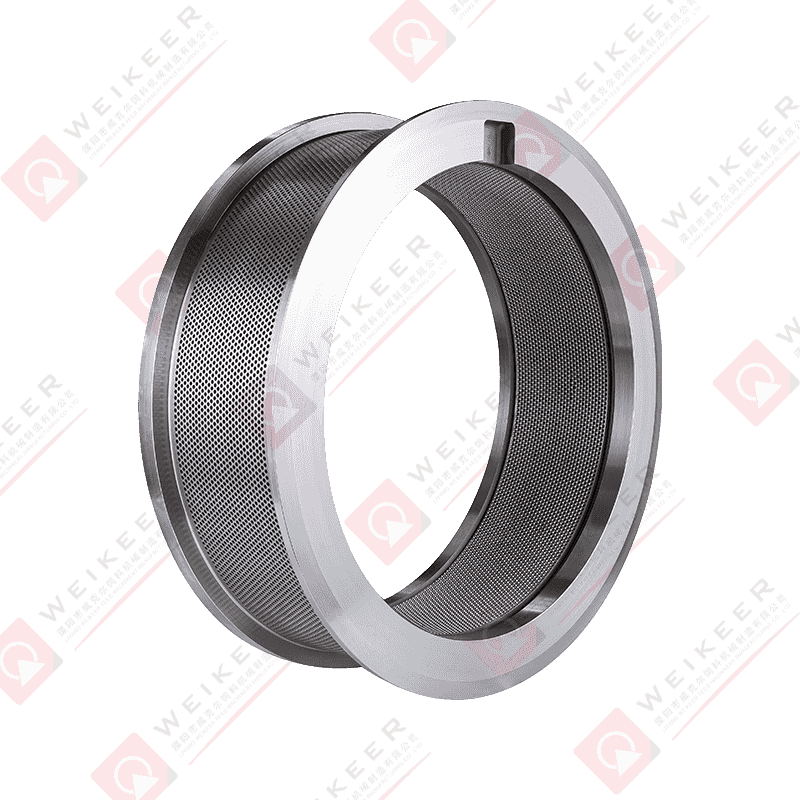
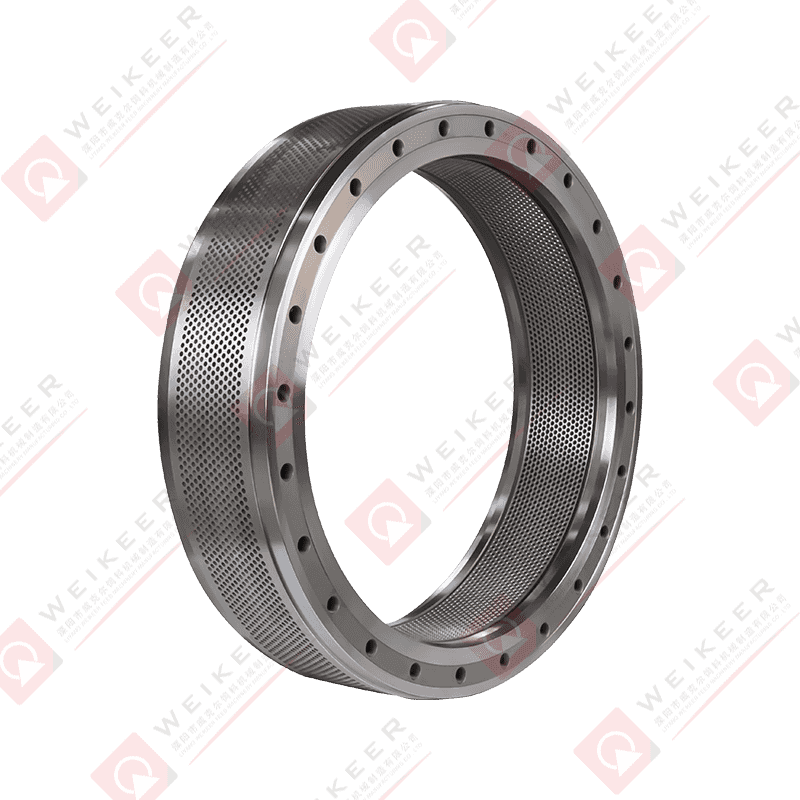
A ring die is a thick, forged steel ring drilled with hundreds of radial holes, each one a tapered inlet followed by a straight channel. Two or three rollers ride inside the ring, held against the inner surface. As the die rotates, material is dragged into the gap between roller and die wall and forced outward through the holes.
The channel is the clever part. Because it is longer than the hole is wide, it acts as a brake, building back pressure and generating friction heat. That heat softens the lignin naturally present in wood and plant fibre, letting the particles bind without any added glue. The pellet then emerges from the outer face of the ring, where fixed knives cut it to length.
Everything downstream follows from this: a die with the wrong channel geometry will either refuse to compress the material or compress it so hard that the mill stalls, the pellets scorch, or the ring cracks under load.
Ring Die or Flat Die: Choosing the Right Shape for Your Line
The two families behave quite differently, and neither is universally better. The table below summarises the practical differences we see in the field.
Output figures are general industry ranges; real capacity depends on material, moisture, die open area, and installed power.
| Feature |
Ring die mill |
Flat die mill |
| Typical output |
Around 800 kg/h to 20 t/h |
Around 300 kg/h to 3 t/h |
| Die orientation |
Vertical ring, rollers inside |
Horizontal disc, rollers on top |
| Pellet consistency |
Even pressure around the full ring |
Good at small scale, more variation |
| Die change |
Heavier, usually needs lifting gear |
Light and quick |
| Usual fit |
Industrial biomass and feed plants |
Farms, workshops, pilot lines |
For commercial biomass production, the ring die dominates for a simple reason: the larger die circumference gives more open area and a longer, more stable compression zone, which is what high tonnage demands.
The Three Numbers Behind Pellet Quality
When a customer tells us their pellets are crumbly, or the mill keeps tripping on overload, the answer is nearly always hiding in one of these three specifications.
Compression Ratio
Compression ratio is the effective channel length divided by the hole diameter. It is the single most important number on a biomass pellets die. Too low, and the material never builds enough pressure to bind, so you get soft, dusty pellets. Too high, and you get clogging, excessive amperage, and heat damage to both product and die.
Most wood pellet operations sit somewhere between 1:5 and 1:8. Softwood and light agricultural residues generally run at the lower end, while dense hardwood, rice husk, and high-ash blends need more resistance. There is no universal chart, because the right figure also depends on moisture, particle size, and how much conditioning the material receives before it reaches the die.
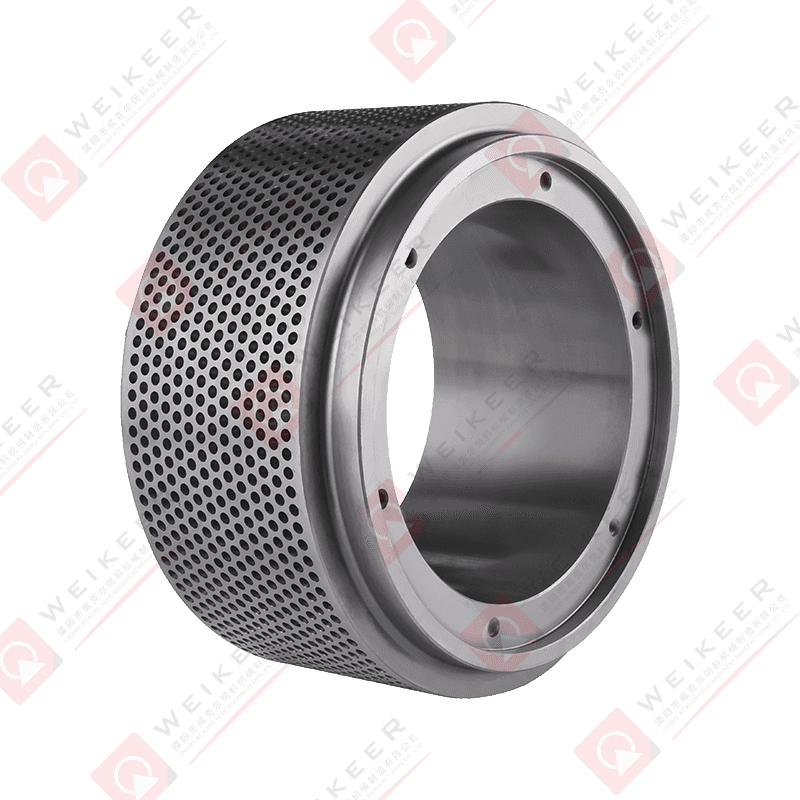
 Biomass Pellet Mill Screw-Type Stainless Steel Ring DieStainless steel screw-type ring die for biomass pelletizing, listed with compatible pellet mill models and presented as a custom die option.View Product →
Hole Size and Open Area
Fuel pellets are commonly produced with 6 mm to 8 mm holes; larger diameters raise capacity but reduce density and durability. Open area, the proportion of the ring surface that is actually hole, sets how freely material passes. More open area means more throughput, but it also means less steel and a weaker ring, so there is a real engineering trade-off rather than a simple "bigger is better" rule.
Steel Grade and Heat Treatment
Biomass is mildly acidic and often damp, so corrosion resistance matters as much as hardness. Stainless grades from the chromium steel family are the usual choice for wood and agricultural residues, paired with controlled heat treatment to produce a hard wear face without a brittle core. Our own dies are machined on CNC ring die equipment and hardened in dedicated heat treatment furnaces, which is how we hold hole geometry consistent from one ring to the next.
Why Biomass Wears Dies Faster Than Feed
Feed ingredients are relatively clean and consistent. Biomass is not. Wood chips carry sand and soil from the yard, straw and husk bring silica that grinds like fine sandpaper, and the whole mix arrives with moisture levels that vary from load to load. Add the organic acids released during heating, and you have an environment designed to attack steel.
The most common failure we see is not a dramatic crack but a gradual clogging of the channels, followed by overheating and a drop in output. If your pellets start coming out soft or the amperage creeps up, the die is telling you something. We have written a closer look at the causes in our article on why biomass pellets dies clog, which is worth reading before you order a replacement.
Stainless rings with a screw-type mounting arrangement have become popular with biomass producers because they resist this combination of abrasion and corrosion while staying simple to install and remove during a die change.
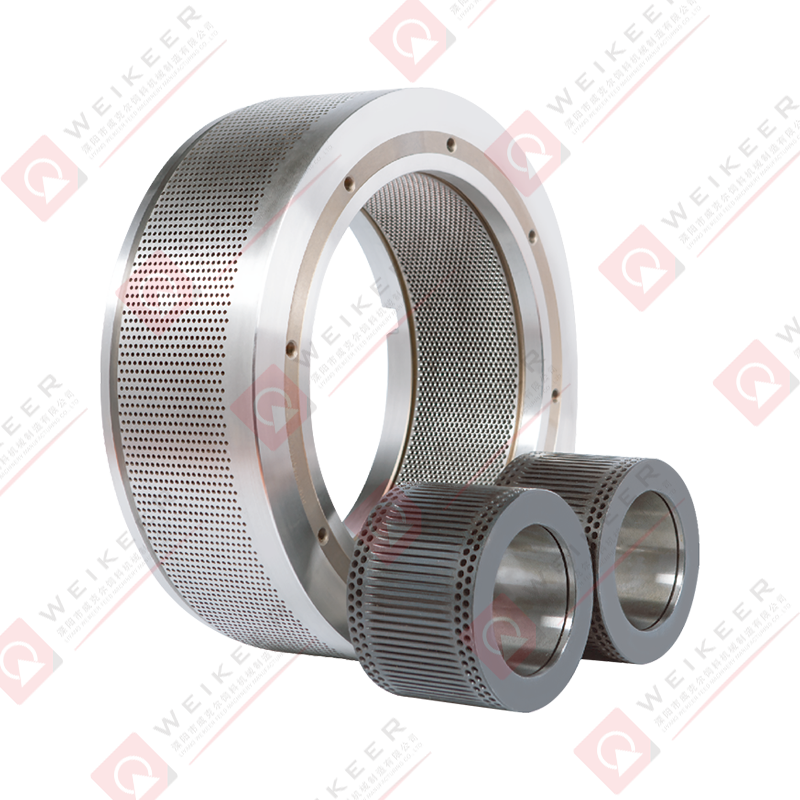 Screw-Type Stainless Steel Ring Dies for Feed and BiomassCategory of heat-treated X46Cr13 stainless ring dies for livestock, aqua feed, and biomass pelletizing, suited to abrasive and corrosive conditions.View Product →
Daily Habits That Add Months to Die Life
Most premature die failures we inspect are operational rather than metallurgical. A few habits, kept consistently, will extend service life more than any single upgrade.
- Check the roller-to-die gap every shift. Too wide and material slips; too tight and you load the mill for no gain.
- Keep the knives sharp and correctly set, so pellets are cut cleanly rather than torn.
- Hold raw material moisture in a stable band, usually around 12 to 15 percent for wood, and resist the temptation to push wet material through faster.
- Never run the mill empty. Dry metal-on-metal contact destroys a die surface quickly.
- Bed in a new die gradually, starting with softer or slightly oily material before moving to full production.
- Log hours, amperage, and output per die. Patterns become obvious fast, and you will replace on schedule rather than mid-order.
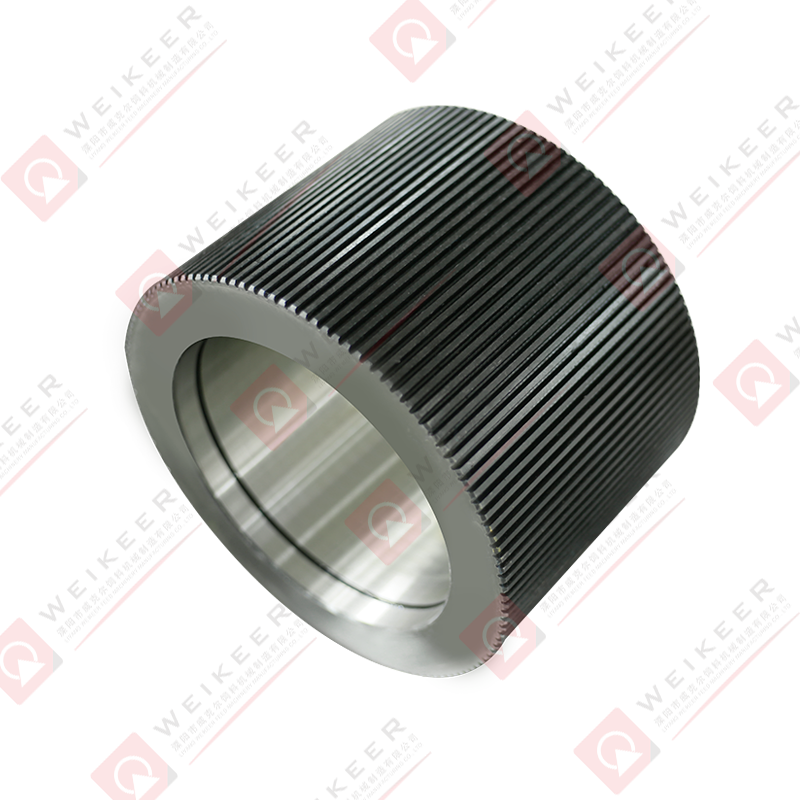
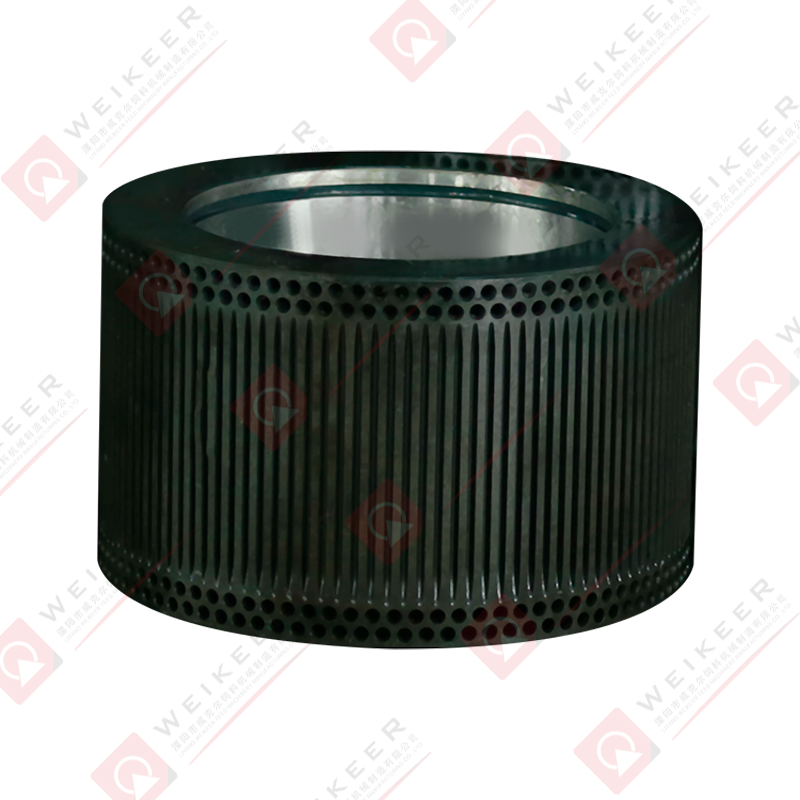
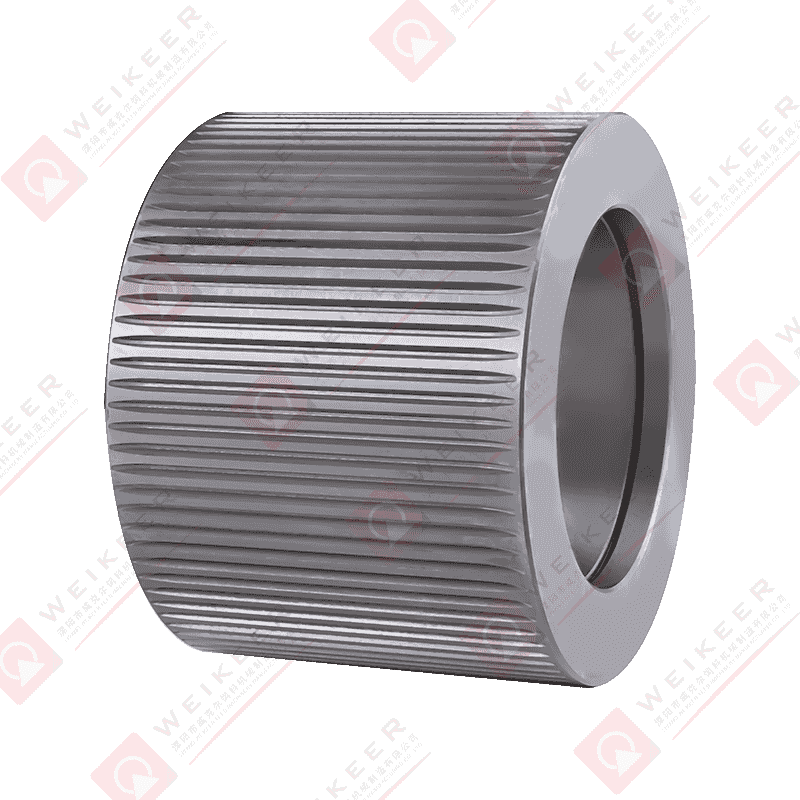
Rollers wear out faster than dies, and a worn roller will damage even a healthy ring. Keep a spare set on the shelf and inspect the shell surface for grooving whenever you open the chamber.
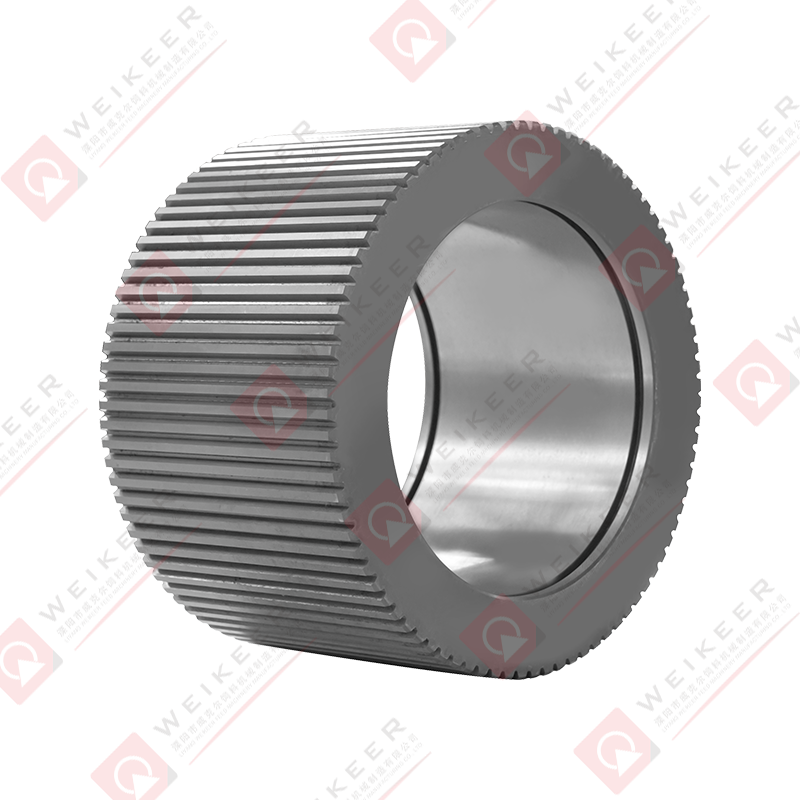
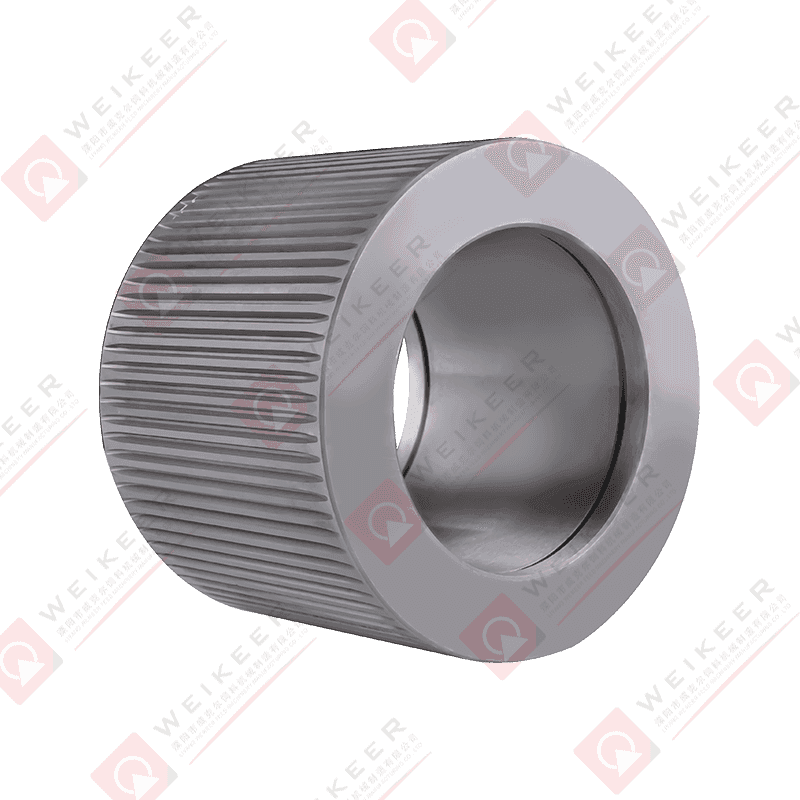
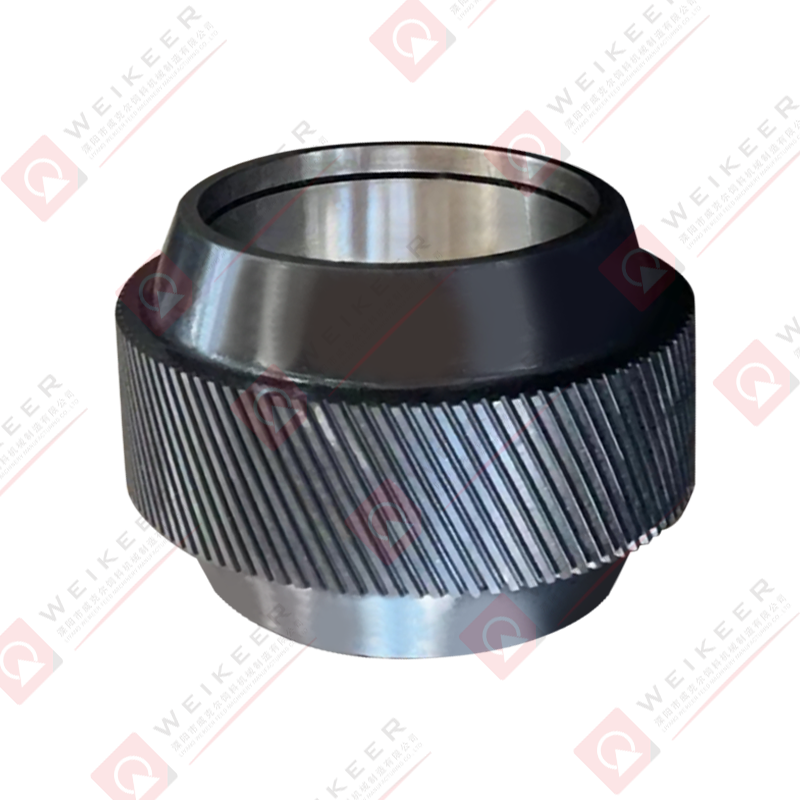
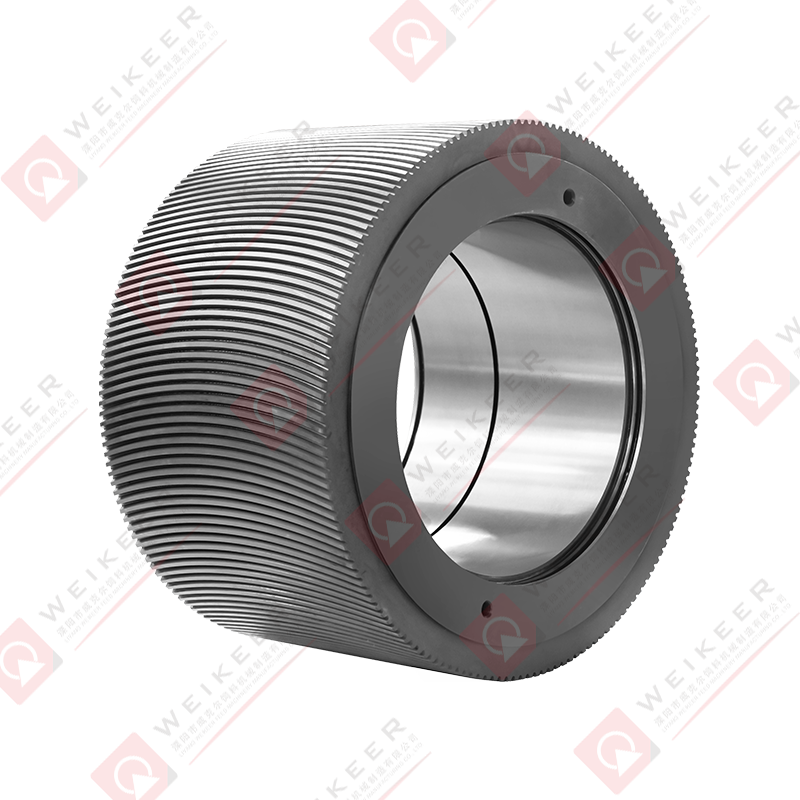
 20CrMnTi Pellet Mill Die Rollers and Press RollersCarburized 20CrMnTi press rollers in multiple surface patterns for feed pellet mills, presented as wear parts compatible with several machinery brands.View Product →
What to Tell Your Supplier Before Ordering
A die is not an off-the-shelf item, and the more your supplier knows, the closer the first ring will be to right. Bring these points to the conversation:
- The mill make, model, and die mounting type, plus the original die drawing or part number if you have it.
- Finished pellet diameter and the durability you need to hit.
- Your raw material mix, including the share of bark, husk, or high-ash residue.
- Typical moisture range and particle size after grinding.
- Target throughput and the installed motor power.
- The compression ratio currently in use, and exactly what is going wrong: soft pellets, clogging, cracking, or short life.
If you want to know who you are dealing with before you send a drawing, our company profile sets out our history, workshop, and the equipment we use to machine and heat treat every ring.
Biomass pelletizing rewards patience and precise parts. Get the compression ratio right for your material, keep the rollers in good condition, and treat the die as a wear item with a predictable life rather than a permanent fixture, and the line will run steadily for years. If you are unsure which specification suits your feedstock, send us the details and we will talk it through with you, the same way we have with producers around the world since 1996.



 русский
 Español
 عربى
 中文简体