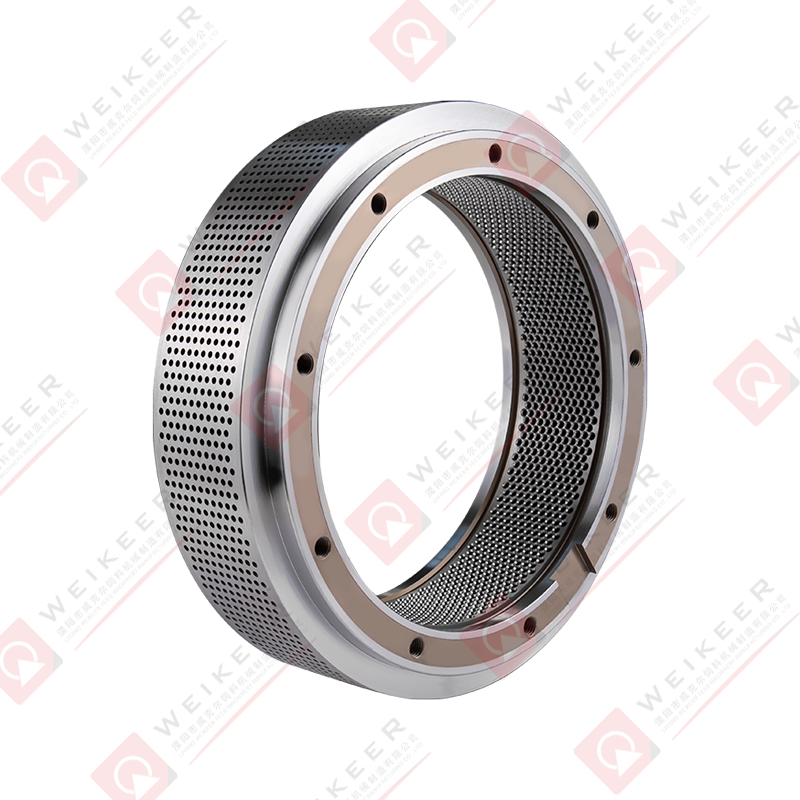
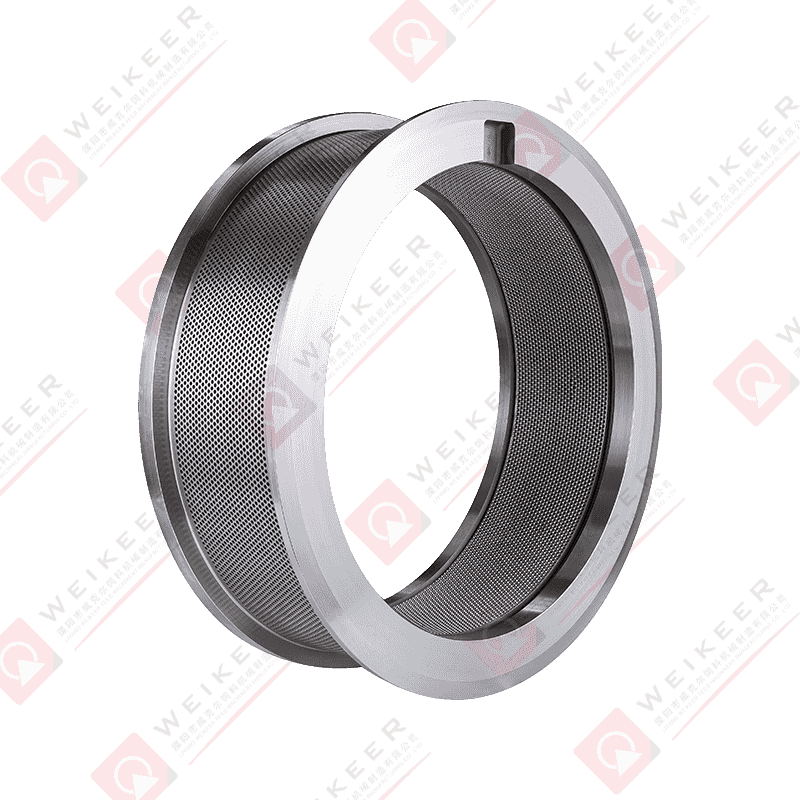
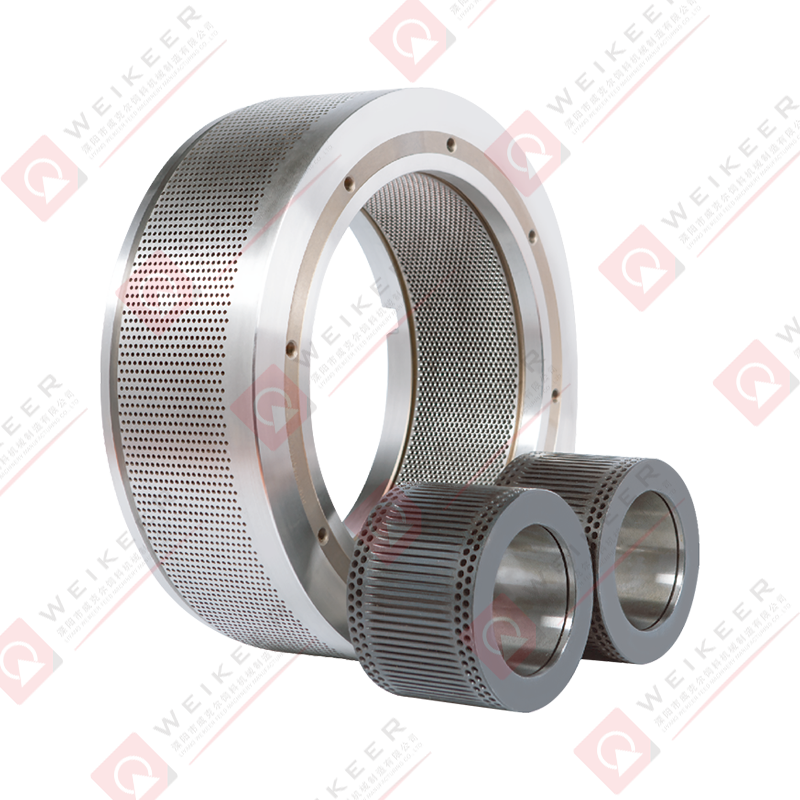
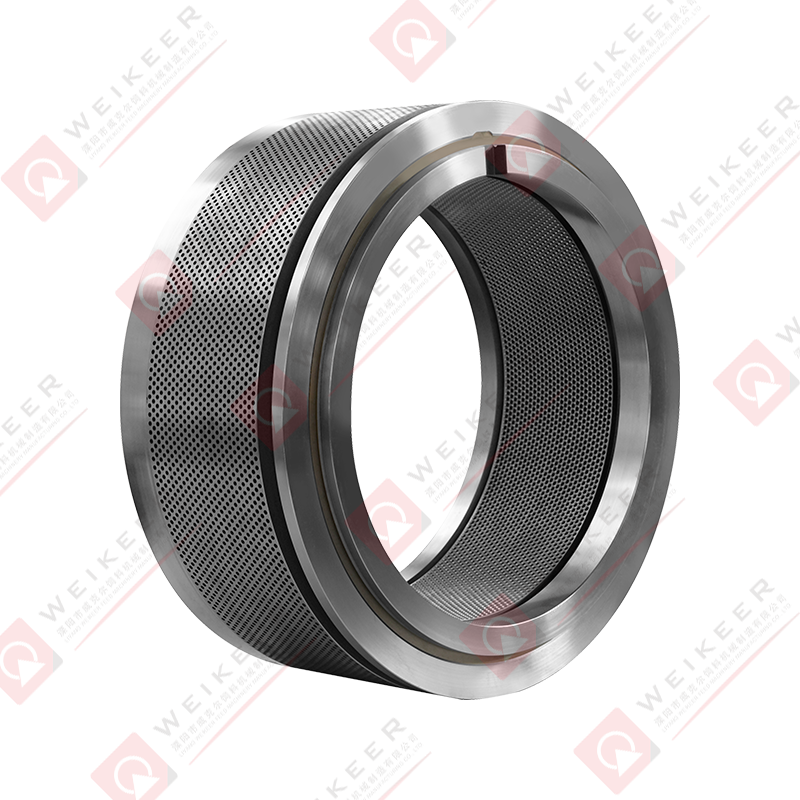
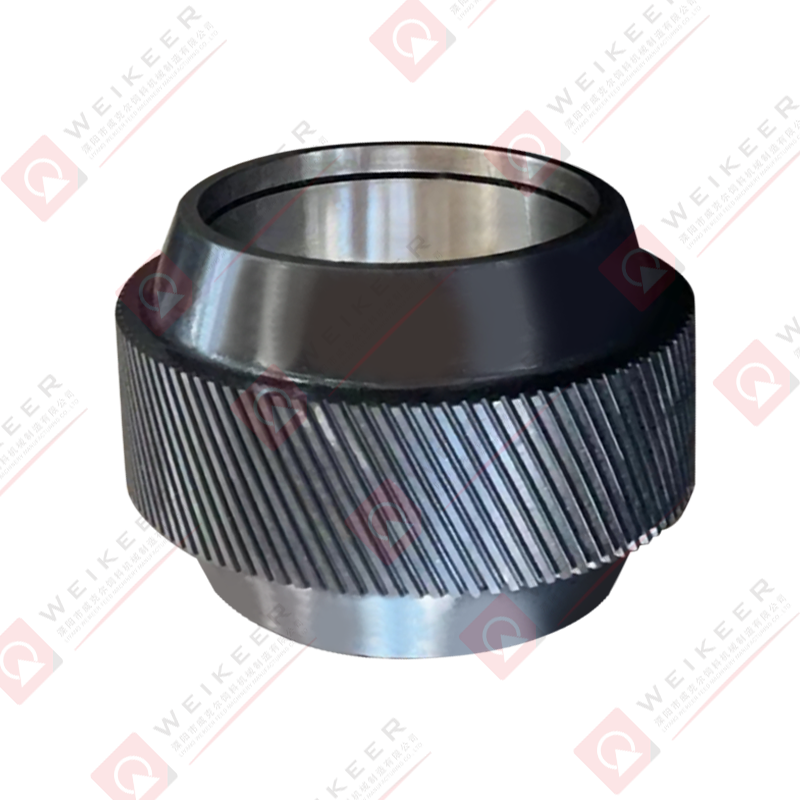
In a pellet mill, the ring die gets most of the attention. The roller shells do most of the quiet work. Every tonne of feed, biomass or litter that leaves the mill has passed through the gap between a die and two rotating shells, and that gap is where the real squeezing happens. When output slips or pellets start to crumble, worn roller shells are among the first things we check, and very often the cheapest thing to put right.
We have been making dies, rollers and the parts around them in Liyang since 1996, so what follows comes from the workbench rather than the brochure. Below is what we know about bearing steel GCr15 pellet mill roller shells: what the steel actually is, why it behaves the way it does, which shell profile suits which job, and how to tell when a set is finished.
What a Bearing Steel GCr15 Roller Shell Is
Inside the die, two roller assemblies are clamped to the press arms. Each one carries a shaft, bearings and a shell, sometimes called a roller cover or sleeve. The shell is the sacrificial part. Its corrugated face drags material into the nip and compresses it through the die holes, and when that corrugation wears flat you replace the shell, not the whole assembly.
GCr15 is a Chinese-standard high-carbon chromium bearing steel in the 52100 family, with roughly 1% carbon and 1.5% chromium. It is through-hardened, quenched and then tempered, and in a well-made roller shell the working surface usually lands somewhere between 60 and 62 HRC. A DIN/EN 100Cr6 shell sits in the same family and behaves in a very similar way. What really separates two shells on the table in front of you is steel cleanliness, the heat treatment recipe, and how carefully the corrugation is cut, hardened and finished.
Why Bearing Steel Handles the Pelleting Squeeze
The roller shell lives a hard life. The load is compressive, abrasive and repetitive: hundreds of thousands of passes against a die, with sand, minerals, fibre and hot steam along for the ride. Bearing steel earns its place for four practical reasons.
- Wear resistance: high carbon with fine chromium carbides gives a hard face that resists the slow polishing that eventually kills a shell.
- Load capacity: high hardness backed by reasonable core strength lets a relatively thin wall take the clamping force without collapsing.
- Dimensional stability: a through-hardened shell resists ovalising and peening, so the clearance you set on Monday is closer to the one you still have on Friday.
- Fatigue behaviour: rolling contact punishes the same surface again and again, and clean bearing-quality steel plus careful tempering postpones spalling.
One caution we repeat often: hardness is not a contest. Push a shell beyond what the heat treatment can support and it chips instead of wearing evenly. That is why we temper in controlled steps and grind after hardening, letting residual stress out of the part rather than locking it in. The differences between the three materials we work with most are summarised below.
Typical published hardness ranges for the three roller shell materials we produce. Real values depend on section size, steel source and the heat treatment recipe.
| Material |
Hardening route |
Typical surface hardness |
Where it earns its keep |
| Alloy steel 20CrMnTi |
Carburised case with tough core |
58-62 HRC at the case |
Shock loads, mixed duty, general toughness |
| Bearing steel GCr15 |
Through-hardened and tempered |
60-62 HRC |
Abrasive, high-tonnage feed and biomass work |
| Spring steel 100Cr6 |
Through-hardened and tempered |
59-62 HRC |
Close GCr15 equivalent, common in European mill specifications |
Roller Shell Profiles: Shape Follows the Feed
The corrugation is the working face, and its shape decides how material is gripped and released. We make GCr15 shells in six surface patterns, and each one has a job it does better than the rest.
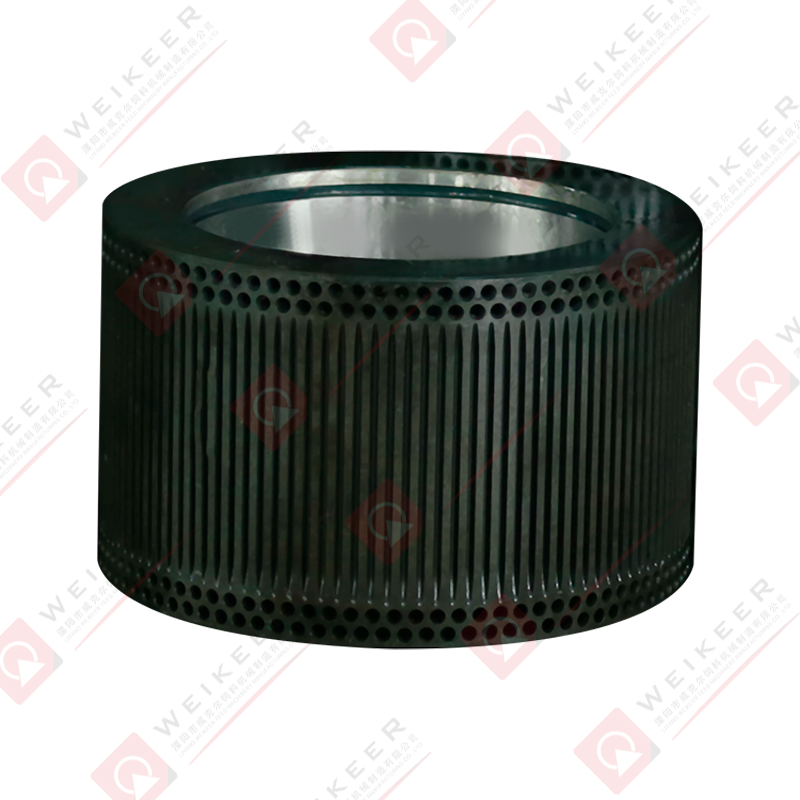
- Closed corrugation and dimpled: grip plus pockets, a strong all-rounder for dense rations and mixes that are hard to feed.
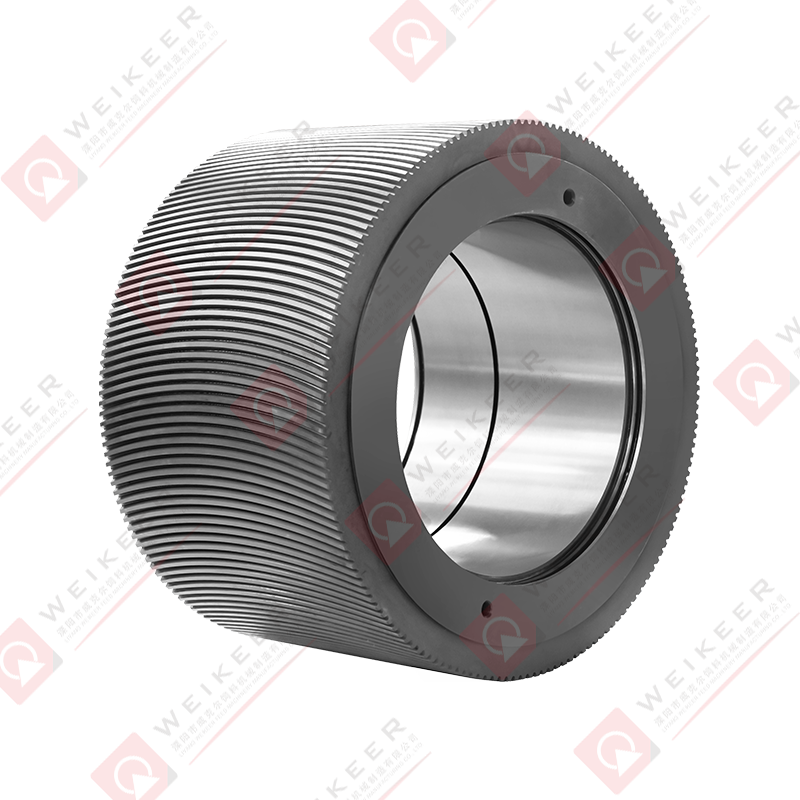
- Curved corrugation: a smoother entry angle and less shearing, kind to fragile pellets.
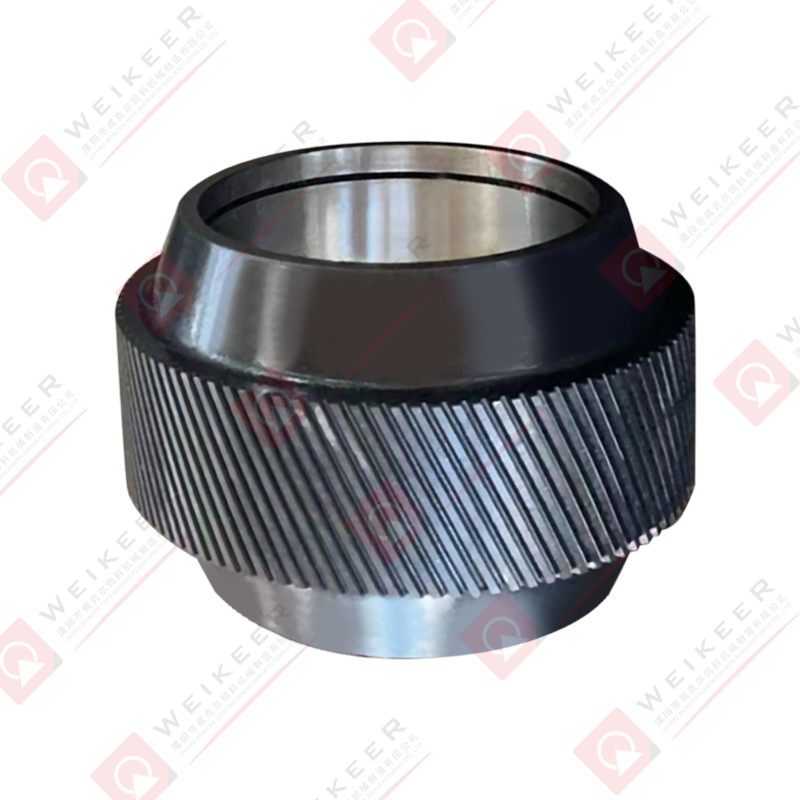
- Diagonal groove: strong forward feed and clean release for fibrous or higher-moisture material.
- Corrugated close end: full contact out to the shell edge, useful when the die is worn or the load is high.
- Corrugated open end: quick to clean, which matters in aqua feed where hygiene and fast changeovers count.
- Dimpled: pockets hold slippery, high-fat or high-molasses material so it stops skating across the face.
The closed corrugation with dimples is the pattern we ship most often to livestock and poultry plants, because it keeps pulling material in even as the face starts to polish. If your mill runs several recipes a week and you want one shell that copes with most of them, this is usually where we start the conversation.
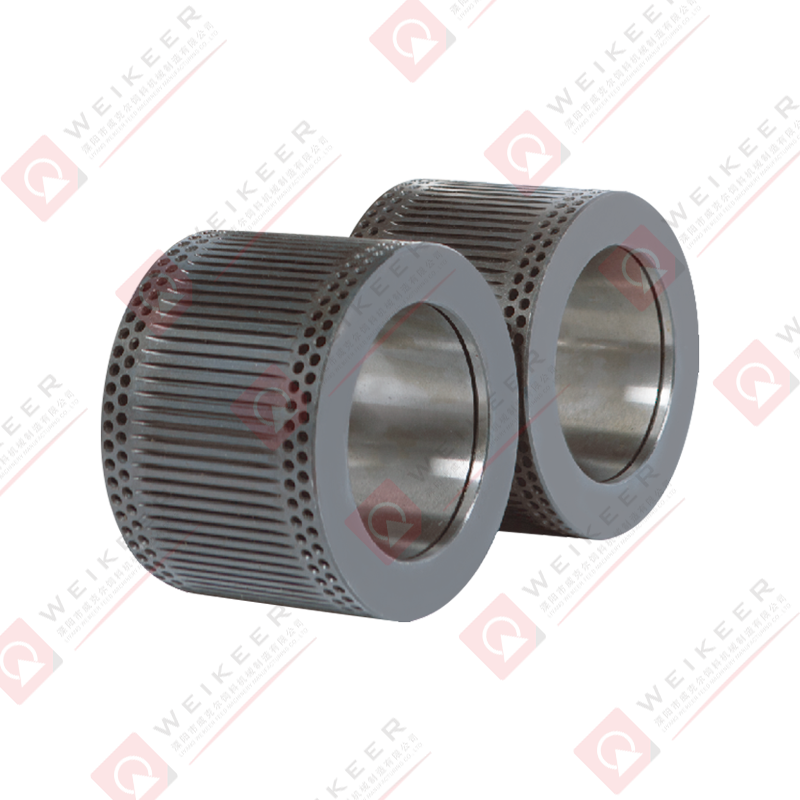 Closed Corrugation and Dimpled GCr15 Pellet RollerA GCr15 bearing-steel press roller with closed corrugation and dimples, suited to mixed feed recipes where consistent material pull matters.View Product →
For biomass and other high-fibre work, the diagonal groove is often the better answer. Fibrous material needs to be walked forward steadily and then released cleanly; a groove that channels it in one direction does that with less smearing and less heat build-up at the nip.
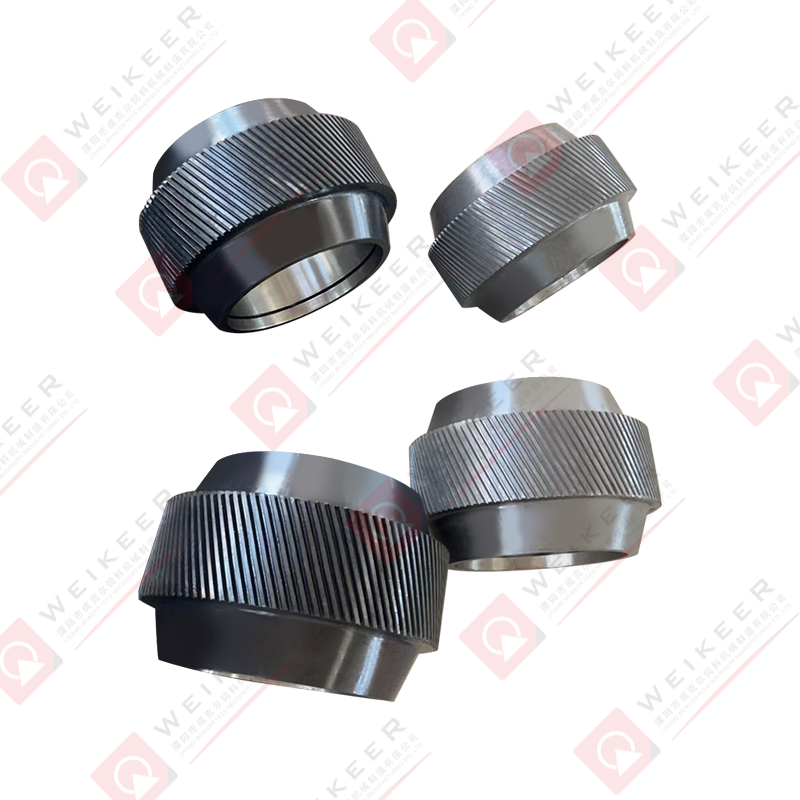 Diagonal Groove GCr15 Pellet Roller for Fibrous MaterialsA GCr15 bearing-steel roller with a diagonal groove designed to improve traction and grip, making it relevant for high-fibre biomass work.View Product →
Matching the Shell to the Feed and the Die
A roller shell is only half of a working pair, so the die in front of it decides a lot. A few combinations we see working well, season after season:
- Aqua feed: fine holes and high fat levels call for open-end corrugation or a dimpled face, light clamping and a close eye on clearance.
- Livestock and poultry feed: the heaviest tonnage duty, best served by closed corrugation with dimples and a die compression that matches the ration.
- Biomass pellets: abrasive, hot and dry-running, so expect a shorter shell life and choose a pattern that feeds steadily rather than grabbing.
- Cat litter and compound fertilizer: mineral abrasion eats shells quickly; keep a spare set on the shelf rather than ordering in a hurry.
Where fat, molasses or urea runs high, a dimpled face is worth trying. The pockets carry a little material with them and give the roller something to push against, which steadies the amp draw and reduces the slip that quietly rounds off a new shell.
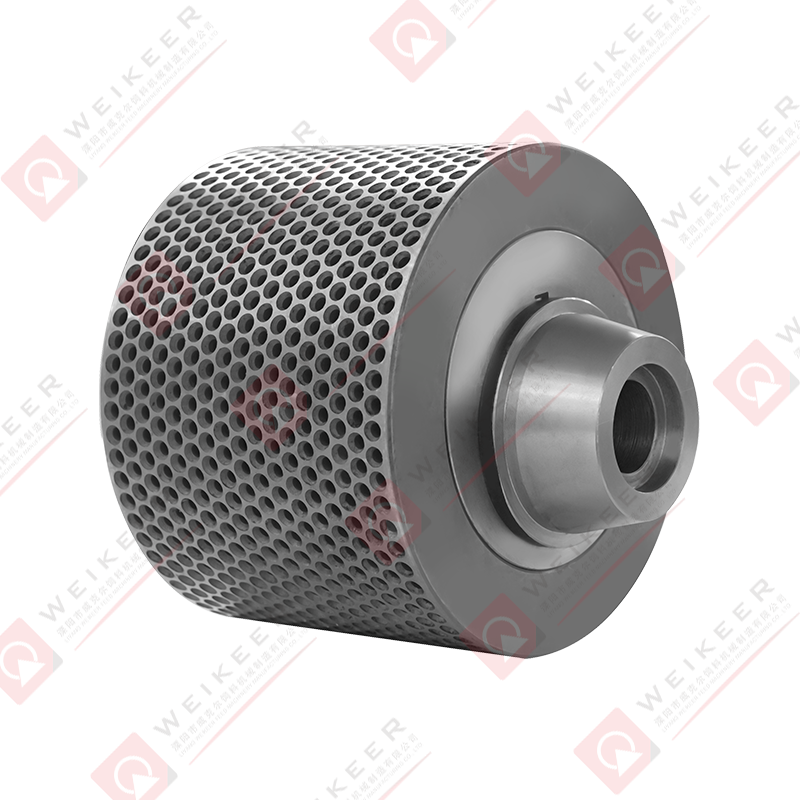 Dimpled Bearing Steel GCr15 Pellet RollerA GCr15 press roller with a dimpled, closed-end design for durability and material containment, useful where high-fat or molasses-rich feed increases slip.View Product →
Fit and Clearance: Where Most Shell Problems Begin
Most of the worn shells that arrive on our inspection bench were not killed by bad steel. They were killed by a gap that was wrong from the first shift. Roller-to-die clearance is usually set somewhere between 0.1 mm and 0.3 mm, and the right figure depends on die diameter, hole size and the material being pressed. Two habits pay for themselves:
- Set both sides equally with a feeler gauge, then re-check after the mill has run warm for twenty minutes.
- Never seat a new shell against a die with visible wear steps or out-of-roundness; the shell will wear to match the die, not to its own shape.
While you are in there, check shaft play, bearing condition and bolt torque. A shell that rocks even slightly on its shaft will wear in a taper, and no grade of steel will save it.
Signs a GCr15 Shell Is Near the End
Shells rarely fail dramatically. They fade, and the mill tells you in small ways first:
- Corrugation depth has visibly flattened, or the face is bright and polished with no grip left.
- Throughput drops while the main motor current climbs, because the mill is slipping rather than pressing.
- Pellet durability falls and fines rise, even though the die and steam settings have not changed.
- Wear is uneven across the face or from one roller to the other, which usually points at alignment rather than material.
- Hairline cracks appear near the flange or the bore, at which point the shell comes off the machine immediately.
Wear patterns deserve a closer look, because they tell you what to change next time. We covered the common ones, and what causes them, in this short guide to wear issues with GCr15 pellet mill rollers; it is worth ten minutes before you place the next order.
Ordering Roller Shells From a Maker Who Runs the Machines
Our workshop sits near Tianmu Lake in Liyang, Jiangsu, and has been producing pellet mill dies, rollers and related wear parts since 1996. The team includes 26 technicians, and the investment we are proudest of is unglamorous: CNC ring die machining and controlled heat treatment equipment that let us hold a specification repeatably rather than approximately. Shells leave here ground, checked and packed in matched sets, ready to fit the mill brands most feed and biomass plants run.
To quote accurately, we need a handful of details: die outside diameter, hole size and compression, the roller shell dimensions or a drawing, the corrugation you prefer, the feed or biomass you press, and your target tonnage per set. Send those and we will come back with a material and profile recommendation rather than a generic price list. If you are unsure which pattern your line actually needs, tell us what the mill is doing and we will talk it through, the same way we would if you were standing at our bench.
Good roller shells do not feel like a purchase. They feel like one less thing to worry about between shut-downs, which is exactly what bearing steel GCr15, cut and hardened with a little patience, is meant to deliver.



 русский
 Español
 عربى
 中文简体