If you are shortlisting aqua feed pellet mill screw type ring die suppliers, the first filter is easy enough: who can actually make a die that bolts onto your press. The harder filter comes next. Who can hold the hole pattern, the taper and the screw circle to the same tolerance on the second order as they did on the first?
We have been making ring dies and press rollers in Liyang since 1996, and most of what follows comes from conversations with maintenance engineers and production managers who have to live with the decision long after the purchase order is closed. Nothing here is a sales pitch — it is simply the checklist we walk through with buyers before a die goes into production.
What "Screw Type" Means on an Aqua Feed Ring Die
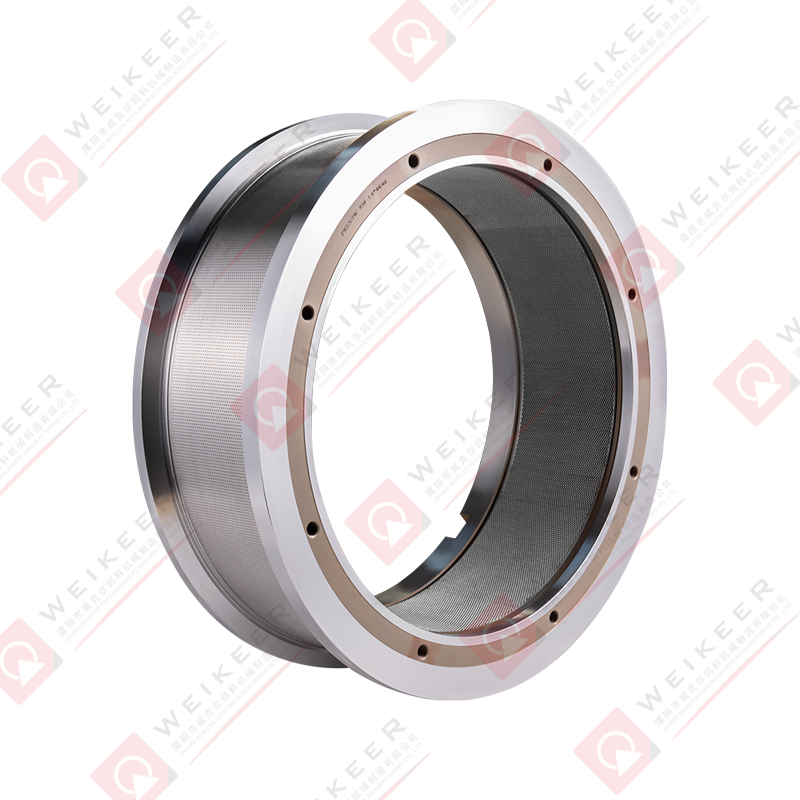
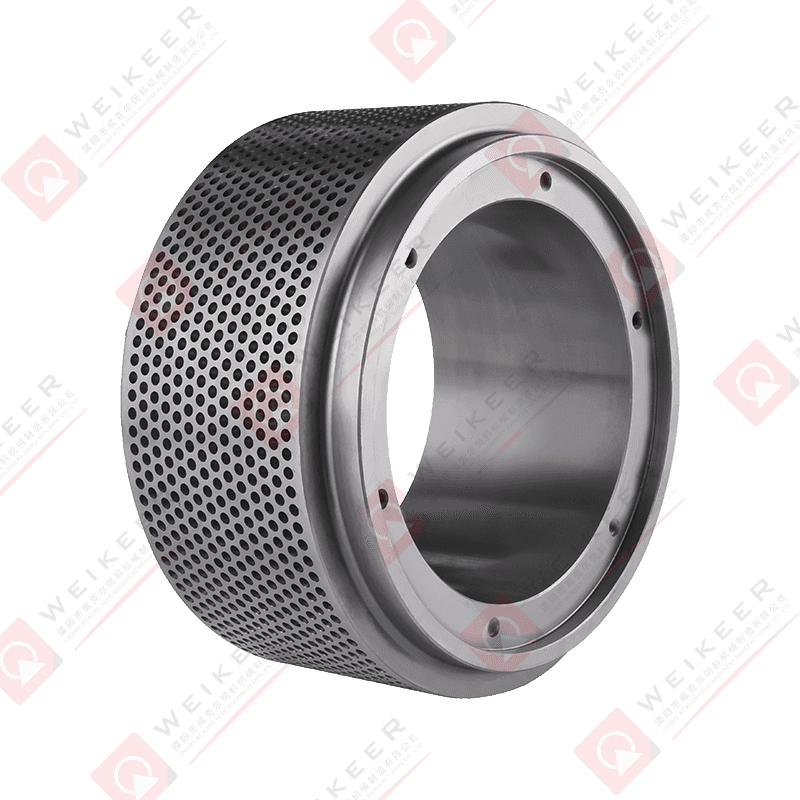
Screw type describes how the die ring is fixed to the die holder. A circle of screws pulls the die down onto the holder face, and that mounting detail — not the pelletizing geometry — decides whether the die will seat squarely and run true.
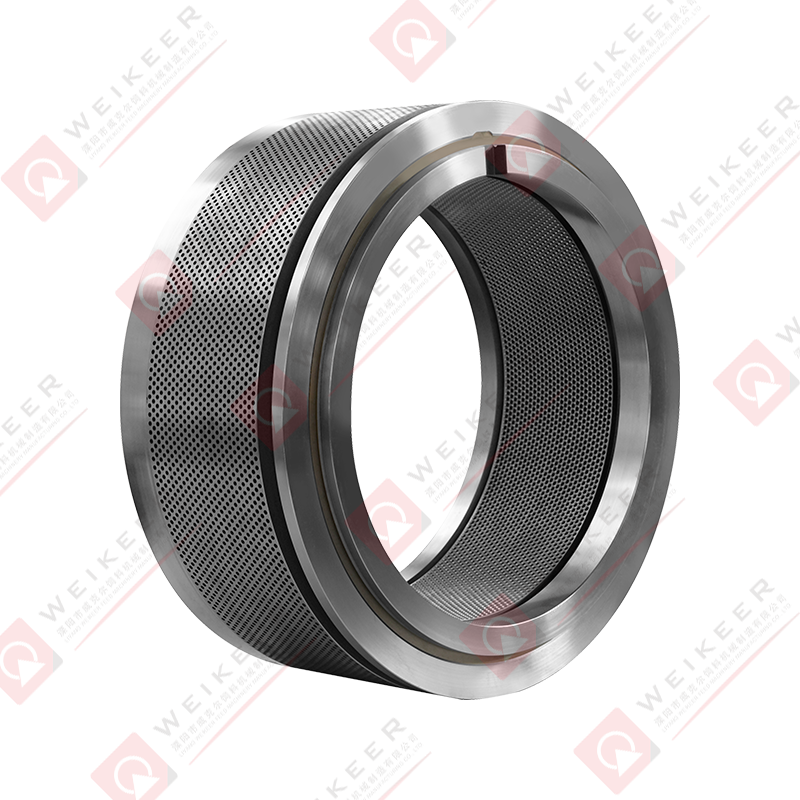
Buyers often compare it with the Anchorear version for aqua feed, which we also make. Both are stainless steel dies doing the same job; the difference lies in how the ring is clamped. Neither pattern is better in the abstract, because what matters is which one your press was built for.
On a screw type die, four dimensions decide fit-up:
- Outside diameter and overall working width
- Inside diameter and the die seat taper
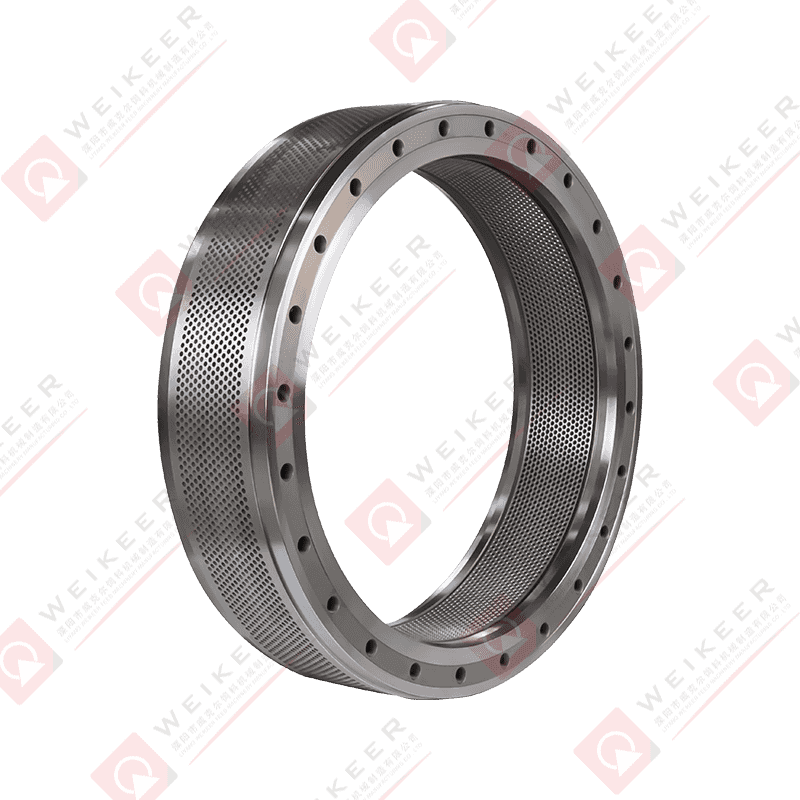
- Number of screw holes and their pitch circle diameter
- Counterbore depth and thread specification
Get any one of these wrong and the die will not sit flat. That shows up quickly as uneven wear across the face, a wandering ammeter reading and a die life that falls well short of expectation.
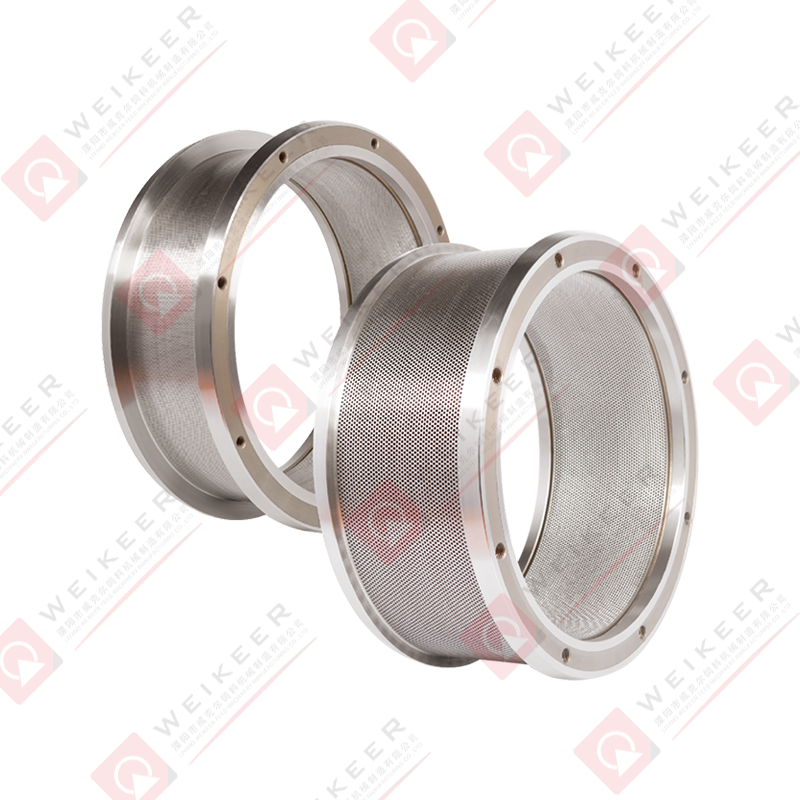 Aqua Feed Screw-Type Ring DieCustom ring die for aqua feed pelletizing, designed for high compression and dense pellets; compatible with listed Famsun, CPM and TAIWAN CPP models.View Product →
Why Aqua Feed Is Hard on a Ring Die
Compared with a standard poultry diet, an aqua feed die usually runs smaller holes, a higher compression ratio and a denser pellet. The feed itself is finely ground, often high in protein and fat, and has to survive in water long enough to be eaten rather than dissolving on the way down. Water stability is largely a function of how the mash is conditioned and how hard the die works it.
Small holes mean less open area. The same tonnage has to pass through far more restriction, so the die carries more of the load and generates more heat at the working face. Fine, fatty mash also flows less freely through the inlet counterbores than a coarse poultry mash does.
That is why a supplier's job is not simply to drill straight holes. It is to keep the taper, the inlet counterbore and the finish inside each hole consistent from the first row to the last, and from one die to the next. A die with 10% of its holes running tight will limit throughput no matter how good the other 90% are.
How to Judge a Screw Type Ring Die Supplier
Most quotes look similar on paper. The differences sit in the details that a supplier is willing to put in writing.
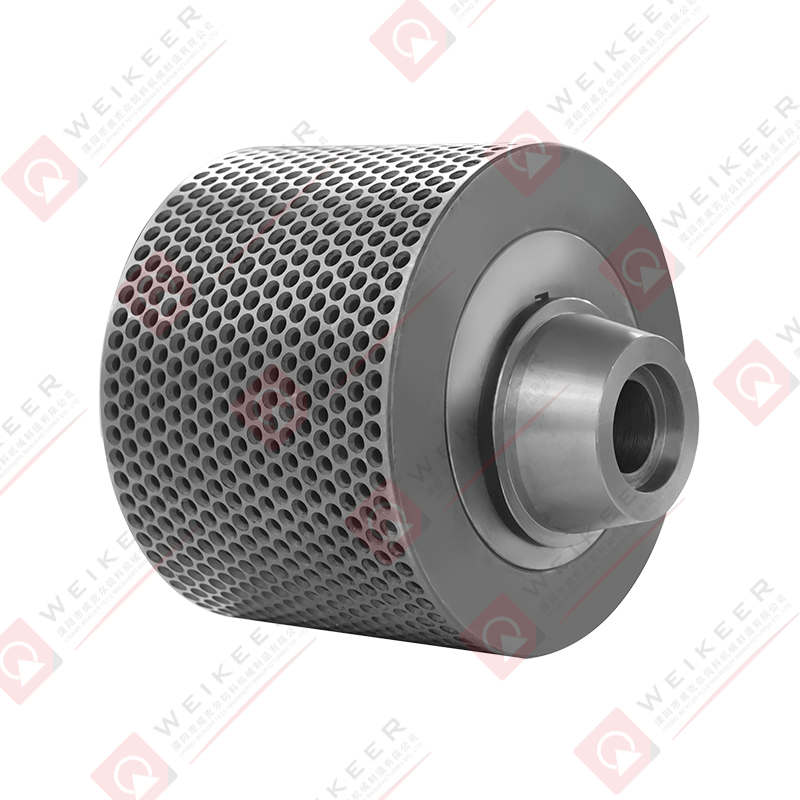
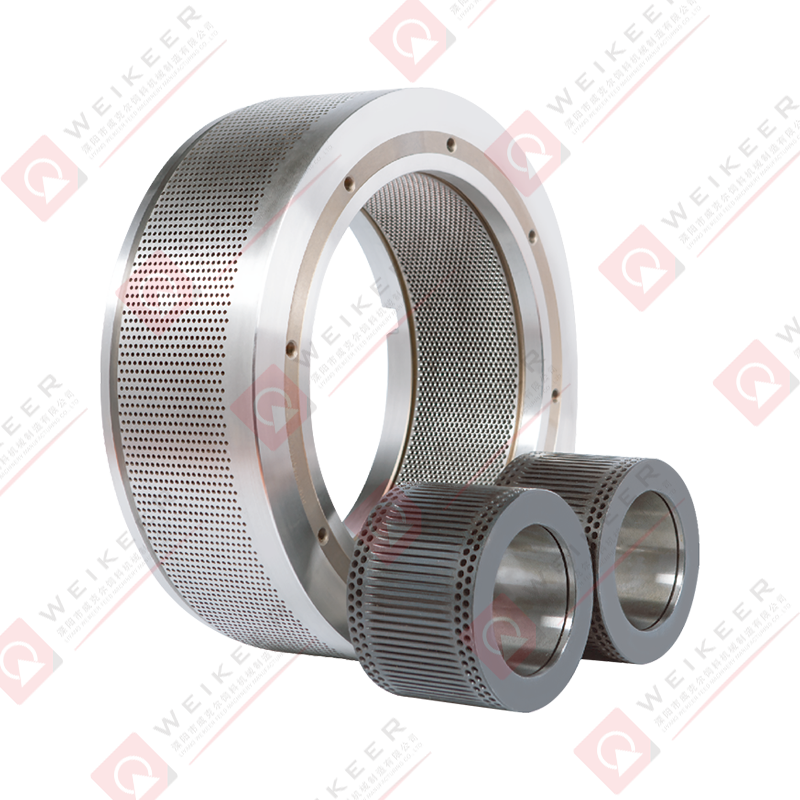 Stainless Steel Screw-Type Pellet Mill Ring DieX46Cr13 stainless steel ring die, heat-treated for wear and corrosion resistance across livestock, aqua and biomass feed; offered as wholesale product by Liyang Weikeer.View Product →
Material and heat treatment
Ask which stainless grade is used and how the ring is hardened. Hardness consistency around the circumference matters as much as the headline figure — a die that is soft on one side will wear into an oval and start throwing pellets of mixed quality. In our own workshop, dies are machined on CNC HTT KH-4-100 ring die equipment and heat treated in HZQL furnaces, and we are happy to share the hardness range recorded for each batch.
Hole geometry and compression ratio
Compression ratio is the effective hole length divided by the hole diameter. It controls how much resistance the mash meets and therefore pellet density and durability. A good supplier can match the ratio you are running today, and can advise when a change in diet or pellet size calls for a different one. If a supplier cannot explain the ratio they are quoting, that is usually a sign the number came from a catalogue rather than from your process.
Mounting accuracy and repeatability
Ask for the inspection record that ships with the die: outside diameter, inside diameter, working width, hole count, screw circle and hardness. Then ask what happens on the repeat order. Consistency between batches is what separates a manufacturer from a trader, and it is worth asking for the drawing reference that will be kept on file for your press.
Specification Checklist Before You Order
These are the points we confirm with buyers before an aqua feed screw type die enters production. Bring your current die drawing, or the measurements from the die you are replacing, and most of this can be settled in a single exchange.
Table: the six points worth confirming in writing before an aqua feed screw type ring die is manufactured.
| Specification point |
Why it matters |
What to confirm |
| Hole diameter and tolerance |
Sets pellet size and the pressure drop across the die |
Nominal diameter plus tolerance band, measured after finishing |
| Effective hole length and compression ratio |
Drives pellet density and water stability |
Ratio matched to your current die or to the new diet |
| Inlet counterbore and taper |
Helps mash enter the hole and reduces blocking |
Depth and angle, plus consistency across the whole face |
| Stainless grade and hardness |
Determines wear life in an abrasive aqua mash |
Grade, heat treatment route and hardness range |
| Screw hole layout |
Decides whether the die bolts on at all |
Hole count, pitch circle diameter, thread and counterbore |
| Outside diameter, inside diameter and width |
Fit-up and proper contact on the die seat |
Measured drawing, or a traceable press model reference |
How those choices interact with throughput and pellet quality is covered in more detail in our note on designing a screw type die to optimize the pelletizing process.
The Die and the Rollers Wear as a Pair
A new die paired with worn rollers is a common reason for a disappointing first week. The rollers need to match the die face, and the gap has to be set correctly on both sides, or the die will wear unevenly and never settle into an even working pattern.
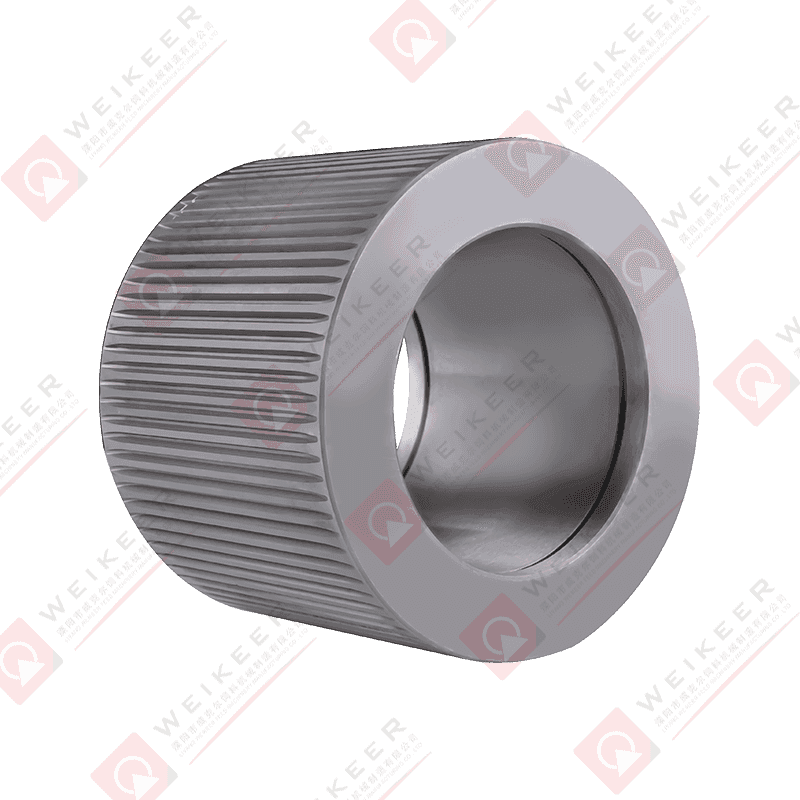
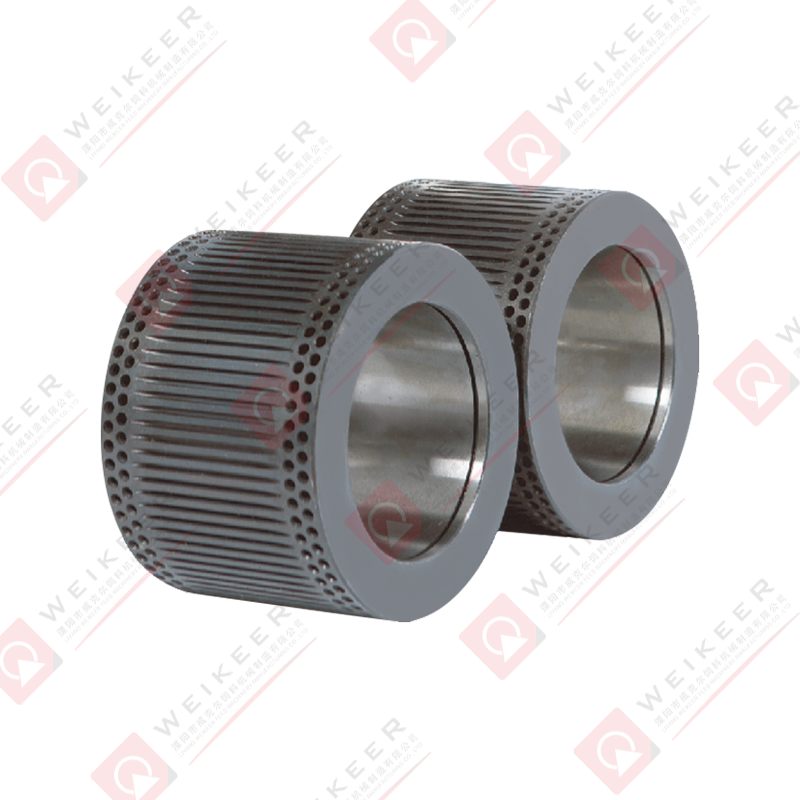
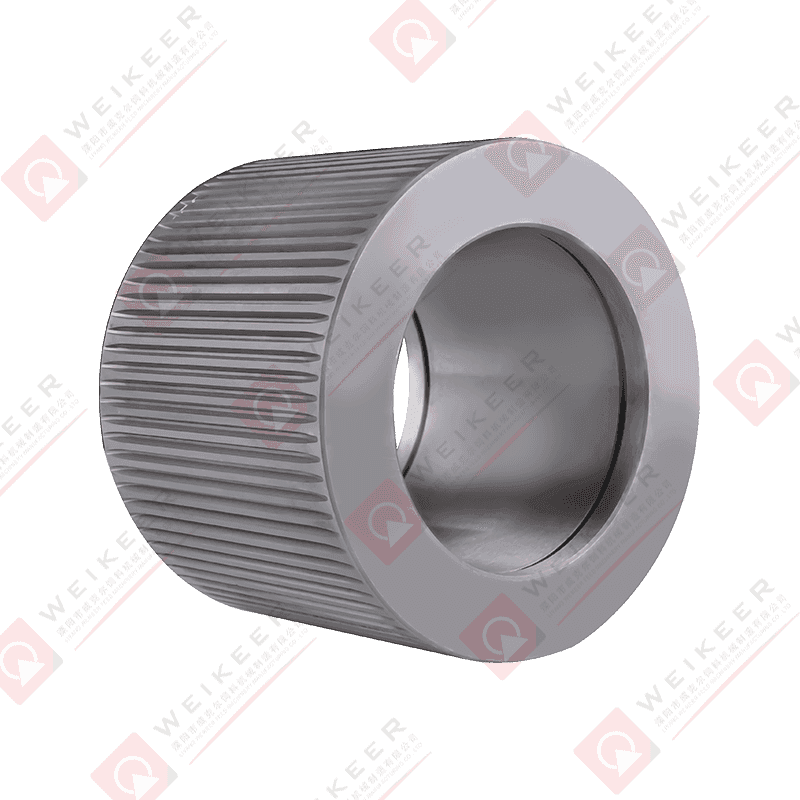
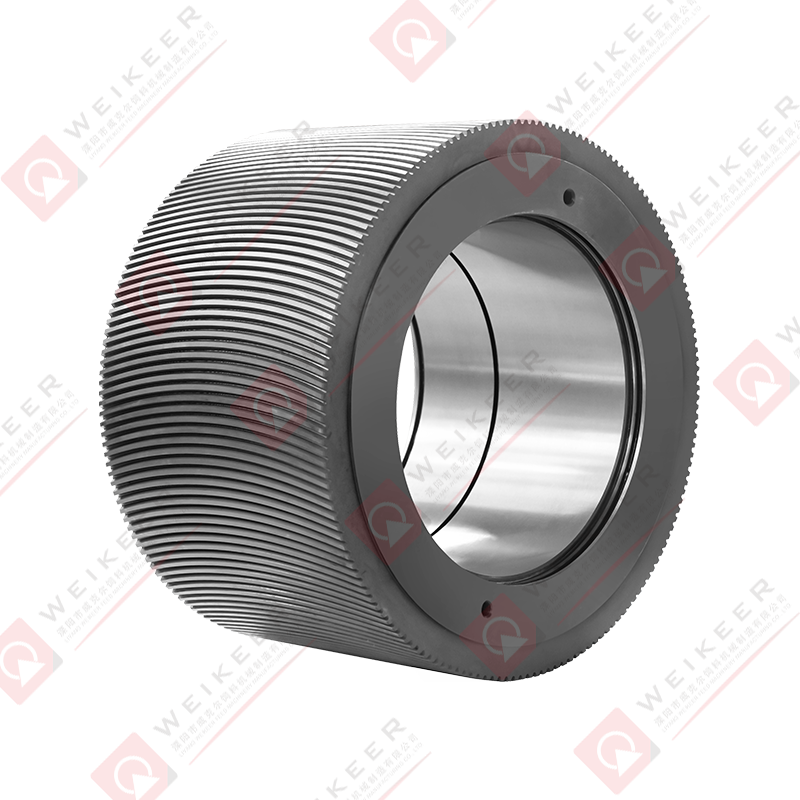
Rollers are usually selected by material and by surface form. Alloy steel 20CrMnTi gives a tough, case-hardened working surface; bearing steel GCr15 offers good wear resistance; spring steel 100Cr6 suits applications where shock loading is a concern. Surface forms such as closed corrugation and dimpled, curved corrugation, diagonal groove and the open or closed end patterns all change how the roller grips and feeds the mash across the die.
 20CrMnTi Closed Corrugation Pellet Press RollerCustomizable 20CrMnTi alloy steel press roller with closed corrugation and dimpled surface, intended to reduce noise and vibration and support material movement in bulk handling.View Product →
When you order a die, it is worth asking the same supplier to review your roller condition. Replacing both together usually costs less than losing a fresh die to a worn pair of rollers.
What to Send with a Quote Request
Accurate input means an accurate die. In practice, the enquiries that move fastest include the following:
- Press make and model, or the original die drawing number
- Measurements from the die being replaced: outside diameter, inside diameter, working width, screw hole count and pitch circle diameter
- Hole diameter, effective hole length and the compression ratio currently in use
- Pellet size, species and whether the product is sinking or floating
- Quantity, required delivery date and whether the order is a first trial or a repeat
If a drawing is not available, photographs of the die seat and the holder with a few key measurements are usually enough for us to confirm the pattern.
Questions Buyers Ask Most Often
Can a screw type die be used on an Anchorear holder?
No. The two mounting patterns are not interchangeable. The clamping method and the seat geometry differ, so the die must match the holder that is on the press.
How long should an aqua feed die last?
There is no single figure. Hole size, fat inclusion, conditioner settings, roller condition and how carefully the gap is set all move the number considerably. A supplier who quotes a fixed tonnage without asking about your process is guessing.
Do you supply dies and rollers together?
Yes. Dies, press rollers and related wear parts can be supplied as a matched set, which is usually the simplest way to keep the working face consistent.
Choosing among aqua feed pellet mill screw type ring die suppliers really comes down to fit-up accuracy, honest specification and repeatability. If you send us your press details or a drawing, we will confirm the screw circle, hole geometry and compression ratio before anything is quoted — and tell you plainly if a different pattern or ratio would serve your process better.



 русский
 Español
 عربى
 中文简体