An aqua feed pellet die is one of those parts that everybody notices only when it stops performing. On a shrimp or fish feed line, the die is the last piece of tooling the mash touches before it becomes a pellet, and much of what a mill actually cares about — pellet durability, water stability, fines, energy per ton — is settled inside a few centimetres of stainless steel. We have been machining ring dies and press rollers at our factory in Liyang since 1996, and the questions that reach us from aqua feed mills are remarkably consistent, so this article gathers the answers we give most often into one place.
What follows is practical rather than promotional. If you are specifying a die for a new line, or trying to work out why a die that used to run beautifully has started to fade, these notes should help you ask the right questions — of us, or of anyone else.
What Makes Aqua Feed Different for a Pellet Die
Aqua feed is not livestock feed with a different label on the bag. Fish and shrimp formulations are usually high in protein and fat, finely ground, and pelleted with more added water and a gentler conditioning regime than a poultry mash would tolerate. The die therefore sees a softer, often slightly more slippery and more corrosive mass, frequently at a lower temperature than a classic livestock mill would run.
Small holes, thin walls, high open area
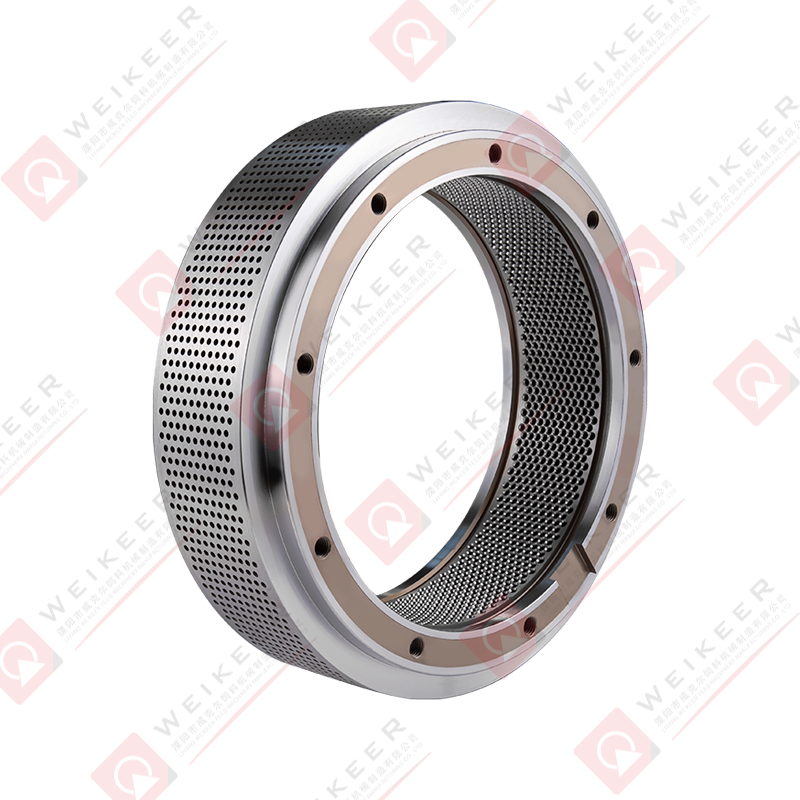
Shrimp feed is often pelleted through holes of 1.0 to 2.0 mm, and floating fish feed commonly sits in the 2 to 4 mm band. A hole that small means a very large number of them, and a die wall thin enough to keep the open area high and the pressure drop reasonable. Wall thickness, hole count and hole finish all matter more here than on a die making 5 mm livestock pellets, simply because there is less room for error. A slightly rough hole in a 4 mm die is a cosmetic detail; in a 1.5 mm die it can be the difference between a clean extrusion and a cloud of fines.
Water stability is decided at the die
Aqua pellets are usually judged by how long they hold together in water. That behaviour begins with how thoroughly the mash is compacted as it passes through the hole. A die that has lost its surface finish, or one that has been polished back out of tolerance, tends to release pellets that break down early and leave dust in the tank.
Anchorear and Screw Type: Two Ways to Mount an Aqua Die
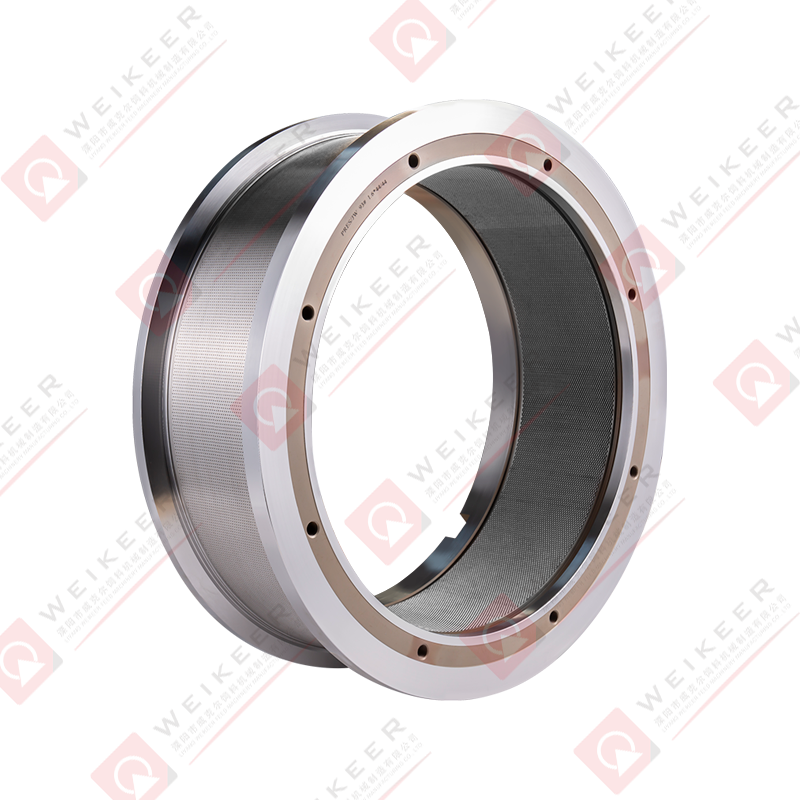
The first decision when ordering a replacement is rarely the hole size — it is the mounting. Our stainless steel ring dies come in two series, and both include an aqua feed option; the real difference lies in how the die is fixed to the pellet mill.
Both stainless steel ring die series include a dedicated aqua feed option; the difference is in how the die is fixed to the mill.
| Ring die series |
Mounting style |
Aqua feed option |
Other applications in our catalogue |
| Pellet Mill Anchorear Stainless Steel Die |
Anchorear, bolt-on |
Yes, dedicated aqua feed ring die |
Cat litter, complex fertilizer, livestock and poultry feed |
| Pellet Mill Screw Type Stainless Steel Die |
Screw type, threaded |
Yes, dedicated aqua feed ring die |
Biomass pellets, livestock and poultry feed |
The Anchorear style is the familiar bolt-on arrangement: the die is located on the die holder and held by bolts around the rim. Maintenance teams tend to know it well, and a changeover is quick when a spare set is already on the shelf. It is the arrangement we build most often for aqua lines running a mixed programme of fish and shrimp feed, because it keeps the changeover simple and repeatable.
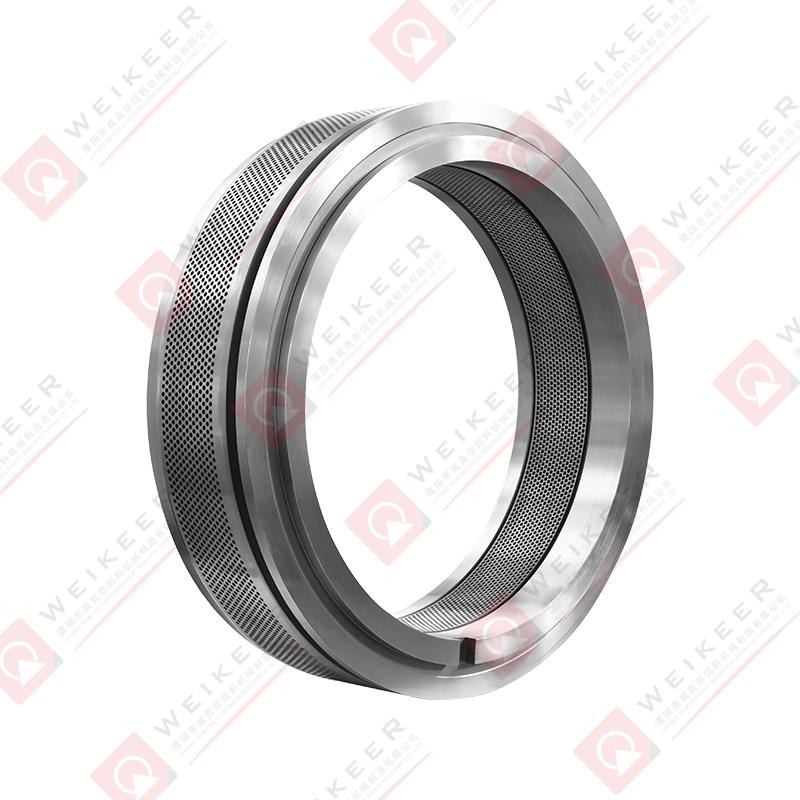 Aqua Feed Pellet Mill Anchorear Stainless Steel Ring DieBolt-on anchorear ring die for aqua feed lines, in stainless steel for fish and shrimp pellets with quick, repeatable changes.View Product →
If you are not certain which pattern your mill uses, a photograph of the die in place, or simply the pellet mill model and the die drawing, is normally enough for us to identify it.
When the Screw Type Is the Better Fit
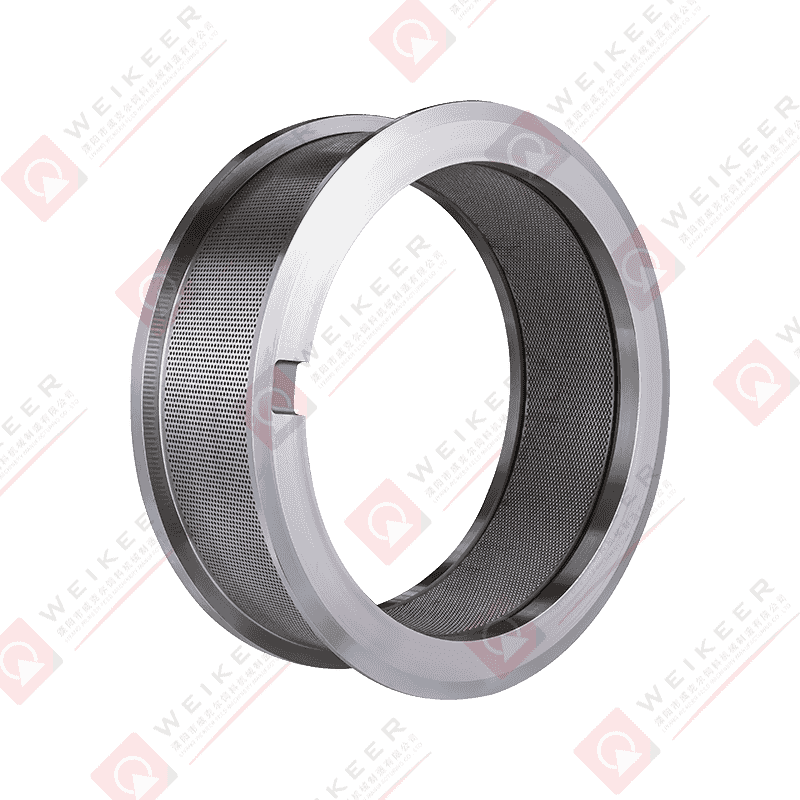
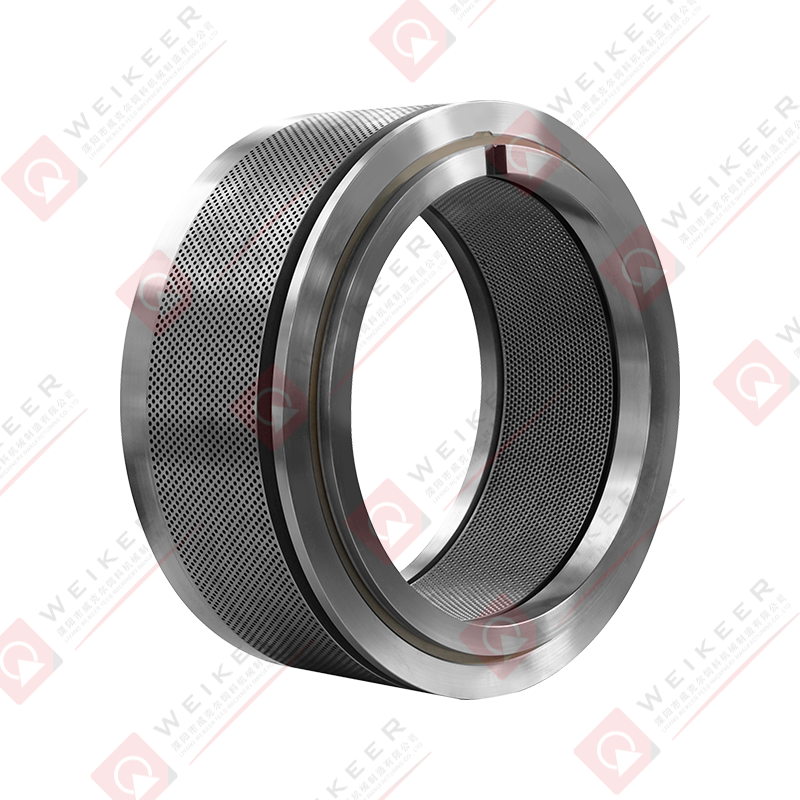
The screw type die seats differently. Rather than relying on bolts around the rim, it is threaded and locked onto the die holder, which spreads the load more evenly and keeps the die centred under heavy running. In our catalogue this is the series we recommend for biomass pelleting, and it also carries an aqua feed version for mills that pellet at high capacity or run long campaigns between changes.
In practice the two styles are not interchangeable on the same machine, so the choice is usually made for you by the mill itself. What matters is that both are made the same way here: stainless steel, machined on CNC ring die equipment, heat treated, and checked before they leave the workshop.
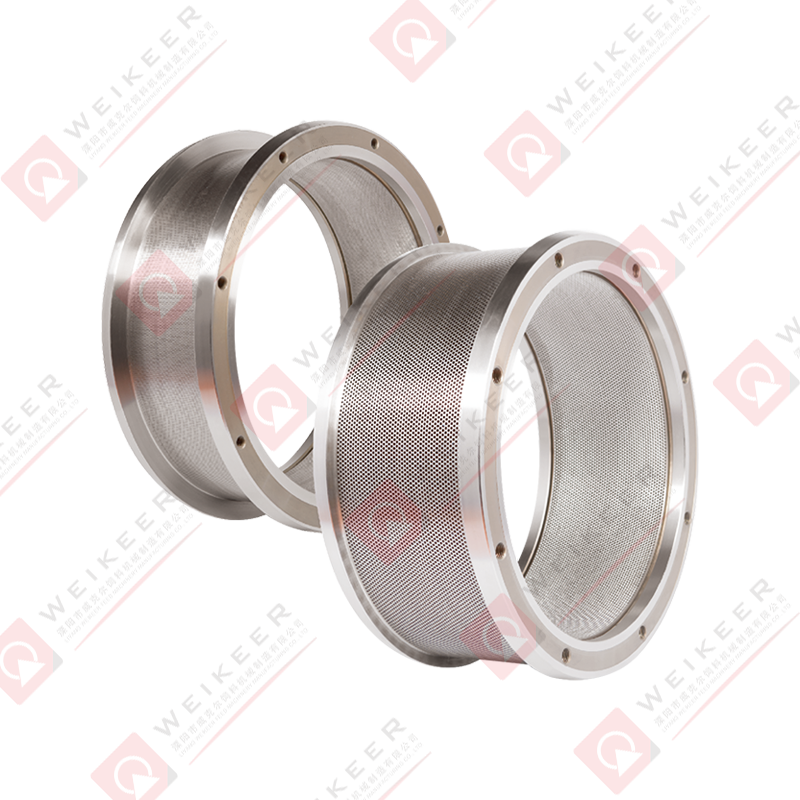 Aqua Feed Pellet Mill Screw Type Stainless Steel Ring DieScrew-type stainless steel ring die for aqua feed pelletizing, designed for high compression and dense pellets when paired with well-maintained rollers.View Product →
The Die and the Roller Have to Be Matched
An aqua die will never deliver its full life if it runs against tired rollers. The roller is what actually pushes the mash into the hole, so a surface that has worn flat, or a roller diameter that has dropped below its working range, changes the slip and the pressure across the whole die face. Mills that replace rollers on schedule consistently get more tons out of each die than mills that keep the originals running until the die is scrapped.
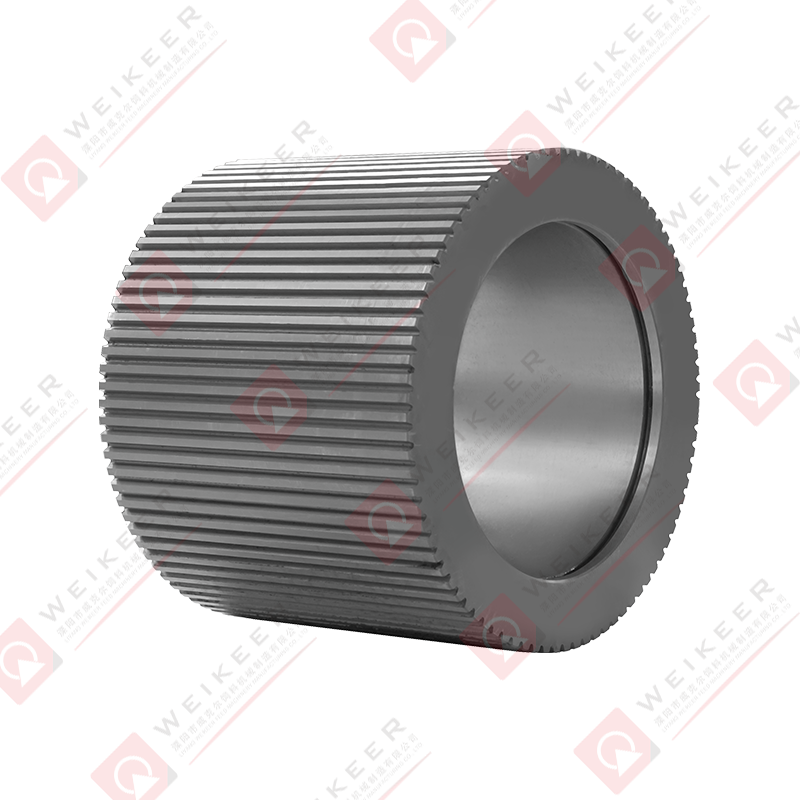
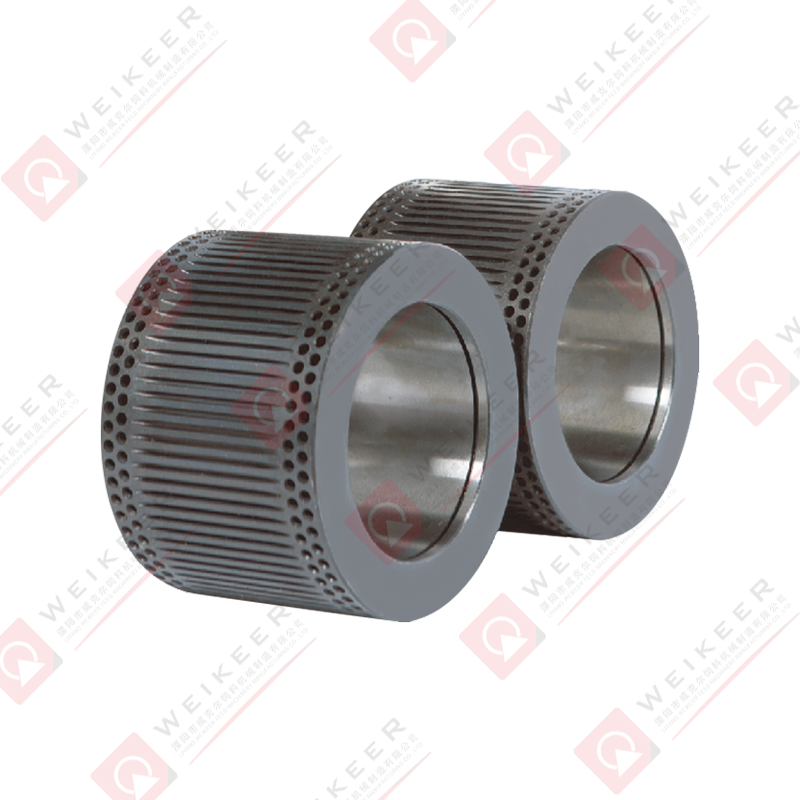
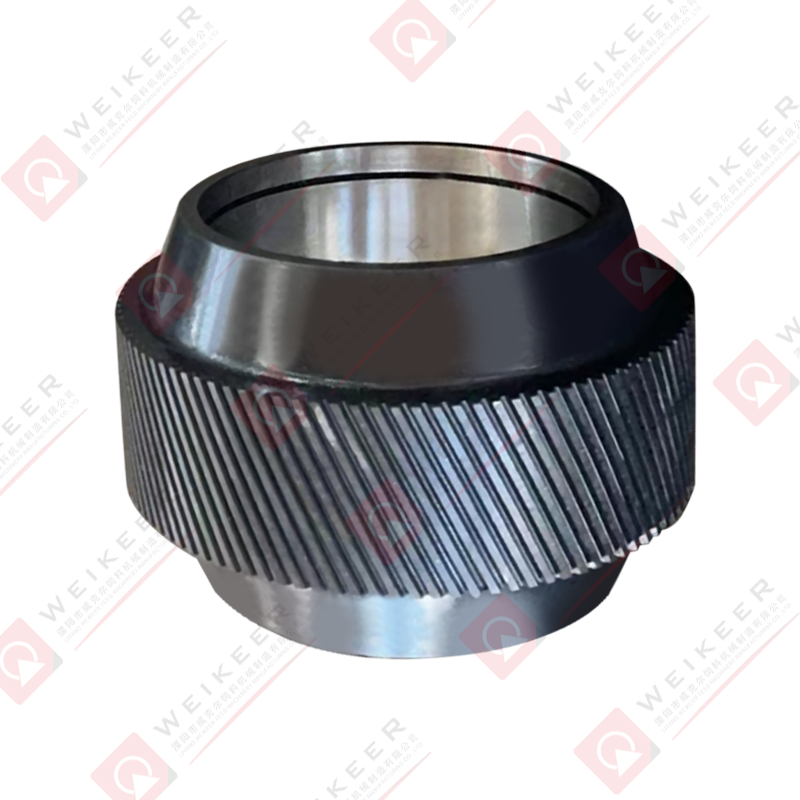
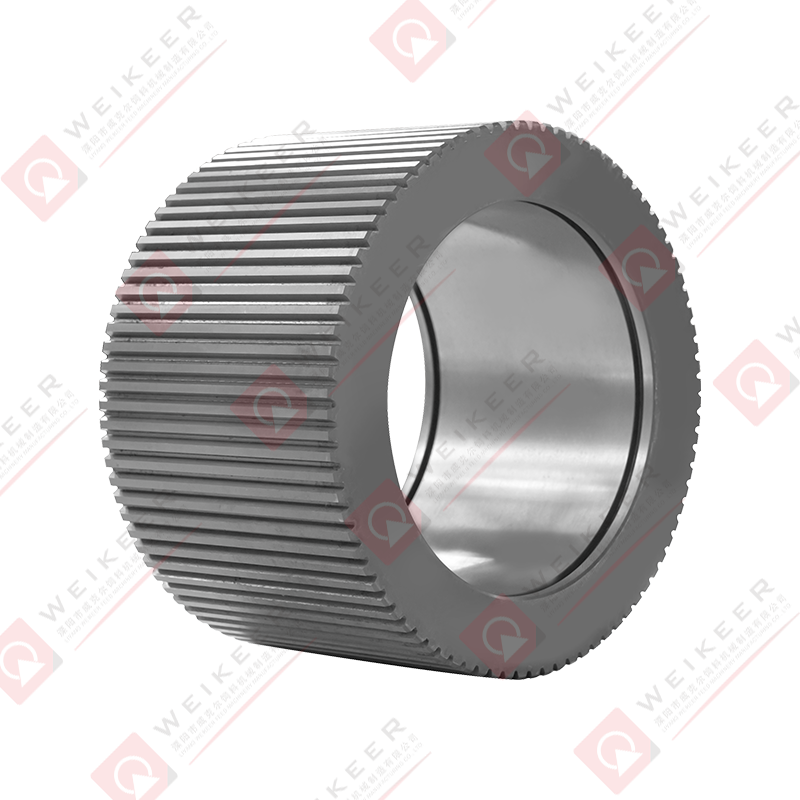
Our press rollers are grouped first by the steel they are made from — alloy steel 20CrMnTi, bearing steel GCr15 and spring steel 100Cr6 — and then by the form of the working surface, from closed corrugation and dimpled patterns to curved corrugation and diagonal grooves. The right combination depends on your feed, your die and how hard you push the mill, and it is one of the things we are happiest to talk through before you order.
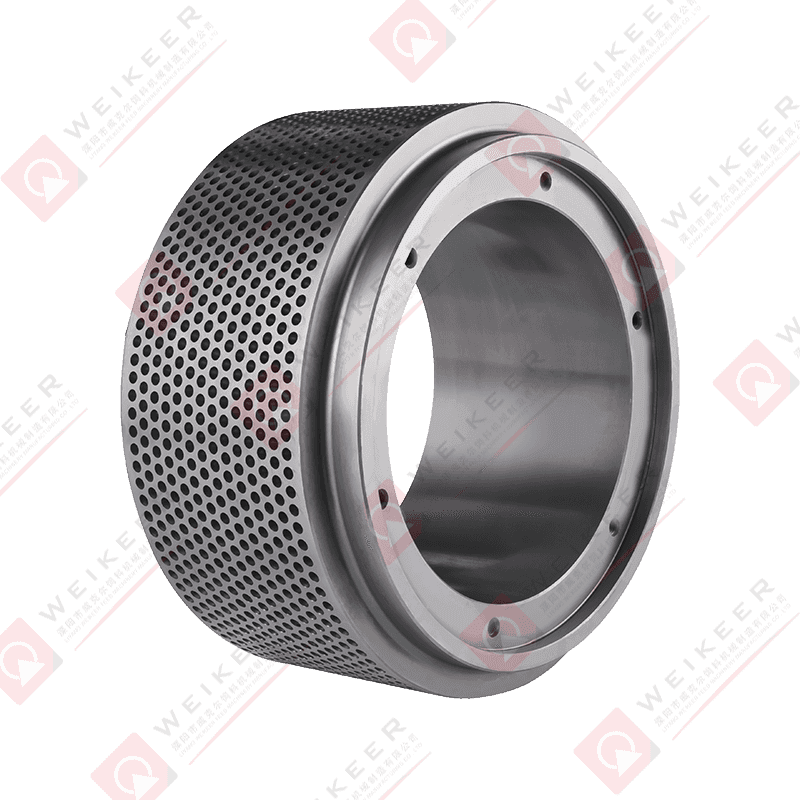 Pellet Mill Press Rollers and Roller ShellsPress rollers and roller shells grouped by alloy, bearing, and spring steels, with corrugated, dimpled, curved, and diagonal surface options.View Product →
Wear Signals Worth Watching
Dies rarely fail suddenly; they fade. The useful signals are usually buried in your own records rather than visible on the die itself:
- Fines climbing at the cooler or the screener, with no change in formulation.
- The main motor drawing a little more current for the same throughput.
- Pellets that feel softer, or that hold together for a shorter time in water.
- A glossy, polished look across the hole entries, where the relief pattern has started to disappear.
- A visible step or ridge where the roller path meets the die surface.
A die that has reached that stage can sometimes be reworked, but the more honest answer is usually that its useful life is over and the next set should be ordered. If you would like to understand the mechanics behind that wear, we wrote about how the wear resistance of a screw type stainless steel die affects pellet production in our industry news section, and the same logic applies to any aqua die.
What We Ask Before We Quote a Die
Every quotation starts with a short list of questions. Answering them properly the first time saves a great deal of email later, and it is the quickest way for us to be confident that a die will both fit and perform.
- The pellet mill brand and model, and the type of die holder it uses.
- Die outside diameter, inside diameter, working width and overall width.
- Hole diameter and hole count, and where you know it, the hole pattern or open area.
- Mounting style, Anchorear or screw type, or a photograph and drawing if you are unsure.
- Feed type and target pellet size, plus the conditioning and added moisture you normally run.
- The life in tons you achieved from the last die, and what changed when that figure dropped.
- The condition of the rollers and the date they were last replaced.
- Any preference on stainless steel grade or working hardness.
Habits That Help an Aqua Die Last
None of these are dramatic, but between them they account for a good part of the difference between a die that lasts a season and one that lasts two:
- Keep moisture and steam consistent; a die that swings between wet and dry mash wears unevenly.
- Check the roller gap regularly, because it creeps as the roller surface wears.
- Store spares dry, off the floor and lightly oiled — thin-wall stainless dies do not enjoy a humid warehouse.
- Keep one good spare set so that a change is planned rather than forced.
- Write down tonnage, amps and fines for each die; the numbers will tell you when a set is finished far more reliably than the calendar.
Aqua feed is not the largest part of the feed industry, but it is one of the least forgiving, which is why the details above tend to matter more here than almost anywhere else. We have been making ring dies and press rollers since 1996, and most of what we know about aqua dies came from mills that were willing to tell us what went wrong.
If you would like a second opinion on a die specification, or simply want to know whether a spare set is worth stocking, send us your mill model and the details of the die you are running now. We will tell you honestly what will fit, what it will do, and where a different choice would serve you better.



 русский
 Español
 عربى
عربى 中文简体
中文简体