An aqua feed pellet mill is only as good as the ring die sitting inside it. That single perforated cylinder decides pellet shape, output rate, and how many hours of your week go into maintenance. When a die reaches the end of its working life, the real question is not only what to buy, but who to buy it from.
Screw type ring dies are one of the two mounting styles we build most often, and they turn up on a great many aqua feed presses. This guide walks through what a screw type die actually does, why aqua feed wears dies differently from poultry or biomass work, what to measure before you order, and how to tell a genuine manufacturer apart from a supplier who is simply forwarding a catalogue.
What a Screw Type Ring Die Does on an Aqua Feed Line
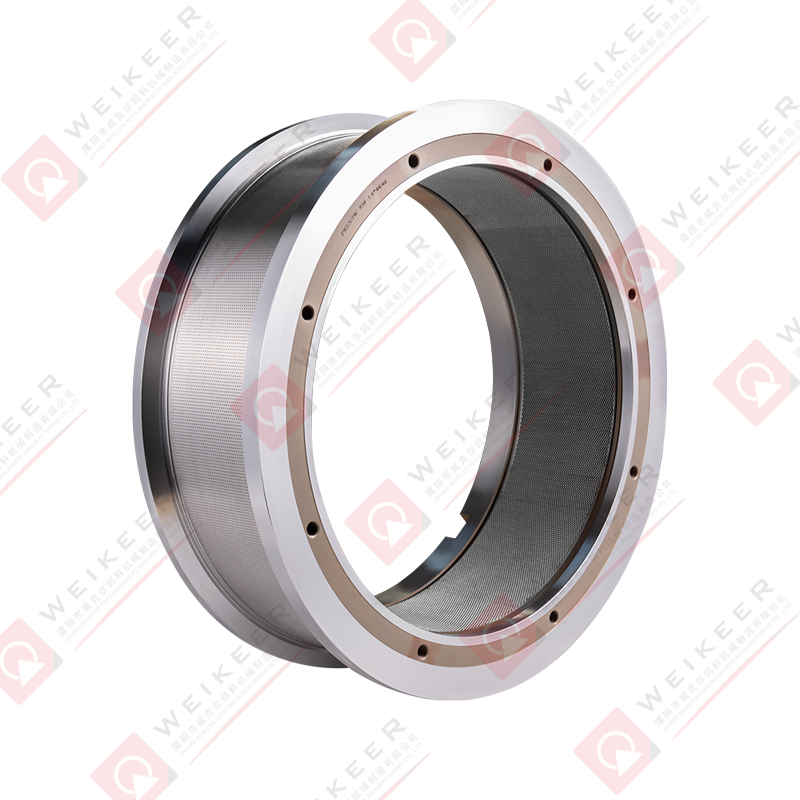
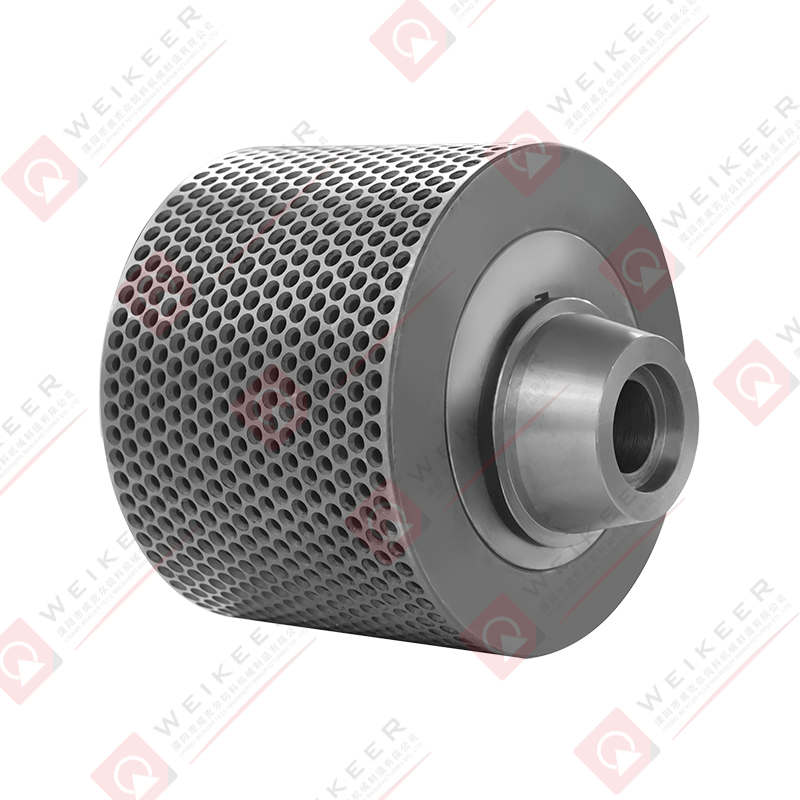
The words "screw type" describe how the die is fixed in the press. Instead of locating on an anchor-style seat, a screw type die is fastened to the die holder with a ring of screws, so the die body, the clamp ring and the holder all have to line up exactly. If the screw pattern or the seat diameter is off by even a fraction, the die will not sit flat. What follows is one-sided wear, unstable pellet quality, and a die that never reaches the tonnage it should.
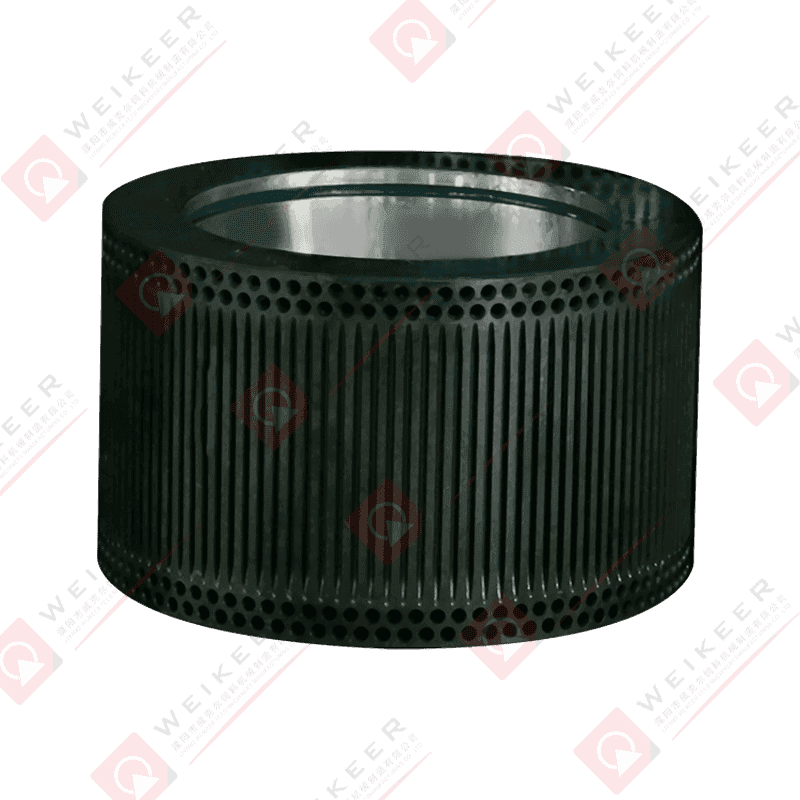
Aqua feed adds its own demands on top of that. Steam, moisture and high-fat formulations make corrosion resistance essential, which is why stainless steel is the working standard here rather than a luxury upgrade. Sinking and floating pellets for shrimp, tilapia, catfish and marine species call for small holes, often somewhere between 1.5 mm and 4 mm, together with a compression ratio tuned to the recipe and the water stability your customers expect. A die that performs beautifully on poultry mash will behave quite differently in a shrimp feed line.
We machine this family of dies in our own workshop, and the full screw type stainless steel ring die range is laid out by application so you can compare specifications side by side.
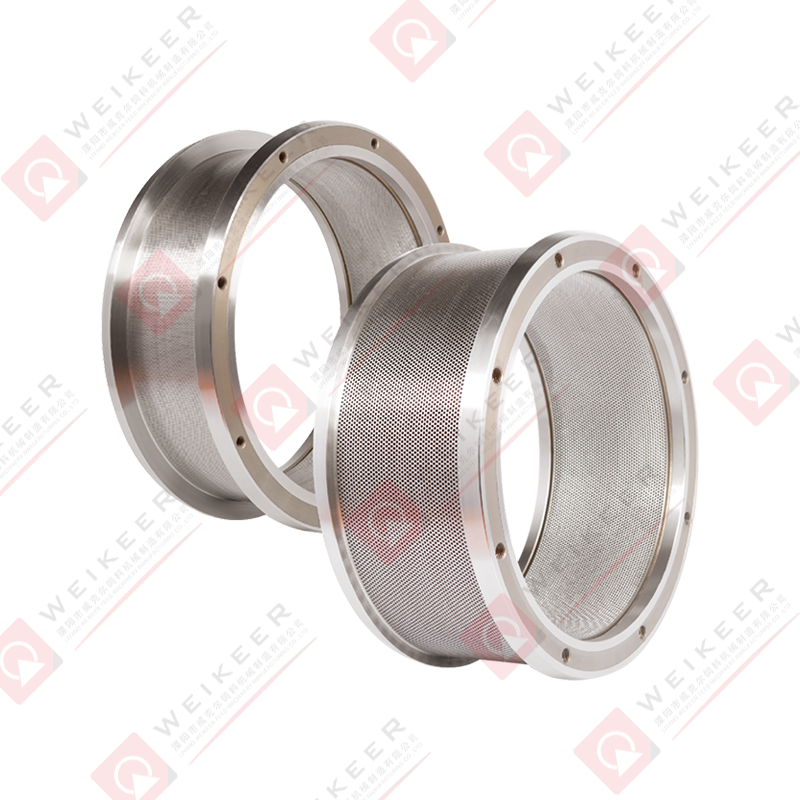 Screw Type Stainless Steel Ring Die for Aqua FeedCompare this custom screw-type ring die by application for dense aqua feed pellets; some dies offer wear-resistant surface treatments.View Product →
Why Aqua Feed Dies Wear Differently
Wear in an aqua feed die rarely has a single cause. It is usually three things happening at once.
- Abrasion: mineral premixes, shell meal and hard binders grind away at the inlet taper of every hole.
- Corrosion: steam and residual moisture attack the hole walls, and the damage accelerates when a press sits idle with feed still packed inside the die.
- Fatigue: repeated pressure and heat cycles slowly change the internal geometry, so pellets that were crisp last month start coming out soft or crumbly.
Because those three effects overlap, a die can look perfectly sound on the outside while its holes have already lost their taper. It is worth understanding how wear resistance shapes pellet production before you decide that a cheaper die is good enough, because the cost usually shows up in the tonnage you lose rather than in the invoice.
Screw Type or Anchorear: Settle the Mounting First
Before comparing prices, confirm which mounting your press actually needs. The two families can look similar in a photograph and behave very differently once they are in the holder.
A quick comparison of the two ring die mounting families we manufacture for feed and pellet producers.
| Aspect |
Screw type ring die |
Anchorear ring die |
| How the die is retained |
Fastened to the die holder with a ring of screws and a clamp ring |
Located on an anchor-style seat and locked with retaining hardware |
| What to measure first |
Screw hole count, hole diameter, pitch circle, die OD, ID and thickness |
Seat diameter, retaining ring dimensions, die OD, ID and thickness |
| Where it tends to fit |
Aqua feed and livestock presses with a bolted die holder |
Aqua feed, livestock, cat litter and complex fertilizer presses |
| Common pitfalls |
Mismatched screw sets, worn holder faces, over-torqued screws |
Fretting or burrs on the seat, which tilt the die and cause one-sided wear |
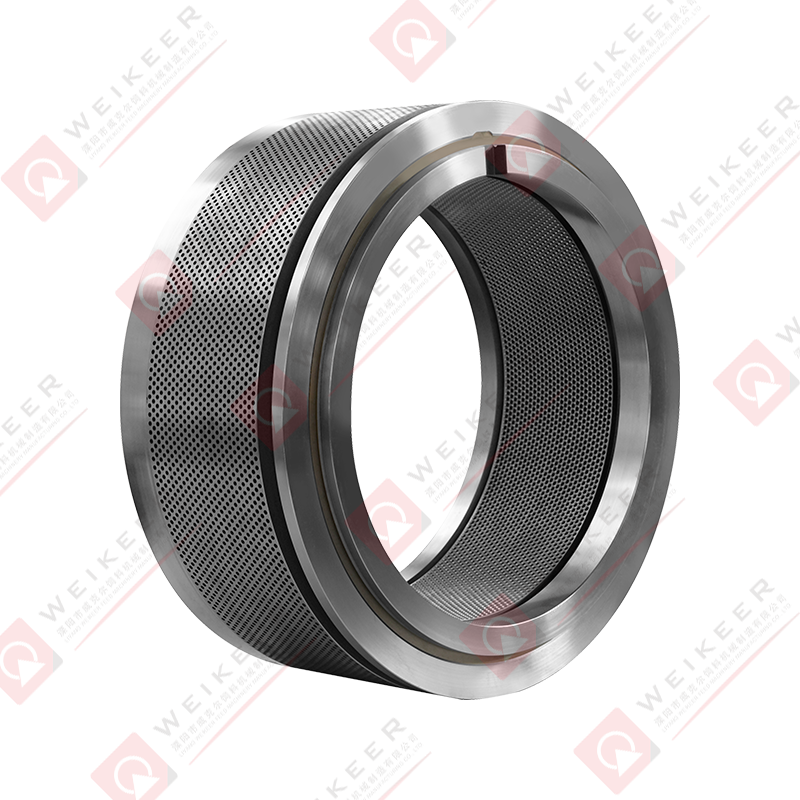
If your press uses the anchor seat instead, the same aqua feed specification is available with that mounting, so you are not forced to compromise on hole geometry just to fit the machine.
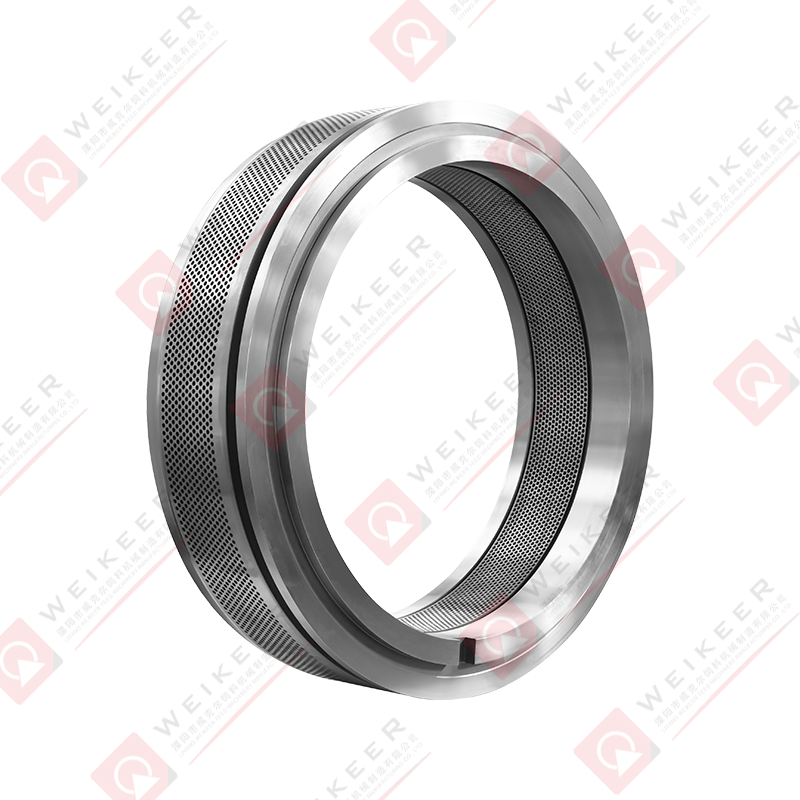 Anchorear Ring Die for Aqua Feed Pellet MillsFor anchor-seat presses, this custom stainless steel ring die preserves aqua feed hole geometry while using X46Cr13 steel to resist moisture and wear.View Product →
What Separates a Reliable Supplier from a Catalogue Seller
Most quotations for an aqua feed ring die look alike on paper. The differences show up later, in the workshop and in the tonnage you actually achieve.
- Steel grade and heat treatment. A die is only as good as the material underneath the holes, and controlled heat treatment is what releases internal stress so the die keeps its geometry instead of cracking early.
- Hole geometry. Hole diameter, inlet taper, relief and compression ratio have to match your formula, your species and your target pellet durability. A supplier who copies a dimension without asking about the feed is guessing.
- Machining consistency. Drilled and reamed holes that vary from one side of the die to the other produce uneven output and uneven wear, no matter how good the steel is.
- Measurement and traceability. Ask how the die is checked before shipment, and whether the screw pattern is verified against your drawing rather than assumed.
- Willingness to ask questions. Expect requests for your die drawing, a photo of the old die, the press model and your current die life. Those questions are a sign of a manufacturer, not a nuisance.
Dies and Rollers Wear as a Pair
A new die on tired rollers is money half spent. Rollers that have lost their crown or their surface pattern cannot build the pressure the die was designed for, so the die wears unevenly and pellet quality drifts. When you plan a die change, plan the roller set at the same time.
Press roller material families we machine, and where each one tends to suit an aqua feed line.
| Material |
Character |
Where it tends to suit |
| Alloy steel 20CrMnTi |
Case-hardening grade with a tough core and a hard working surface |
General aqua feed and livestock presses where toughness and wear life need to balance |
| Bearing steel GCr15 |
High-carbon chromium grade, through-hardened for high surface hardness |
High-abrasion recipes and lines running hard, fine aqua feed |
| 100Cr6 |
High-carbon chromium grade with uniform, even hardness through the section |
Presses where consistent roller hardness matters more than peak hardness |
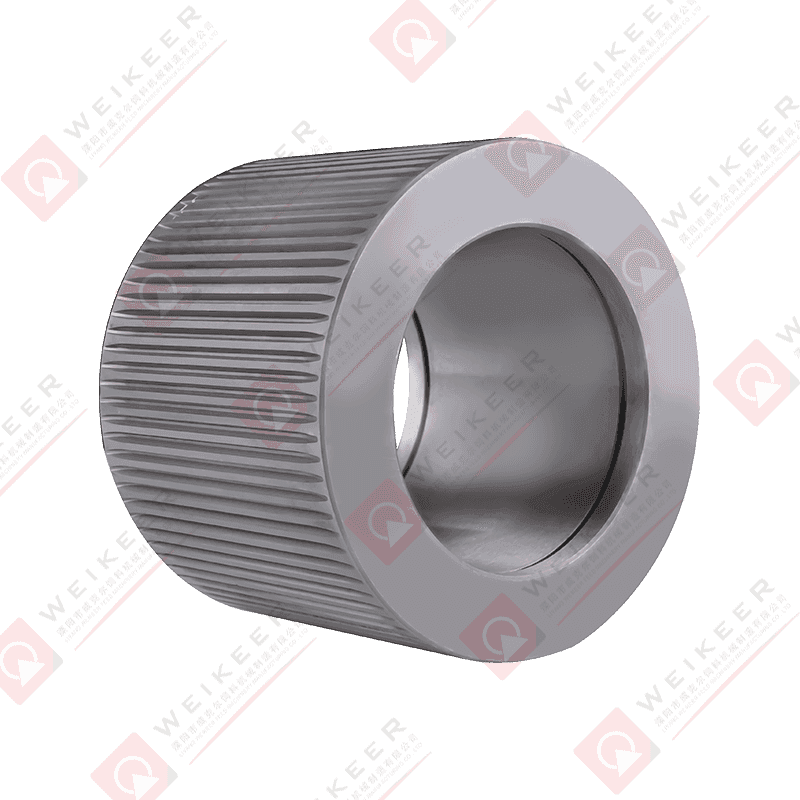
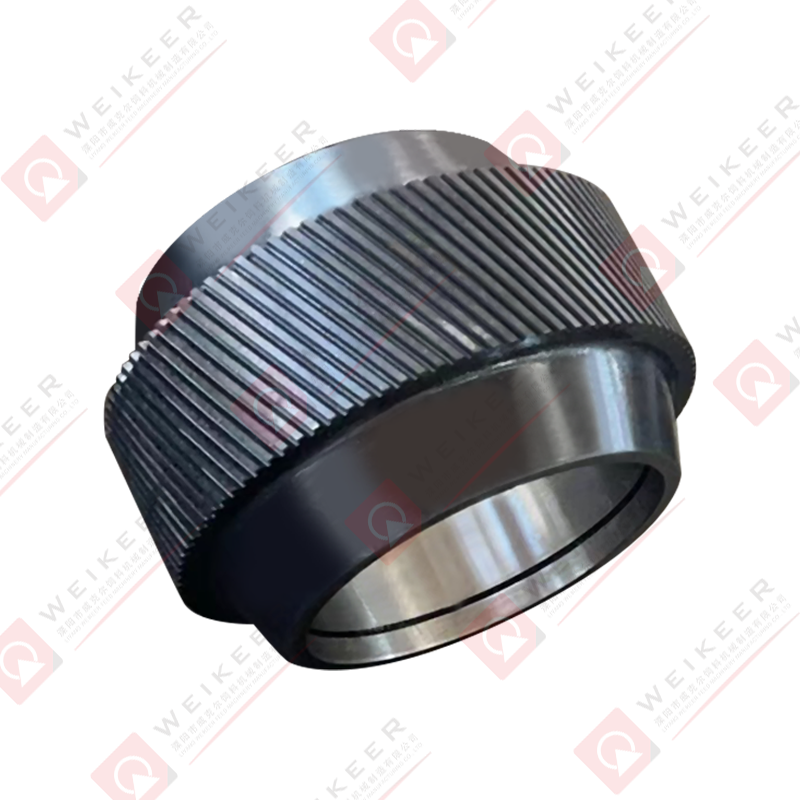
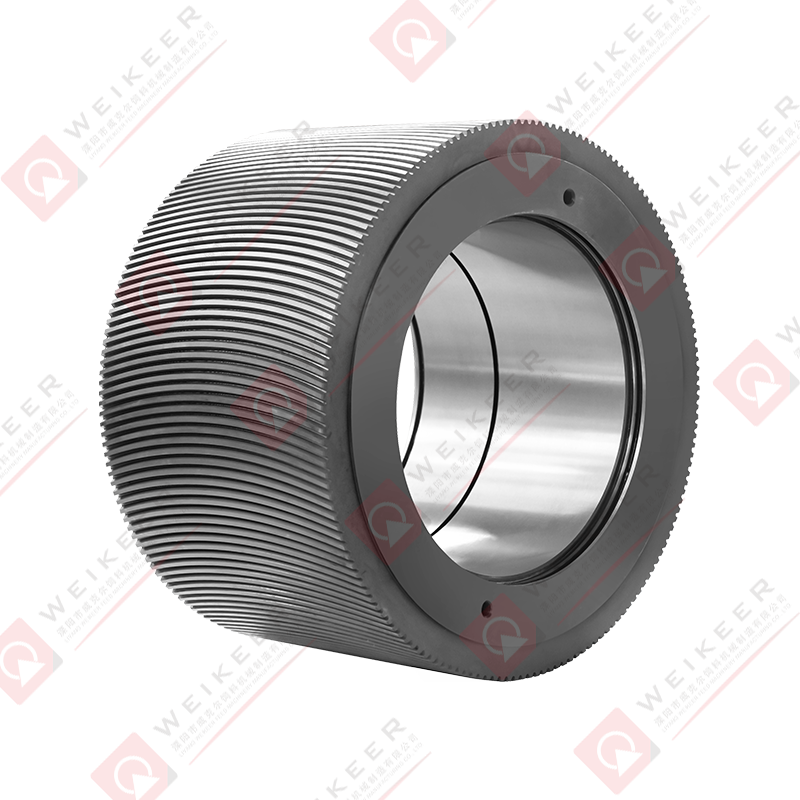
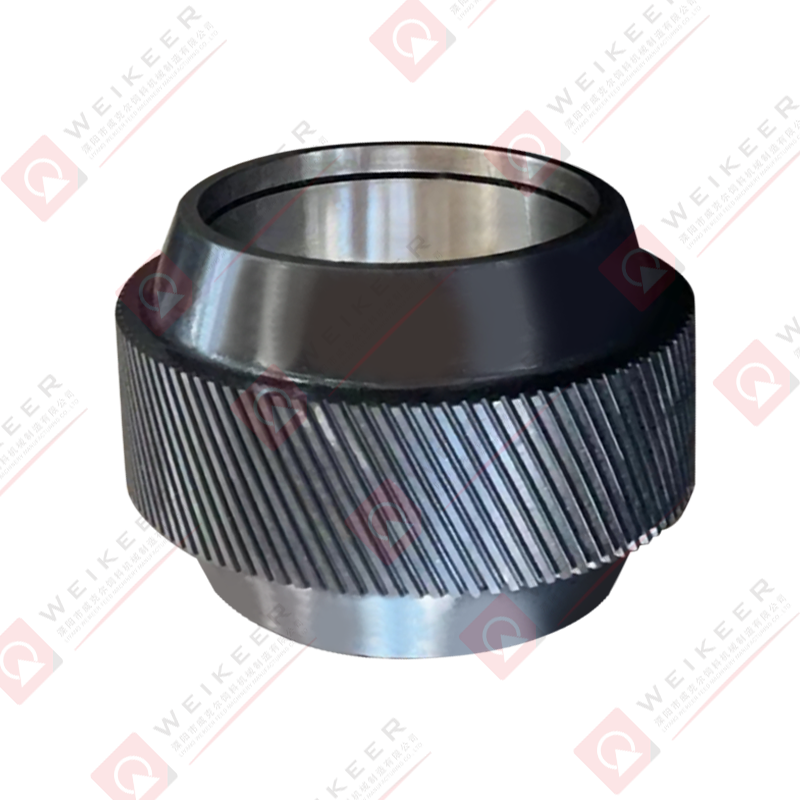
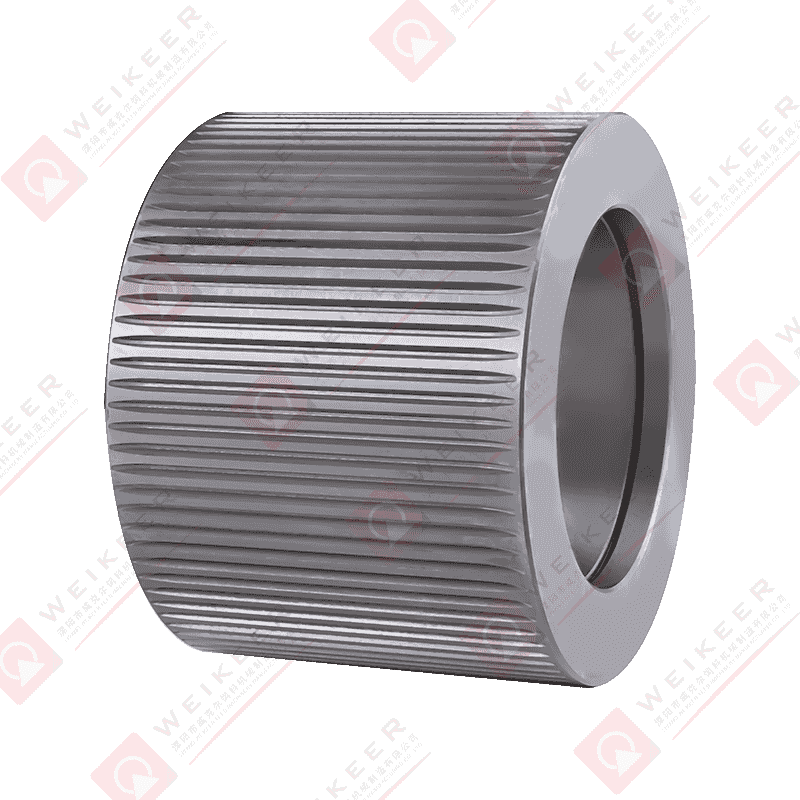
Roller surface form matters too. Closed corrugation, curved corrugation, diagonal grooves and dimpled patterns each grip the feed a little differently, which is why we keep several forms available in each material.
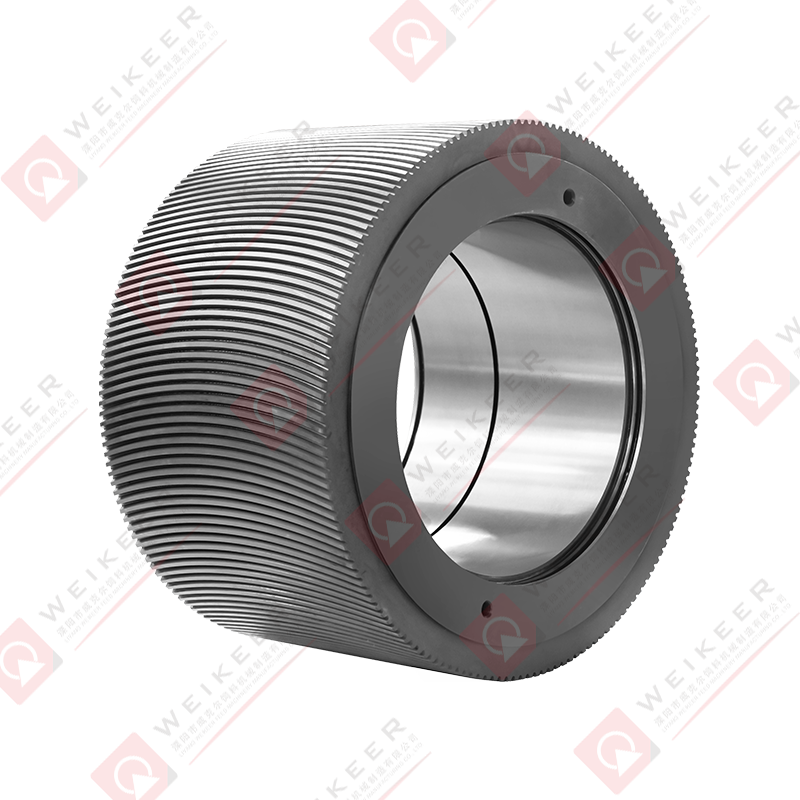
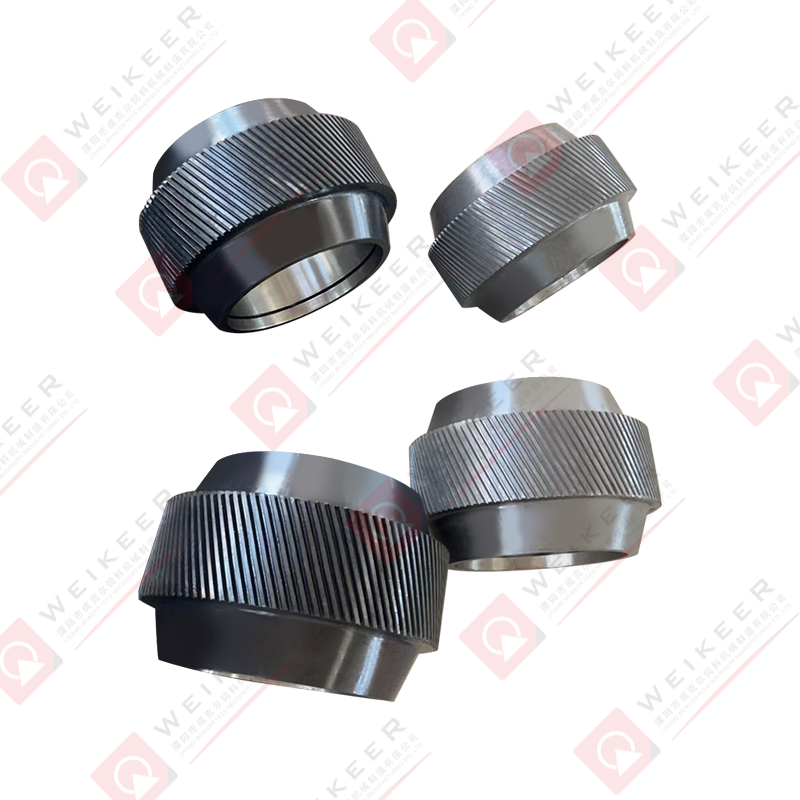 Diagonal Groove GCr15 Pellet RollerChoose this custom GCr15 bearing-steel roller for its diagonal groove surface, which improves traction and reduces slippage during feed material handling.View Product →
A Short Checklist Before You Request a Quote
- A die drawing, or a clear photo of the old die beside a ruler, showing the screw pattern.
- The press make and model, plus the die holder type.
- Current hole diameter and compression ratio, and the pellet size you want to produce.
- Species and feed type, since shrimp, marine and warm-water formulas behave differently.
- Present output per hour and typical die life, so the replacement can be judged against real numbers.
- Roller condition and the surface form you are running now.
Send those six items and any experienced die maker can quote accurately the first time, instead of trading emails for a week.
Built in Liyang, Working with Aqua Feed Mills Worldwide
We are Liyang Weikeer Feed Machinery Manufacturing, and we have been making pellet mill dies, rollers and related parts since 1996. Our site near Tianmu Lake covers 13,000 square metres, with more than 7,000 square metres of production space and a technical team of 26 specialists. Over the years we have invested in the equipment that decides die quality, including CNC ring die machining and dedicated heat treatment capacity, and our processes take their cues from European practice with an emphasis on high quality, high efficiency and low energy use.
Because we focus on the working parts of the press rather than the whole machine, our dies and rollers are built to fit a wide spread of press platforms, both the well-known imported lines and the common domestic models. If you are running aqua feed, that usually means a screw type stainless steel ring die with a matched roller set, sized to your formula and your target pellet.
If you would like a second opinion on the die you are running now, or a quotation for the next set, tell us about your line. We are happy to talk through hole geometry, compression ratio and roller form before anything is machined, because that conversation is what keeps a die performing for its full working life.



 русский
 Español
 عربى
 中文简体