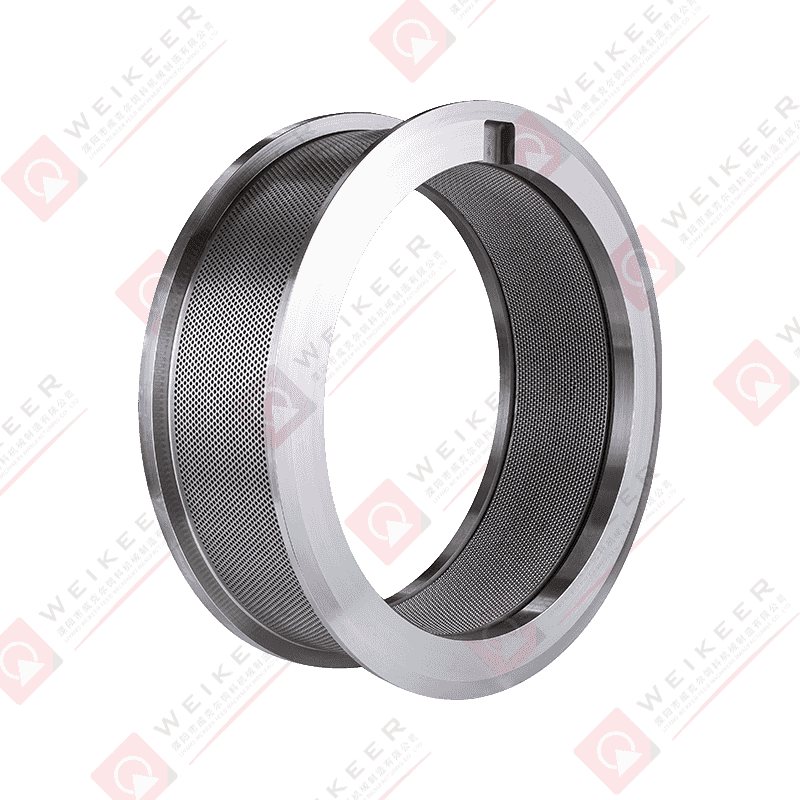
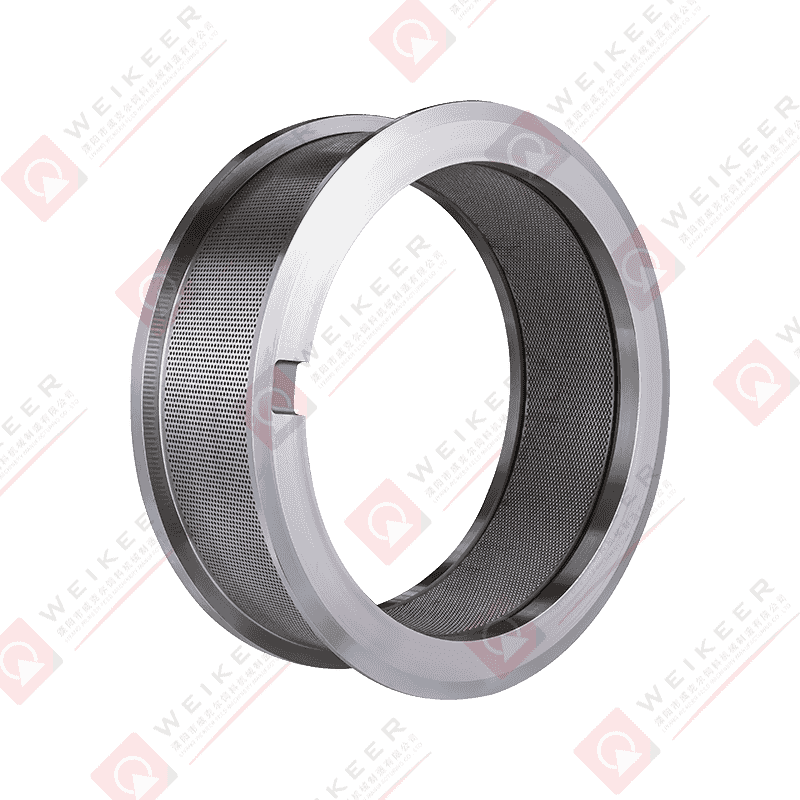
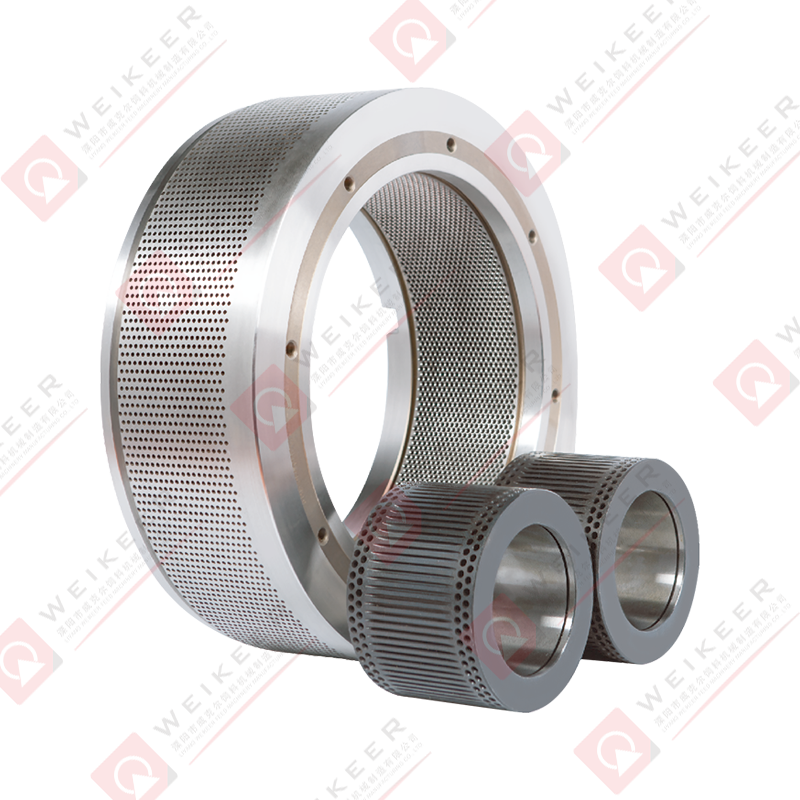
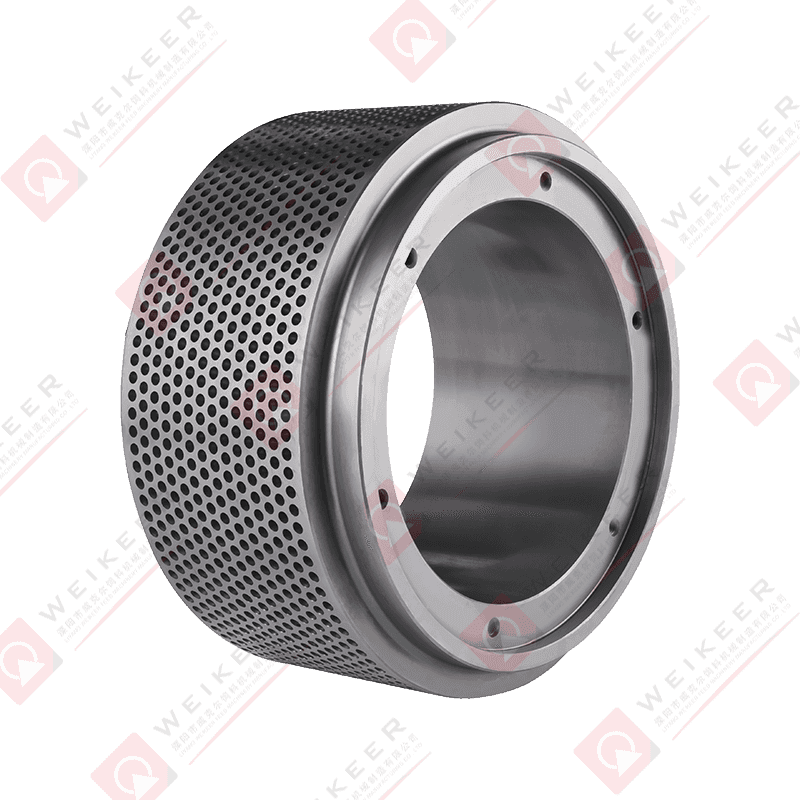
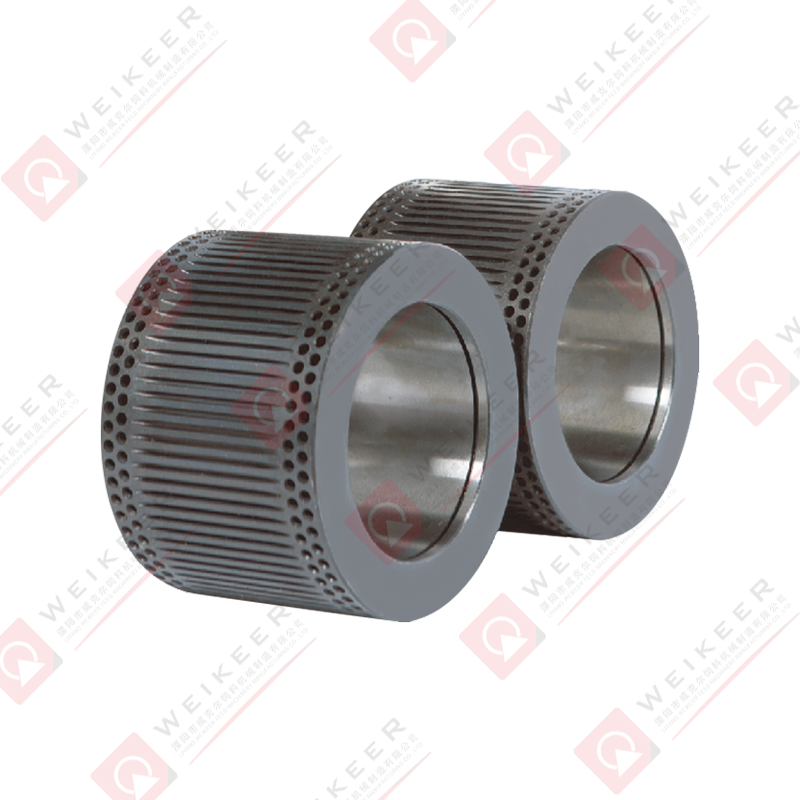
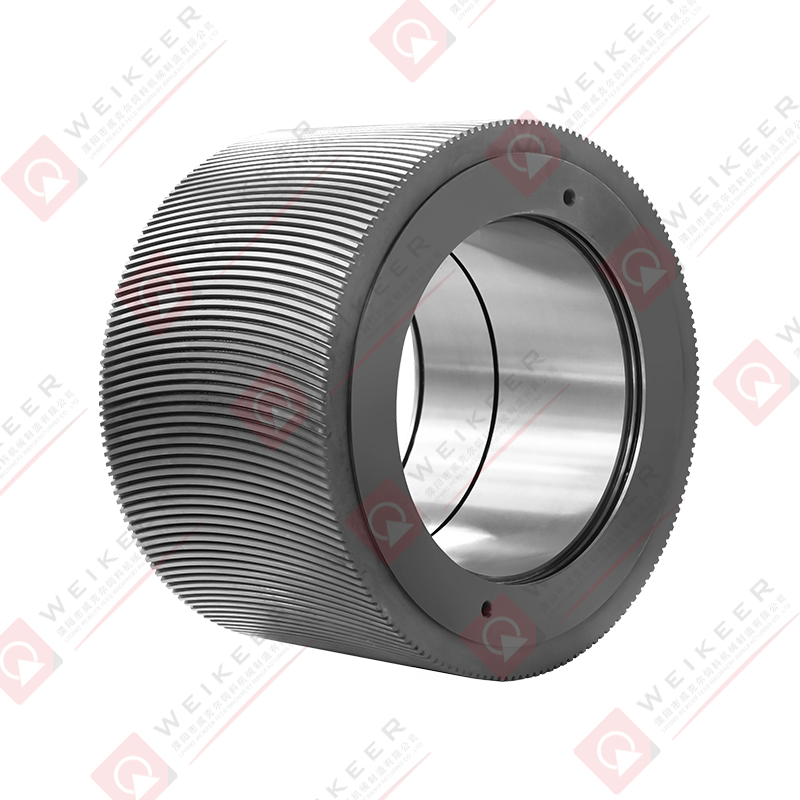
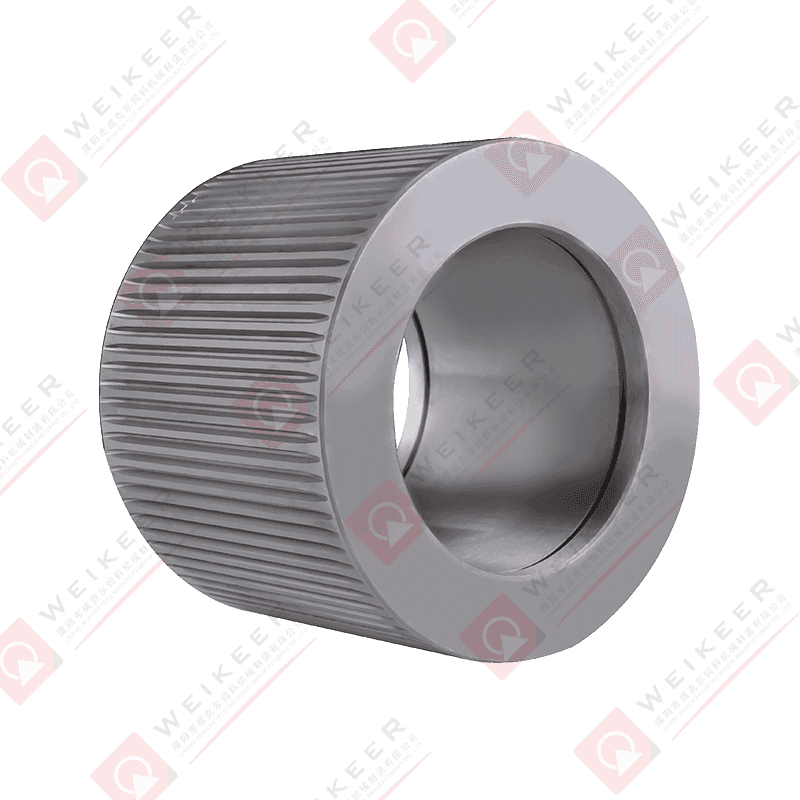
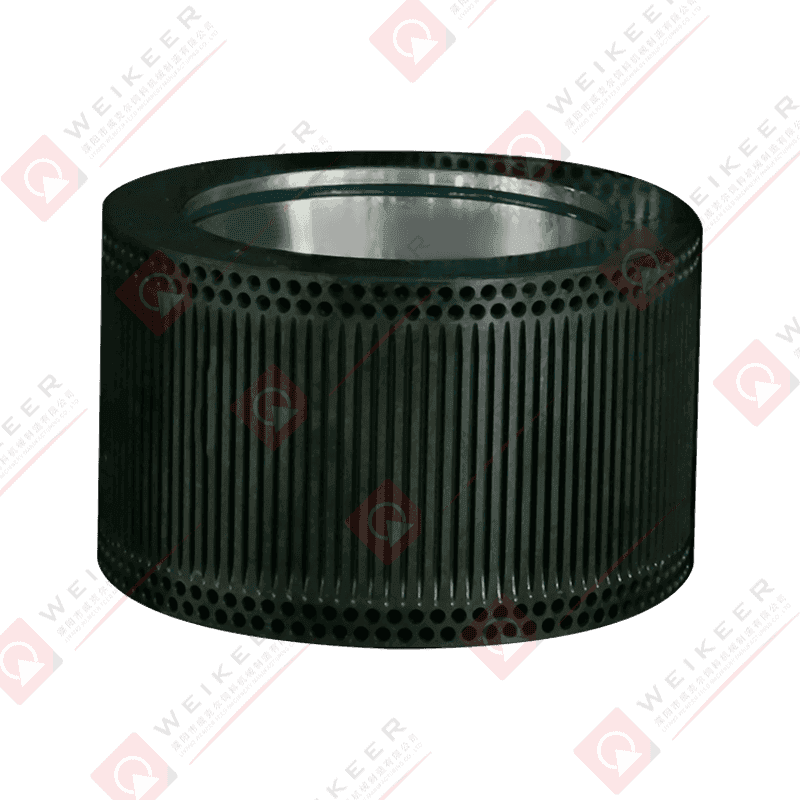
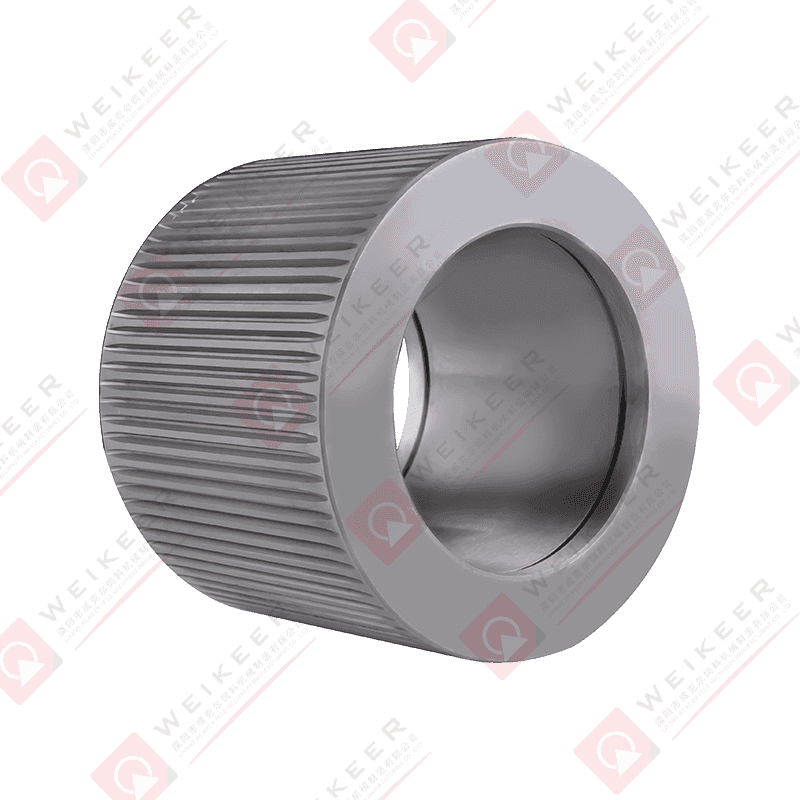
In the pellet manufacturing industry, the die and roller assembly is the mechanically demanding component in the entire production line. These parts must simultaneously endure compressive forces, continuous abrasive wear, elevated operating temperatures, and cyclic fatigue stress—often around the clock in high-throughput facilities. The material from which dies and rollers are made is therefore not a secondary consideration but the primary determinant of pellet quality, machine uptime, and total cost of ownership. Among the alloy steels used for this purpose, 20CrMnTi has established itself as the industry benchmark. This article explains in precise technical detail why 20CrMnTi is so well-suited to pellet mill die and roller applications, how it is processed to achieve its working properties, and what buyers should look for when sourcing these components.
What Is 20CrMnTi Alloy Steel?
20CrMnTi is a Chinese national standard (GB) low-carbon chromium-manganese-titanium case-hardening alloy steel. Its designation encodes its composition: the "20" indicates a nominal carbon content of approximately 0.20% by weight, while "Cr," "Mn," and "Ti" identify the primary alloying elements—chromium, manganese, and titanium respectively. The full chemical composition, as specified under GB/T 5216, falls within the following ranges:
| Element |
Content Range (%) |
Primary Role |
| Carbon (C) |
0.17 – 0.23 |
Core strength and toughness base |
| Chromium (Cr) |
1.00 – 1.30 |
Hardenability, wear and corrosion resistance |
| Manganese (Mn) |
0.80 – 1.10 |
Hardenability, tensile strength, deoxidation |
| Titanium (Ti) |
0.04 – 0.10 |
Grain refinement, carbide stability |
| Silicon (Si) |
0.17 – 0.37 |
Deoxidation, solid solution strengthening |
| Phosphorus (P) |
≤ 0.035 |
Controlled impurity |
| Sulfur (S) |
≤ 0.035 |
Controlled impurity |
This composition positions 20CrMnTi as a classic case-hardening (carburizing) steel. Its low base carbon content ensures that the core of any finished component remains tough and ductile after heat treatment, while the surface layer—enriched with carbon during the carburizing process—achieves extremely high hardness. This combination of a hard surface over a tough core is precisely the microstructural architecture that pellet mill die rollers require.
Why the Die and Roller Assembly Is So Mechanically Demanding
To understand why material selection is so critical, it helps to appreciate the conditions that pellet mill dies and rollers operate under during normal production. A ring die pellet mill works by forcing raw material—whether animal feed ingredients, wood biomass, or other compressible material—between a rotating annular die and a set of press rollers. As the material is squeezed into the die holes, it is compressed to a fraction of its original volume and extruded through the die channel under pressures that can exceed 200–400 MPa locally at the die hole entrance.
The die surface and the roller shell surfaces are simultaneously subjected to rolling contact fatigue, abrasive wear from the raw material particles, compressive stress concentration at each die hole, and frictional heat generated by the pelleting process. In continuous 24-hour production, a single die may complete millions of loading cycles per day. Any material that cannot maintain high surface hardness, resist fatigue crack initiation at stress concentrations, and absorb impact loads without brittle fracture will fail prematurely—leading to costly downtime, die replacement, and potentially damage to adjacent machine components.
How 20CrMnTi's Alloy Chemistry Addresses These Demands
Each alloying element in 20CrMnTi contributes a specific property benefit that directly addresses one or more of the mechanical challenges described above.
Chromium for Hardenability and Wear Resistance
Chromium at 1.00–1.30% significantly increases the hardenability of the steel, meaning the hardened layer can be achieved to greater depth during quenching without requiring excessively rapid cooling that might cause distortion or cracking. Chromium also forms stable chromium carbides in the carburized surface layer, which are harder than iron carbides and provide abrasion resistance against the mineral-containing raw materials processed in feed and biomass pellet mills. This is particularly important when pelleting materials with high silica content, such as rice husks, straw, or certain mineral premixes.
Manganese for Strength and Toughness
Manganese enhances the hardenability of the steel synergistically with chromium, allowing adequate through-hardening of thick die and roller sections. More importantly, manganese increases the tensile strength of the core material after heat treatment while maintaining acceptable impact toughness. This is critical for the die body, which must resist the bending and hoop stresses imposed by the pelleting process without developing fatigue cracks that propagate from the die holes inward.
Titanium for Grain Refinement
The titanium addition—small in quantity but significant in effect—serves primarily as a grain refiner. Titanium reacts with carbon and nitrogen to form extremely fine titanium carbide and titanium nitride particles that pin grain boundaries and prevent austenite grain growth during high-temperature carburizing treatments. Fine austenite grains transform into finer martensite on quenching, which delivers better toughness at equivalent hardness levels compared to coarse-grained microstructures. This is why 20CrMnTi can be carburized at temperatures up to 950°C without the grain coarsening that would degrade toughness in steels without a grain-refining addition.
Heat Treatment Process for Pellet Mill Dies and Rollers
The mechanical properties of 20CrMnTi pellet mill components are not inherent in the as-forged or as-machined state—they are developed through a carefully controlled heat treatment sequence. The standard process for producing dies and rollers intended for pellet mill service involves the following stages:
- Normalizing: The rough-machined component is heated to approximately 950–980°C and air-cooled to relieve forging stresses, refine the as-forged grain structure, and create a uniform microstructure prior to carburizing. This step improves the consistency of the subsequent carburizing response.
- Carburizing: The component is held in a carbon-rich atmosphere (gas carburizing using endothermic gas with methane enrichment, or vacuum carburizing in modern facilities) at 900–950°C for a period calculated to achieve the target case depth. For pellet mill dies and rollers, effective case depths of 1.5–3.5mm are typical, with the exact depth depending on die thickness and hole geometry. The surface carbon content is controlled to 0.85–1.05% to maximize hardness without forming brittle carbide networks.
- Quenching: After carburizing, the component is quenched—typically in oil at 60–80°C—to transform the carbon-enriched surface layer into hard martensite while cooling the core rapidly enough to achieve the desired core hardness. Oil quenching is preferred over water quenching for 20CrMnTi to minimize distortion and quench cracking risk in complex geometries like ring dies with multiple holes.
- Low-Temperature Tempering: Immediately after quenching, the component is tempered at 150–200°C for 2–4 hours. This reduces quench stresses and eliminates retained austenite transformation issues while preserving the high surface hardness (58–62 HRC on the surface is typical for correctly processed 20CrMnTi die components).
- Grinding and Final Machining: After heat treatment, the die inner diameter, roller outer surface, and critical dimensional features are finish-ground to final tolerances. Grinding must be performed carefully to avoid thermal damage (grinding burn) that would reduce surface hardness and induce residual tensile stresses detrimental to fatigue life.
Performance Comparison: 20CrMnTi vs Other Die and Roller Materials
Several other steels are used for pellet mill dies and rollers, including stainless steel grades (316L, 304), D2 tool steel, and other alloy steels such as 42CrMo and 20CrNiMo. The table below compares their key characteristics relative to 20CrMnTi for this specific application:
| Material |
Surface Hardness (HRC) |
Core Toughness |
Corrosion Resistance |
Typical Service Life |
| 20CrMnTi (carburized) |
58 – 62 |
Excellent |
Moderate |
High (benchmark) |
| 316L Stainless Steel |
25 – 35 |
Good |
Excellent |
Low–Moderate |
| 42CrMo (through-hardened) |
48 – 54 |
Good |
Moderate |
Moderate |
| D2 Tool Steel |
60 – 64 |
Poor–Moderate |
Moderate |
Moderate (brittle failure risk) |
| 20CrNiMo (carburized) |
58 – 63 |
Excellent |
Moderate |
High (higher cost) |
Stainless steel dies are specified primarily for aquatic feed and specialty food pelleting where hygiene and corrosion resistance are paramount, and operators accept shorter wear life as the trade-off. For the vast majority of animal feed, biomass, and wood pellet applications, 20CrMnTi delivers the balance of wear resistance, toughness, and cost-effectiveness.
Die Hole Geometry and Its Interaction with Material Properties
The geometry of the die holes—including their diameter, effective length, taper angle, and hole pattern—interacts directly with the material's mechanical properties to determine both pellet quality and die service life. In 20CrMnTi dies, the carburized case must be deep enough to extend fully through the die hole wall thickness at the narrowest section, otherwise the softer core material becomes exposed as wear progresses and the die hole enlarges rapidly. This is why high-quality die manufacturers specify a effective case depth of 1.5mm even for small-hole dies, and up to 3.5mm for thick dies used in heavy biomass pelleting.
The countersink or inlet taper on each die hole is also critical. A well-designed inlet taper reduces the stress concentration at the hole entrance—the point of compressive and shear loading during pelleting. In 20CrMnTi dies processed to the correct hardness, this taper zone retains its geometry for much longer than in softer or more brittle materials, maintaining consistent pellet density and hardness throughout the die's service life.
What to Verify When Purchasing 20CrMnTi Pellet Mill Dies and Rollers
Given that counterfeit or substandard alloy steel components are a genuine concern in the pellet mill parts market, buyers should request and verify the following from any supplier:
- Material Certification: Request a mill certificate (Material Test Report) that confirms the steel heat number, chemical composition, and compliance with GB/T 5216 or an equivalent recognized standard. Cross-check the carbon, chromium, manganese, and titanium contents against the specified ranges.
- Hardness Test Results: Ask for Rockwell hardness test results from the finished die or roller surface. Correctly processed 20CrMnTi components should achieve 58–62 HRC on the working surface. Readings below 56 HRC indicate insufficient carburizing depth, inadequate quench, or incorrect material.
- Case Depth Verification: Reputable manufacturers can provide metallographic cross-section reports showing the effective case depth (defined as the depth to 550 HV) achieved on a sample from the same production batch. Verify this meets the 1.5mm requirement for your die specification.
- Dimensional Inspection Report: The die inner diameter, outer diameter, width, and hole pattern dimensions must be verified against your pellet mill manufacturer's specifications. Even minor deviations in hole diameter or pitch affect pellet quality and accelerate roller wear.
- Manufacturer Track Record: Prefer suppliers who specialize in pellet mill wear parts and can provide references from comparable operations. Established manufacturers will have process documentation for their carburizing furnaces, quench systems, and quality control procedures.
Conclusion
The selection of 20CrMnTi alloy steel for pellet mill die rollers is not arbitrary industry tradition—it is the result of decades of operational experience converging on a material whose chemistry, hardenability, and response to carburizing heat treatment uniquely satisfy the mechanical demands of the pelleting process. The combination of high surface hardness derived from the carburized layer, a tough and fatigue-resistant core enabled by the low base carbon and balanced alloy content, and fine grain structure preserved by the titanium addition collectively produce components that outlast alternatives and maintain pellet quality consistency over extended production campaigns. For any operation serious about minimizing downtime and output quality, specifying verified 20CrMnTi dies and rollers with documented heat treatment and hardness certification is a non-negotiable baseline requirement.



 русский
 Español
 عربى
عربى 中文简体
中文简体