What Is a Ring Die and Why Does Material Matter?
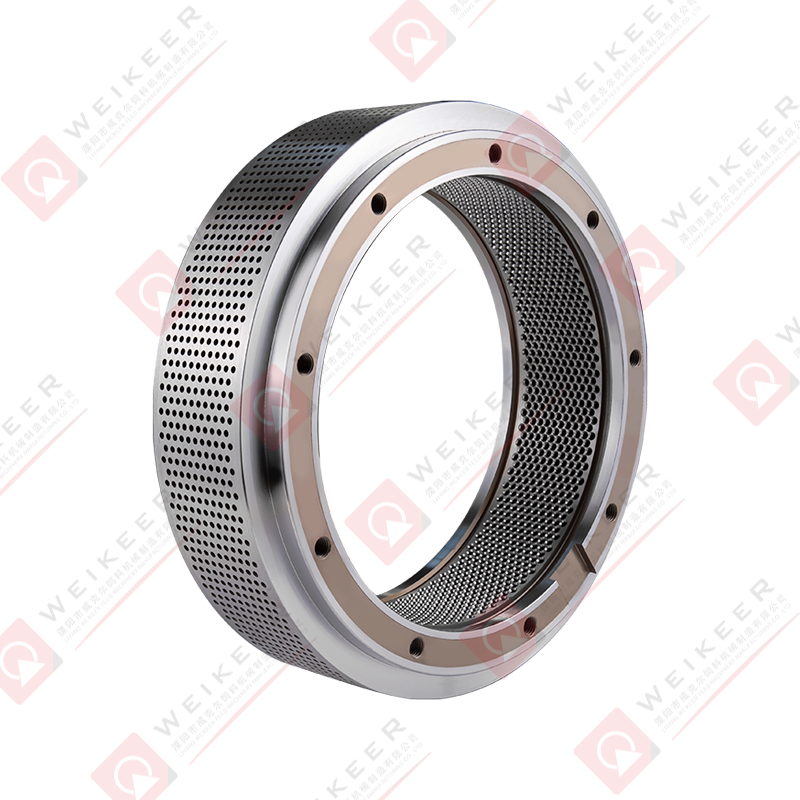
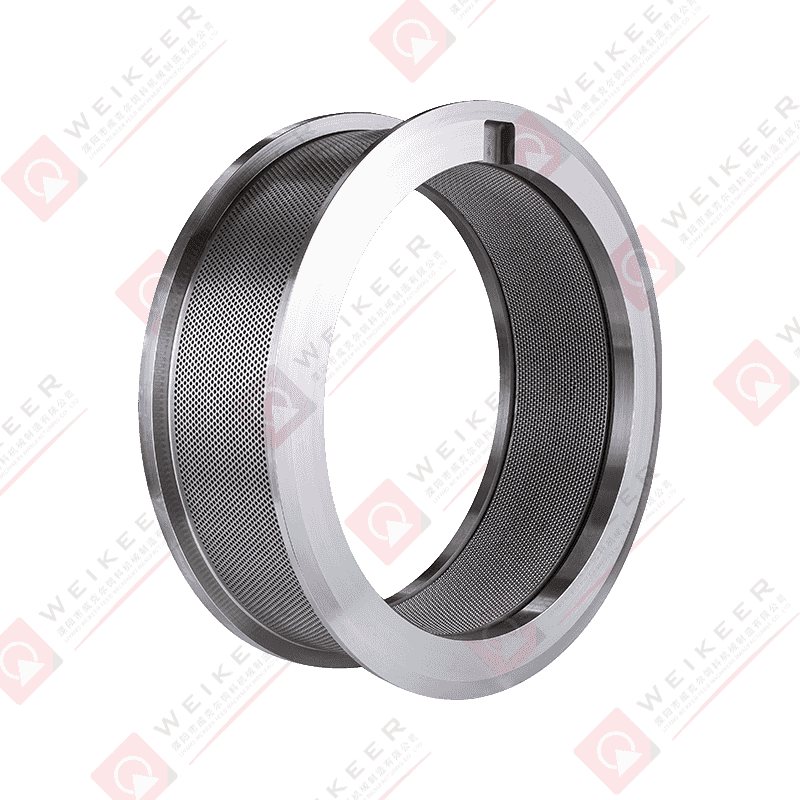
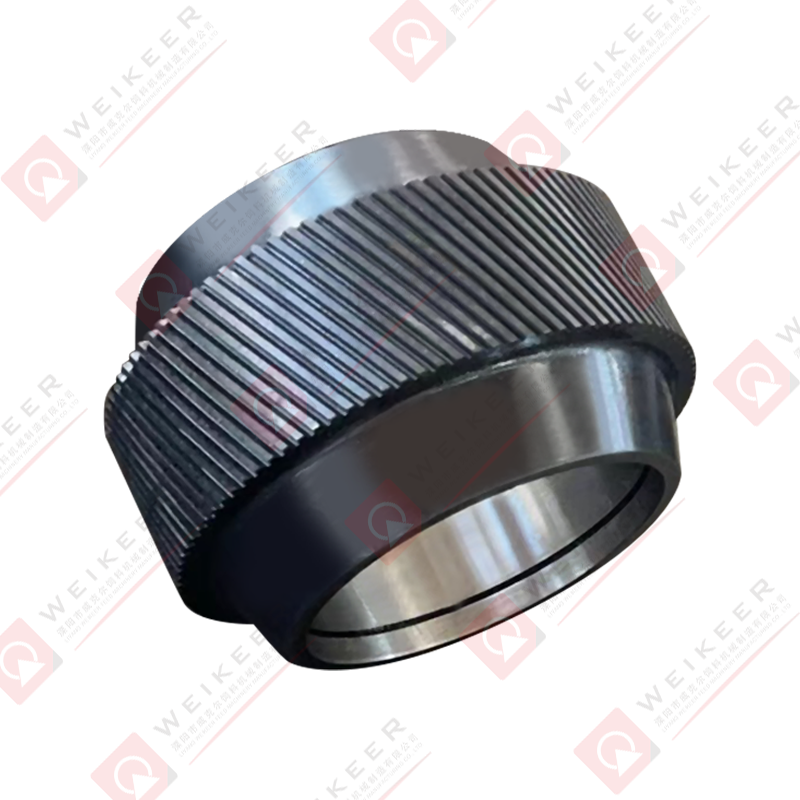
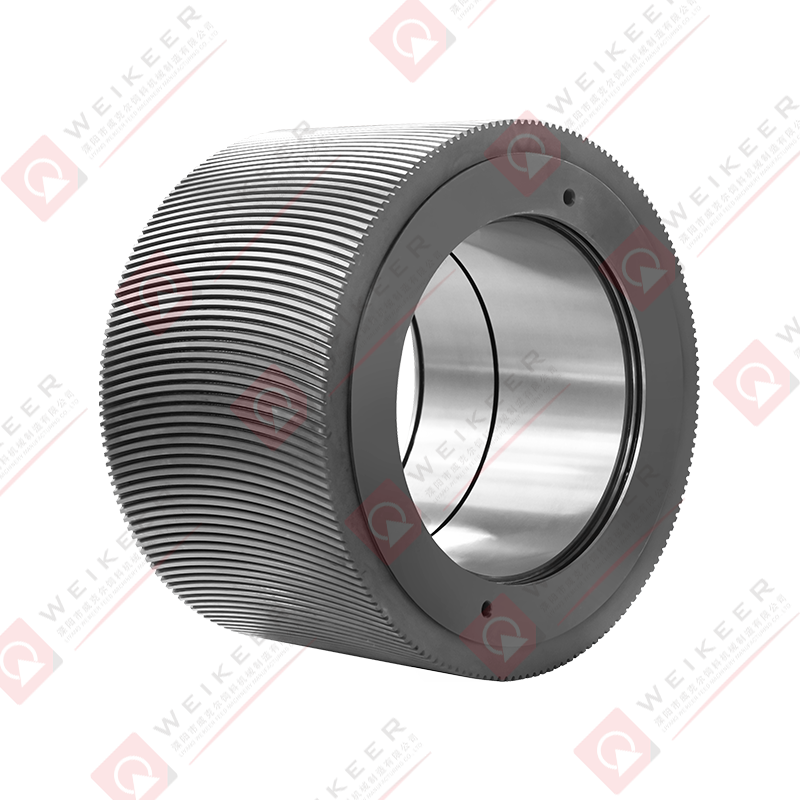
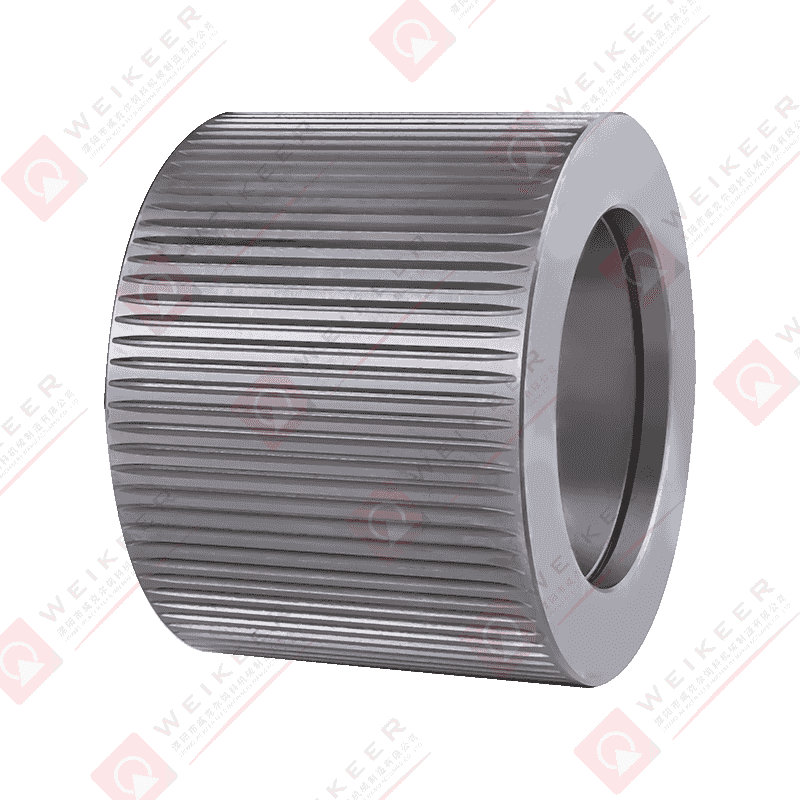
The ring die is the critical wear component in a pellet mill. It is a cylindrical steel shell perforated with hundreds or thousands of precisely drilled holes — called die holes or channels — through which conditioned mash is forced by rotating press rollers to form dense, uniform pellets. The geometry of these holes, including their diameter, effective length, and inlet bevel angle, directly controls pellet density, hardness, throughput rate, and energy consumption per ton of output.
Because the ring die is simultaneously subjected to compressive forces from the rollers, abrasive friction from the feed material, elevated temperatures from frictional heat, and sometimes chemical attack from acidic or corrosive ingredients, its material composition is not a secondary concern — it is the primary engineering decision. Carbon steel dies are common and economical, but they corrode rapidly when processing high-moisture feeds, mineral-enriched formulas, or acidic biomass materials. Stainless steel ring dies address these failure modes directly, offering a substantially longer service life and more consistent pellet quality over the full wear cycle of the die.
Anchorear Stainless Steel Ring Dies: Design and Metallurgy
Anchorear manufactures ring dies from high-alloy stainless steel grades specifically selected for pellet mill duty. The widely used base material is a martensitic stainless steel — typically equivalent to AISI 420 or a proprietary higher-carbon variant — which is heat-treated after machining to achieve a surface hardness in the range of 52–58 HRC. This hardness level balances wear resistance against brittleness: a die that is too hard will crack under impact loading from foreign material or sudden pressure spikes, while one that is too soft will wear unevenly and produce out-of-specification pellets before its rated service life is reached.
The chromium content of Anchorear's stainless grades — typically 13% to 17% — provides the corrosion resistance that separates these dies from standard alloy steel alternatives. In aquaculture feed production, where high-fat, high-moisture formulas contact the die surface continuously, standard dies may pit or rust within weeks. An Anchorear stainless ring die resists this attack, preventing contamination of the final product and maintaining the surface finish of the die hole walls, which directly influences pellet surface smoothness and durability.
Anchorear also applies specialized surface treatments to the die hole interior. Nitriding or physical vapor deposition (PVD) coatings applied to the channel walls reduce the static friction coefficient, allowing feed material to flow through the holes more freely. This reduces energy draw, lowers die temperature during operation, and decreases the formation of burned or discolored pellets — a common defect in high-starch formulations such as pet food or aquaculture diets processed at marginal moisture levels.
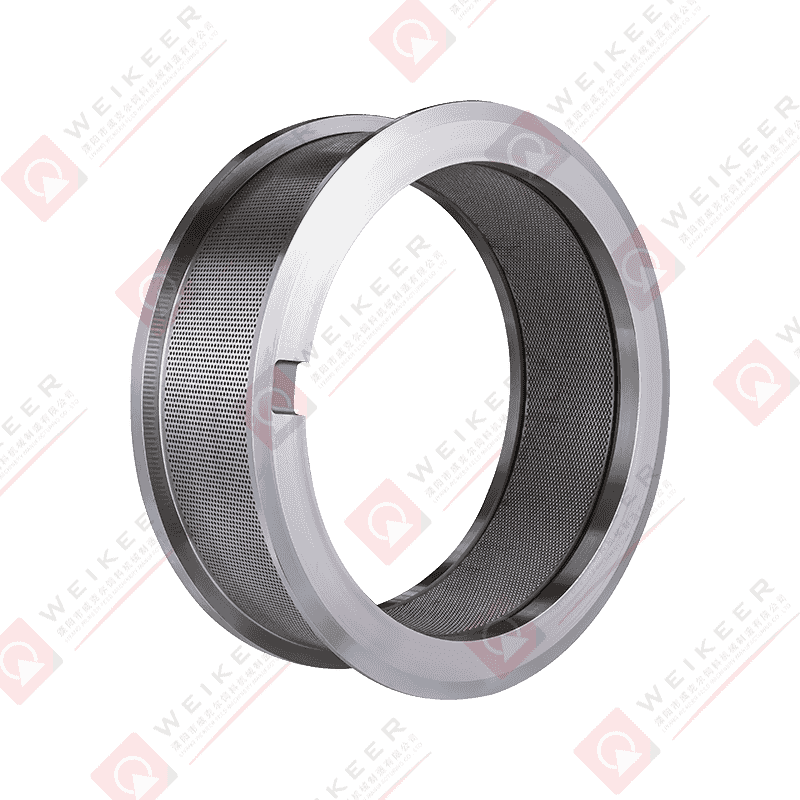
Key Dimensional Parameters of the Ring Die
Understanding ring die geometry is essential for matching the die specification to the target pellet and feed material. The following parameters are specified on every Anchorear ring die order:
- Die hole diameter: Ranges from 1.5 mm for shrimp starter feeds to 20 mm or more for large animal roughage pellets. The hole diameter defines the nominal pellet diameter, though pellets shrink slightly as they dry and cool after exiting the die.
- Effective length (L/D ratio): The ratio of the working channel length to the hole diameter. A higher L/D ratio increases compaction and produces harder, denser pellets but raises energy consumption and die temperature. Typical L/D values range from 6:1 for soft biomass pellets to 14:1 or higher for very hard aquaculture or cat food pellets.
- Inlet bevel (countersink) angle: The chamfered entry angle at the feed-side face of each hole. A larger countersink angle captures more material and eases entry under high-moisture conditions. Typical inlet angles range from 30° to 60°.
- Open area percentage: The proportion of the die face occupied by hole openings versus solid metal. Higher open area increases theoretical throughput but reduces structural rigidity. Anchorear engineers calculate hole spacing to balance both factors for the target application.
- Die outer diameter and working width: Must match the specific pellet mill model exactly. Anchorear supplies dies compatible with all major mill brands including CPM, Andritz, Bühler, Muyang, and others.
Comparing Stainless Steel and Alloy Steel Ring Dies
The choice between stainless and conventional alloy steel dies depends on the specific processing environment. The table below summarizes the practical differences across the factors that matter to pellet mill operators:
| Factor |
Alloy Steel Ring Die |
Anchorear Stainless Steel Ring Die |
| Corrosion Resistance |
Low — rust in humid or acidic feeds |
High — suited for aqua, pet food, acidic biomass |
| Service Life |
Shorter in corrosive applications |
Up to 2–3× longer in high-moisture service |
| Initial Cost |
Lower |
Higher (offset by longer life) |
| Pellet Surface Quality |
Degrades as die corrodes |
Maintained throughout service life |
| Food/Feed Safety |
Risk of rust contamination |
No rust contamination risk |
| Best Applications |
Dry, low-fat poultry or ruminant feed |
Aquaculture, pet food, biomass, specialty feeds |
Applications Where Anchorear Stainless Ring Dies Deliver Clear Advantages
Aquaculture Feed Production
Shrimp, fish, and crustacean feeds contain high levels of fish meal, fish oil, and salt — a combination that accelerates corrosion of standard steel dies at an exceptional rate. Anchorear stainless ring dies maintain their dimensional integrity and surface finish throughout a full production run, delivering pellets with the smooth, hard exterior surface that sinks correctly and resists water breakdown for the required feeding window. Die holes that corrode or pit produce rough pellet surfaces that break apart prematurely in water, wasting expensive raw materials and degrading water quality.
Pet Food and Specialty Animal Feeds
Cat and dog food formulations often contain high fat levels (up to 20% added fat in some recipes), acidic preservatives, and vitamin premixes. These components attack conventional steel and create conditions that can transfer metallic contaminants to the finished product — an unacceptable quality and regulatory risk. Stainless steel eliminates the contamination pathway and supports compliance with food safety standards such as HACCP, ISO 22000, and FSSC 22000. Many pet food manufacturers specifically require stainless steel or food-grade tooling for all product-contact surfaces.
Biomass and Wood Pellet Production
Biomass raw materials — wood chips, agricultural residues, energy grasses — vary widely in moisture content and silica levels. High silica content is abrasive, while high moisture and organic acid content are corrosive. Anchorear stainless dies with optimized L/D ratios for fibrous biomass materials (typically 5:1 to 8:1) resist both attack modes simultaneously, reducing the frequency of die changes during continuous high-output production campaigns.
Proper Die Break-In and Maintenance Practices
Even the highest-quality stainless steel ring die will underperform if not broken in correctly. New dies should always be conditioned with an oil-sand mixture — typically a blend of food-grade vegetable oil or mineral oil mixed with fine abrasive sand or rice husks — before the production run. This break-in procedure polishes the die hole surfaces, removes any machining burrs, and establishes a thin lubrication film that prevents the initial feed charge from seizing in the channels. Skipping this step on a new Anchorear stainless die is the single common cause of premature cracking or hole plugging in the production shift.
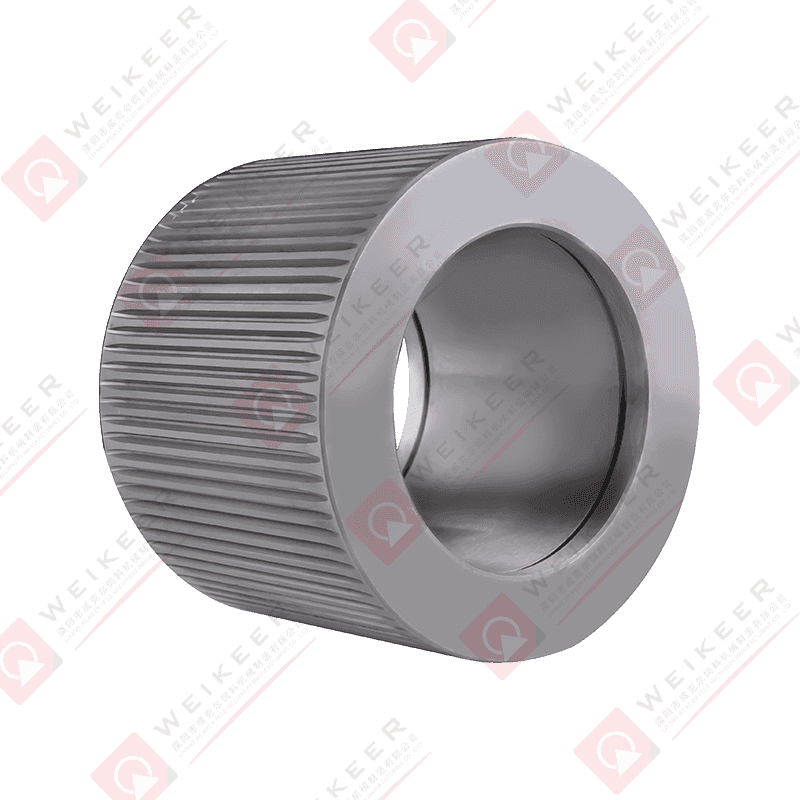
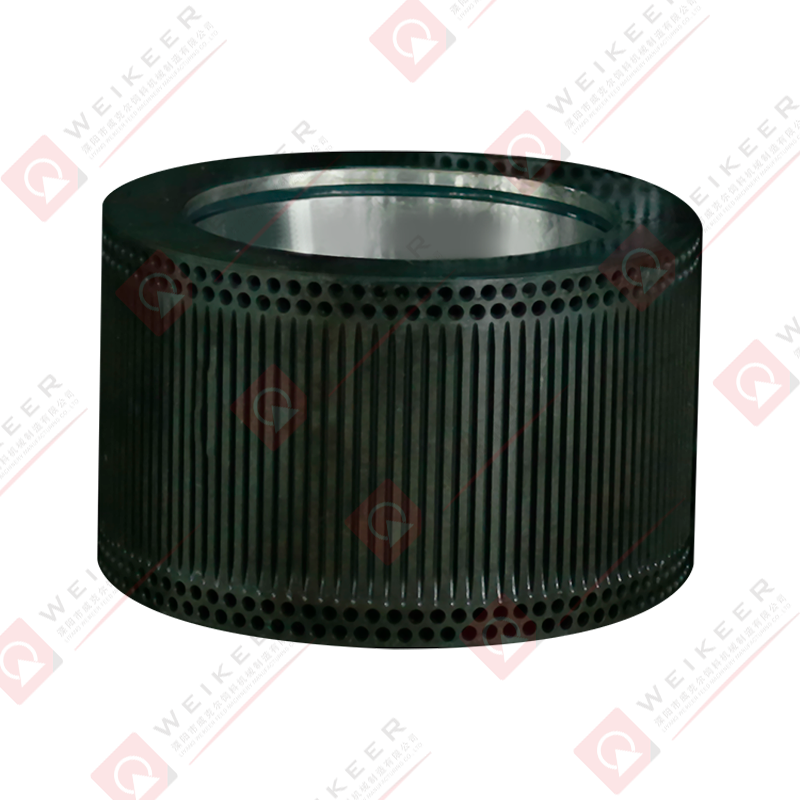
During production, roller-to-die gap setting is critical. The press rollers must be set with minimal but consistent clearance from the die face — typically 0.1 to 0.3 mm. Too large a gap allows feed to bypass without being compacted; too small a gap generates metal-to-metal contact that rapidly scores both the roller shell and the die face. Regular inspection of roller gap, shell wear, and die hole condition using a pellet hardness tester and visual inspection of exit pellet surface finish allows operators to anticipate die replacement before quality falls out of specification.
When storing Anchorear stainless ring dies between production campaigns, filling the holes with an oil-based preservative and wrapping the die in moisture-resistant packaging prevents any surface oxidation at the channel walls. Even stainless steel can develop superficial staining if left exposed to humid air for extended periods without protection, and maintaining channel smoothness between campaigns protects the investment in a precision-machined component.
Selecting the Right Anchorear Die for Your Mill and Formula
Specifying the correct Anchorear stainless ring die requires accurate data on four inputs: the target pellet diameter and hardness specification, the feed formula composition and moisture content at the die, the pellet mill model and rated capacity, and the required production rate. With these parameters confirmed, Anchorear's engineering team calculates the appropriate L/D ratio, inlet bevel geometry, open area, and stainless grade to meet the production target at the sustainable energy cost per ton. Where operators are transitioning from alloy steel to stainless dies for the time, Anchorear recommends a parallel trial run comparing pellet quality, die temperature, energy draw, and output rate before committing to full fleet conversion — a practical approach that validates the investment with plant-specific data rather than generalized claims.



 русский
 Español
 عربى
عربى 中文简体
中文简体