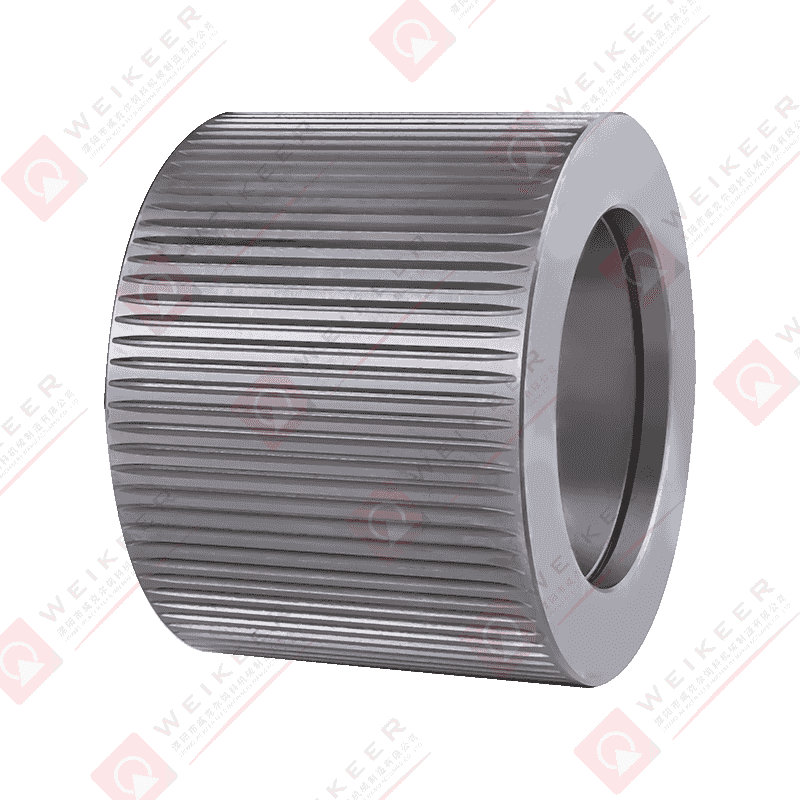
What Is a Ring Die in a Pellet Mill?
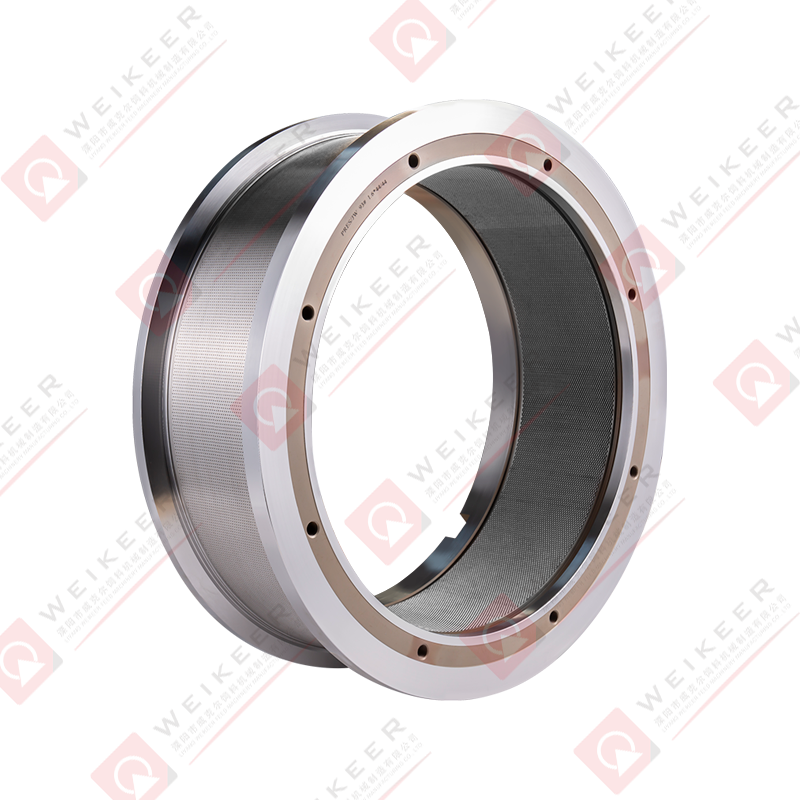
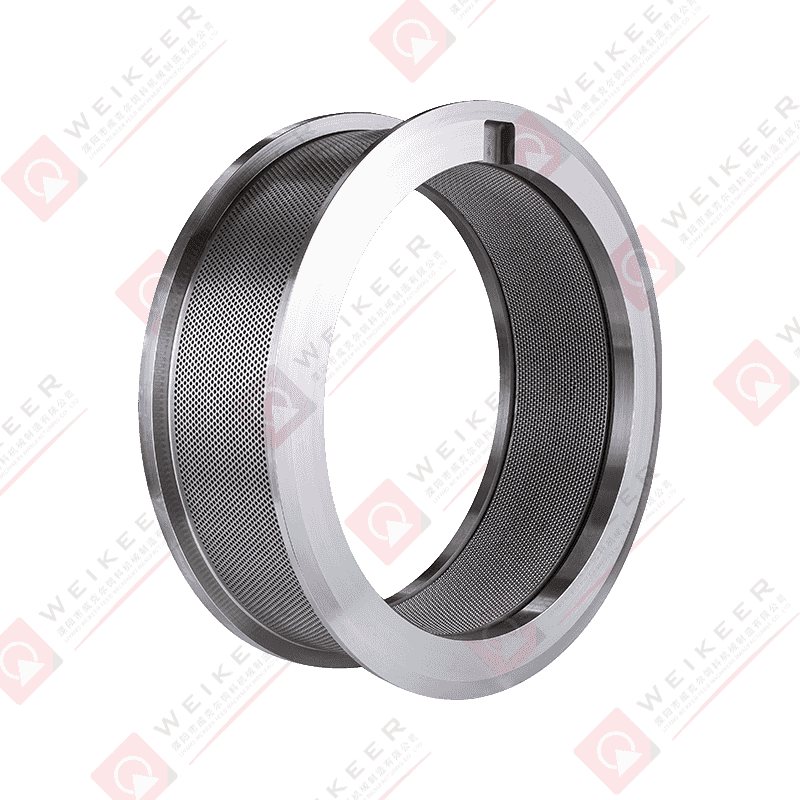
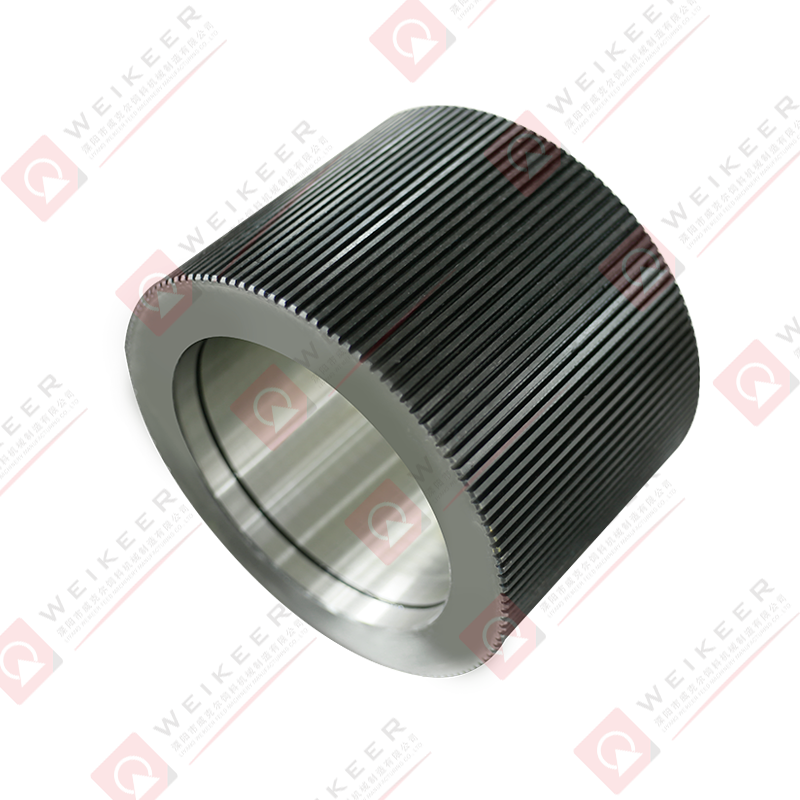
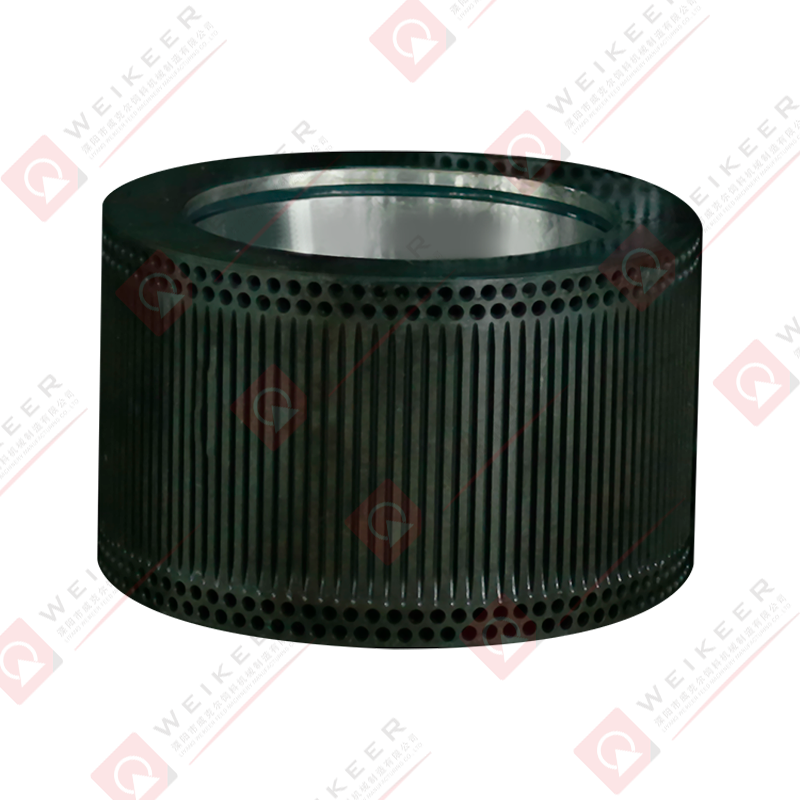
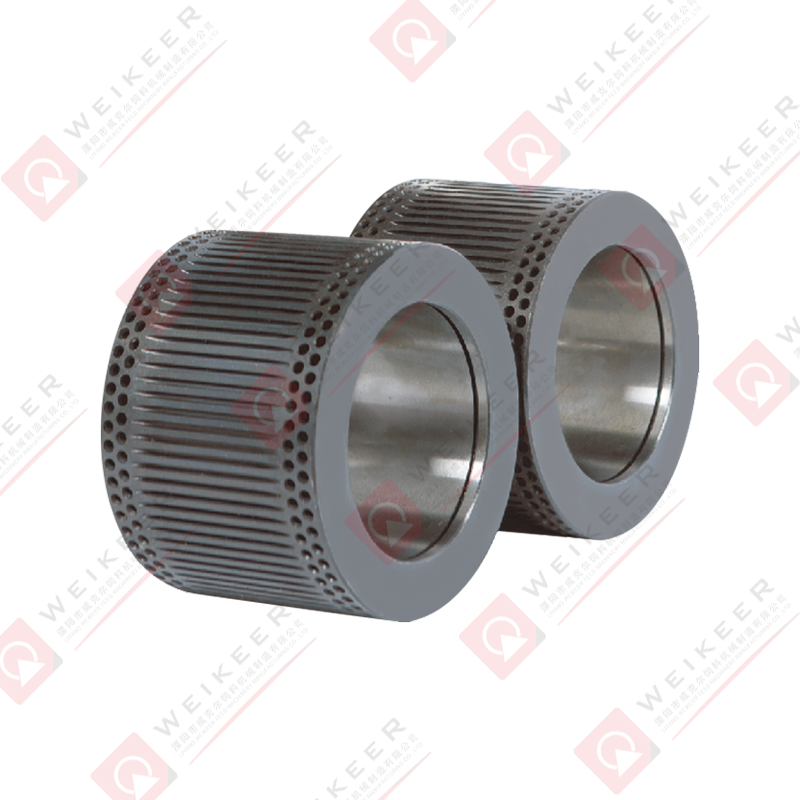
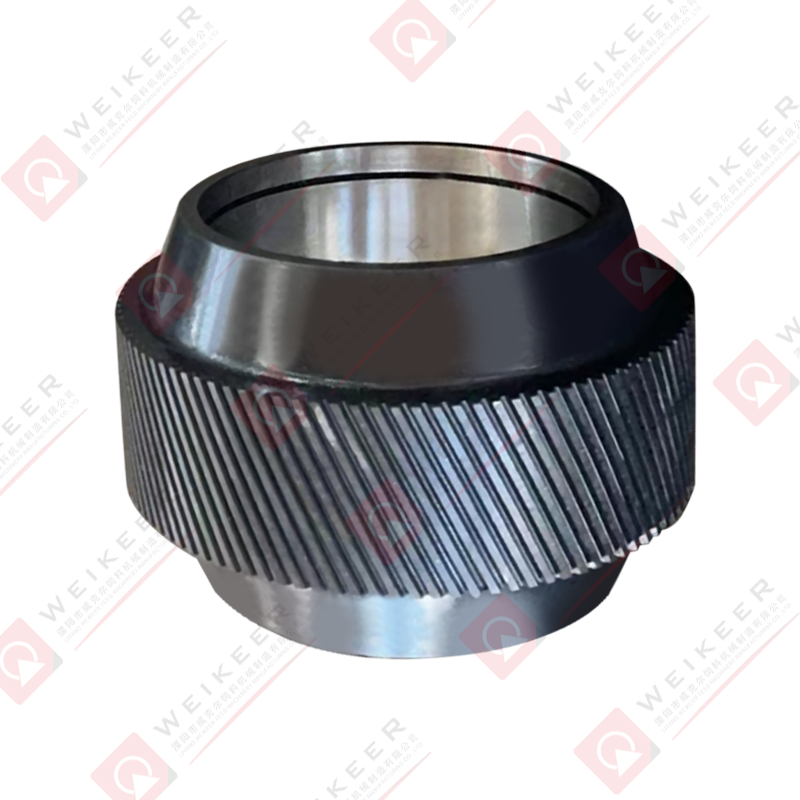
A ring die is the core forming component of a ring die pellet mill — the widely used type of pellet press in animal feed, aquafeed, biomass fuel, and organic fertilizer production globally. It is a thick-walled, hollow cylinder machined from high-grade steel with hundreds or thousands of radially drilled holes — called die channels or die holes — that pass through the die wall from its inner surface to its outer surface. Feedstock material, conditioned with steam and moisture to reduce friction and improve binding, is fed into the interior of the rotating ring die and compressed against the inner surface by two or more press rollers. As the rollers press the material into the die holes under high pressure, it is extruded through the channels and emerges from the outer die surface as continuous cylindrical strands, which are then cut to length by stationary knives positioned outside the die to produce uniform pellets.
The ring die is simultaneously the mechanically stressed and the wear-critical component in the entire pellet mill. Every kilogram of pellets produced must pass through the die holes under pressures that can exceed 200 MPa at the die channel wall, at temperatures of 60°C to 90°C in feed pelleting and up to 120°C in biomass applications. The die must maintain its dimensional accuracy — particularly the die hole diameter and the smoothness of the channel bore — across millions of compression cycles and hundreds of tonnes of throughput before the increase in hole diameter from wear reduces pellet quality below acceptable limits. The material from which the die is manufactured, the heat treatment it receives, and the precision of its machining are therefore the primary determinants of production cost per tonne, pellet quality consistency, and overall pellet mill profitability.
Why Stainless Steel Is Specified for Ring Dies
Ring dies for pellet mills are manufactured from two main categories of steel: alloy tool steels (such as 20CrMnTi, 42CrMo, and D2) and stainless steels (commonly AISI 316L, 304, and martensitic grades such as 420 or 440C). The choice between these categories depends on the material being pelleted, the regulatory environment governing the end product, and the production conditions including moisture level and chemical exposure during processing.
Stainless steel ring dies are specified primarily in applications where corrosion resistance is a functional requirement rather than an optional upgrade. In aquatic feed production, the feedstock contains high moisture levels — often above 20% — combined with fish meal, shrimp meal, and salt-containing ingredients that create a corrosive environment inside the die channels. Alloy tool steel dies in this service suffer accelerated corrosion that roughens the channel bore, increases friction, reduces throughput, and eventually causes channel seizure or cracking. Stainless steel's chromium oxide passive layer prevents this corrosion mechanism, maintaining channel bore smoothness throughout the die's working life. Similarly, in organic fertilizer pelleting, the ammonia compounds and organic acids present in composted materials attack carbon steel dies rapidly; stainless steel provides the chemical resistance needed to achieve commercially viable die service life in this application.
Regulatory requirements are a second driver for stainless steel specification. In pet food, pharmaceutical excipient, and human-food-grade ingredient pelleting, direct contact between the feedstock and the die surface is subject to food safety regulations — including FDA 21 CFR, EU Regulation 1935/2004, and equivalent national standards — that require food-contact surfaces to be manufactured from non-toxic, corrosion-resistant materials. Stainless steel grades 304 and 316L meet these requirements and are the standard specification for pet food and food-grade pellet mill ring dies worldwide.
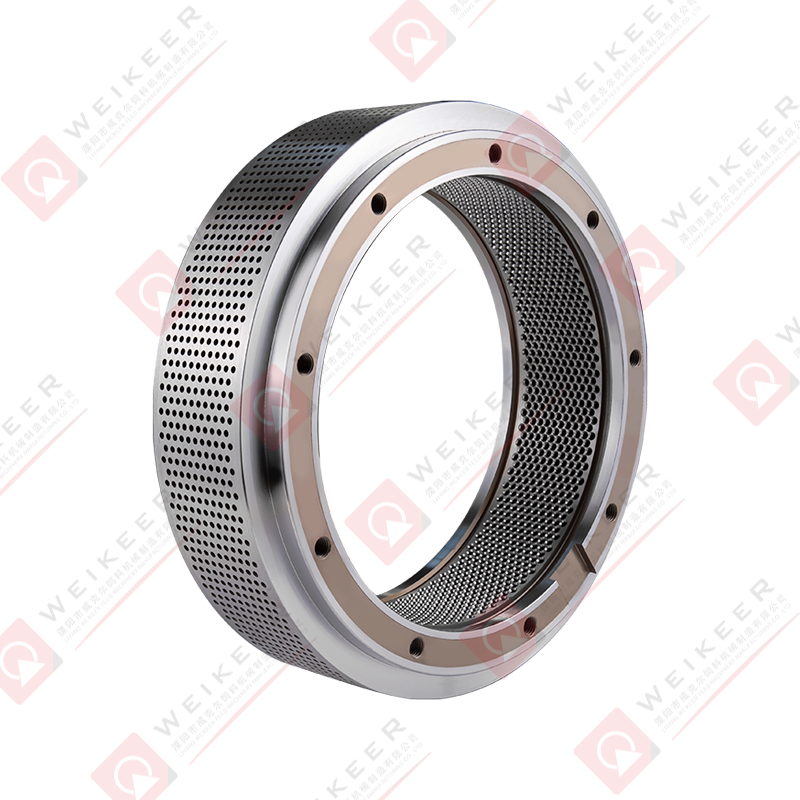
Stainless Steel Grades Used in Ring Die Manufacturing
Not all stainless steels deliver equivalent performance in ring die applications. The choice of grade involves trade-offs between corrosion resistance, hardness after heat treatment, machinability, and cost that must be matched to the specific demands of the pelleting application.
AISI 316L (1.4404)
316L is an austenitic stainless steel with 2 to 3 percent molybdenum content that provides resistance to chloride pitting corrosion compared to standard 304. It is the preferred grade for aquafeed ring dies, marine ingredient processing, and any application where chloride-containing ingredients are present in the feedstock. The "L" designation indicates low carbon content (0.03%), which eliminates sensitization — the precipitation of chromium carbides at grain boundaries during welding or elevated temperature exposure — and maintains corrosion resistance in the heat-affected zones of any welded repairs. However, 316L cannot be hardened by heat treatment and achieves a hardness of approximately 200 HB in the annealed condition, which is significantly softer than heat-treatable alloy steels used in standard dies. For this reason, 316L ring dies wear faster than hardened alloy steel dies in abrasive feedstocks and are suited to applications where corrosion rather than abrasion is the dominant wear mechanism.
AISI 440C (1.4125)
440C is a high-carbon martensitic stainless steel that can be hardened by quenching and tempering to achieve surface hardness values of 58 to 62 HRC — comparable to many conventional alloy tool steels used in standard ring die production. This combination of stainless corrosion resistance with high hardness makes 440C the technically demanding and highest-performance stainless steel option for ring die manufacture. It is specified for applications requiring both corrosion resistance and abrasion resistance simultaneously — such as shrimp feed containing abrasive shell-derived ingredients or fertilizer pellets with mineral additives. The higher carbon content of 440C compared to 316L reduces its weldability and toughness, making it more susceptible to cracking under impact loading, so it is appropriate for stable, well-conditioned feedstocks without hard foreign body contamination risk.
AISI 420 (1.4021)
420 stainless steel is a medium-carbon martensitic grade that offers a balance between hardenability (achievable hardness 50 to 55 HRC after heat treatment), corrosion resistance, and cost. It is a common specification for general-purpose stainless steel ring dies in applications where moderate corrosion resistance is needed alongside reasonable wear life — including poultry feed with fishmeal addition, pig feed with wet ingredients, and organic fertilizer processing. Its corrosion resistance is lower than 316L or 440C in chloride-rich environments, making it less suitable for marine ingredient-heavy formulations, but it provides adequate protection in standard agricultural feed applications with typical moisture levels.
Critical Die Geometry Parameters and Their Effect on Pellet Quality
The geometry of the die holes — their diameter, effective length, compression ratio, relief bore design, and surface finish — determines the pelleting pressure, throughput rate, pellet hardness, durability, and the power consumption of the pellet mill for any given feedstock. Selecting the correct die specification for a new application requires understanding each of these parameters and how they interact.
| Parameter |
Definition |
Effect of Increasing Value |
| Hole Diameter (D) |
Working bore of the die channel (mm) |
Larger pellet diameter; lower compression pressure |
| Effective Length (L) |
Length of working bore in compression zone (mm) |
Higher compression; harder, denser pellets; higher power draw |
| L/D Ratio |
Effective length divided by hole diameter |
Higher compression ratio; critical specification parameter |
| Inlet Countersink Angle |
Entry cone angle at inner die surface (degrees) |
Wider angle improves material entry; reduces plugging tendency |
| Relief Bore Diameter |
Enlarged bore behind the working zone (mm) |
Reduces back-pressure; improves throughput for dense pellets |
| Open Area (%) |
Ratio of hole area to total die face area |
Higher throughput capacity; reduced die wall strength |
| Surface Finish (Ra) |
Bore surface roughness (μm) |
Rougher bore increases friction; useful for lubricious feeds |
The L/D ratio is the single important die geometry parameter for pellet quality optimization. For broiler poultry feed, typical L/D ratios range from 8:1 to 12:1; for aquafeed requiring high pellet water stability, ratios of 12:1 to 20:1 are common; for biomass wood pellets requiring density and durability, ratios of 6:1 to 10:1 are typical, with larger diameter holes (6 mm to 8 mm) than feed applications. The correct L/D ratio for a specific formulation must be validated through production trials because feedstock composition, moisture content, and particle size distribution all affect the friction coefficient inside the die channels and therefore the actual compression pressure generated at a given L/D.
Die Hole Patterns and Open Area Optimization
The pattern in which die holes are arranged across the die face — their pitch (center-to-center spacing), staggering pattern, and the resulting open area percentage — affects both the die's production capacity and its structural strength. A hexagonal close-packed hole pattern maximizes open area for a given hole diameter and pitch, achieving open area percentages of 30% to 45% depending on the ratio of hole diameter to pitch. Straight-row patterns are easier to manufacture but achieve lower open area. Increasing open area increases throughput capacity per unit of die face area but reduces the material remaining between holes, decreasing the die's resistance to the circumferential hoop stress generated by the pelleting pressure. For stainless steel dies, which are somewhat softer than hardened alloy steel dies in austenitic grades, careful open area management is particularly important to avoid fatigue cracking between holes under cyclic loading.
Matching Ring Die Specification to Feed Formulation
The critical practical decision in ring die specification is matching the die geometry — particularly the L/D ratio and hole diameter — to the physical properties of the specific feed formulation being pelleted. Using the wrong L/D ratio for a formulation results either in soft, low-durability pellets with poor handling characteristics (too low L/D) or in excessive power consumption, overheating of the feedstock, and increased die wear rate (too high L/D).
- High-fiber, low-starch formulations (ruminant feeds, rabbit pellets, biomass) require higher L/D ratios — typically 10:1 to 14:1 — because the fiber content provides limited binding and higher compression pressure is needed to achieve pellet durability. These formulations also benefit from wider inlet countersink angles (60° to 90°) to prevent plugging of the die entry zone by long fiber particles.
- High-starch, low-fiber formulations (broiler starter, swine grower) bind readily under moderate compression and typically require L/D ratios of 7:1 to 10:1. Over-compressing these formulations reduces throughput without improving pellet quality and increases die wear rate unnecessarily.
- Aquafeed formulations with high fish or shrimp meal content require both high L/D ratios (12:1 to 20:1) for pellet water stability and stainless steel construction for corrosion resistance. The combination of high compression pressure and corrosive ingredients makes stainless steel the mandatory specification rather than an option in commercial aquafeed production.
- Organic fertilizer formulations present the chemically aggressive pelleting environment, with ammonia compounds, organic acids, and high moisture content simultaneously present. AISI 316L or 420 stainless steel dies with relief bore hole designs that reduce plugging tendency are the standard specification for this application, combined with regular cleaning protocols to prevent ammonia salt accumulation in idle die channels.
New Die Break-In Procedure for Stainless Steel Ring Dies
A new stainless steel ring die — regardless of grade or supplier — requires a careful break-in procedure before being run at full production capacity. The break-in process serves two purposes: it polishes the die channel bore surfaces through controlled abrasive wear to the optimum surface roughness for the target feedstock, and it allows the press operator to identify any blocked or abnormally resistant channels before they cause roller damage or motor overload at full throughput.
The standard break-in procedure for stainless steel ring dies involves filling all die channels with an oil-soaked grinding compound — a mixture of coarse sand or fine gravel with vegetable oil or mineral oil — before the die is run. The mill is then operated at reduced roller gap and slow speed for 15 to 30 minutes while the grinding compound polishes the channel walls. After the initial grinding run, the die is flushed with a clean oily feedstock — typically bran with added oil — for 30 to 60 minutes to remove all grinding compound residue before introducing the production formulation. For stainless steel dies, the break-in phase is typically longer than for alloy steel dies because the austenitic grades (316L, 304) are tougher and more work-hardening resistant, requiring more abrasive cycles to reach the target bore surface finish.
Maintenance Practices That Extend Ring Die Service Life
Correct maintenance between production runs and during idle periods has a disproportionate effect on the achievable service life of stainless steel ring dies. The following practices are the impactful maintenance steps for feed and fertilizer pelleting operations.
- Oil plugging before shutdown: At the end of every production run, the die should be filled with an oil-rich feedstock or pure vegetable oil by running it through the die at reduced throughput for 5 to 10 minutes. The oil residue in the channels prevents the feedstock from drying and hardening inside the die holes during idle periods, which causes channel blockage that requires mechanical reaming or complete destruction of the plugged channels to clear.
- Correct roller gap adjustment: Maintaining the correct roller-to-die gap — typically 0.1 mm to 0.3 mm for feed applications — prevents metal-to-metal contact between the roller shell and die inner surface while ensuring consistent material entry into the die channels. A gap that is too large allows material to slip without entering the channels, increasing heat generation; a gap that is too small causes roller shell contact with the die inner face, causing rapid surface damage to both components.
- Regular dimensional inspection: Measure die hole diameter at multiple locations across the die face at regular intervals using a calibrated plug gauge or air gauge. When hole diameter has increased by more than 5% above nominal due to wear, pellet diameter consistency and durability will have deteriorated to the point where the die should be replaced or remanufactured. Track die wear rate per tonne of throughput to predict replacement intervals and maintain production scheduling.
- Corrosion prevention during extended storage: When a stainless steel ring die is removed from service for an extended period, clean all die channels thoroughly with water followed by a solvent flush to remove residual organic material, then coat the entire die — including channel bores — with a food-grade corrosion inhibitor oil. Store the die in a dry environment away from chloride-containing cleaning agents or salt-laden air that could initiate pitting corrosion even on stainless steel surfaces during prolonged storage.
- Remanufacturing assessment: When a stainless steel ring die reaches the end of its service life due to hole enlargement, assess whether remanufacturing — re-drilling the existing holes to a larger diameter, re-profiling the inlet countersinks, and re-polishing the inner die face — is cost-effective compared to a new die. For high-cost stainless steel grades such as 316L and 440C, remanufacturing typically offers 40% to 60% of new die service life at 25% to 35% of replacement cost, making it economically attractive when the die body remains structurally sound with no cracks or deformation.



 русский
 Español
 عربى
عربى 中文简体
中文简体