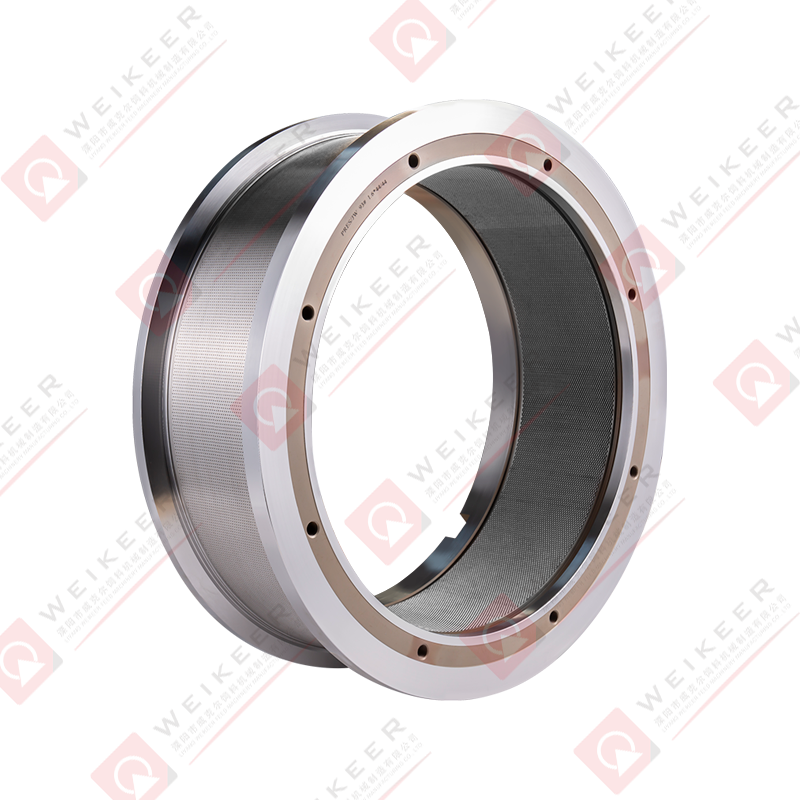
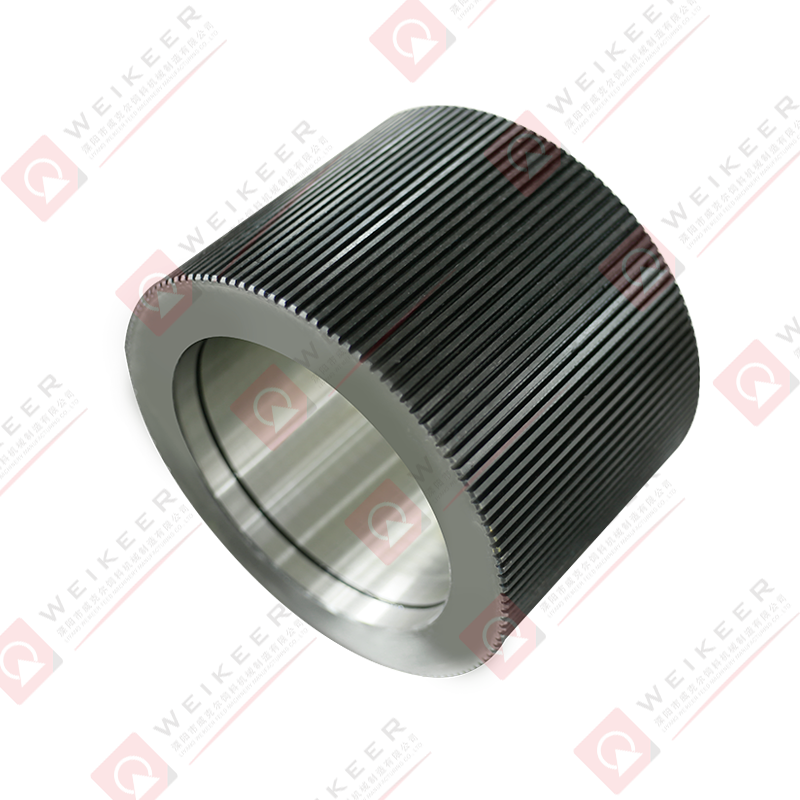
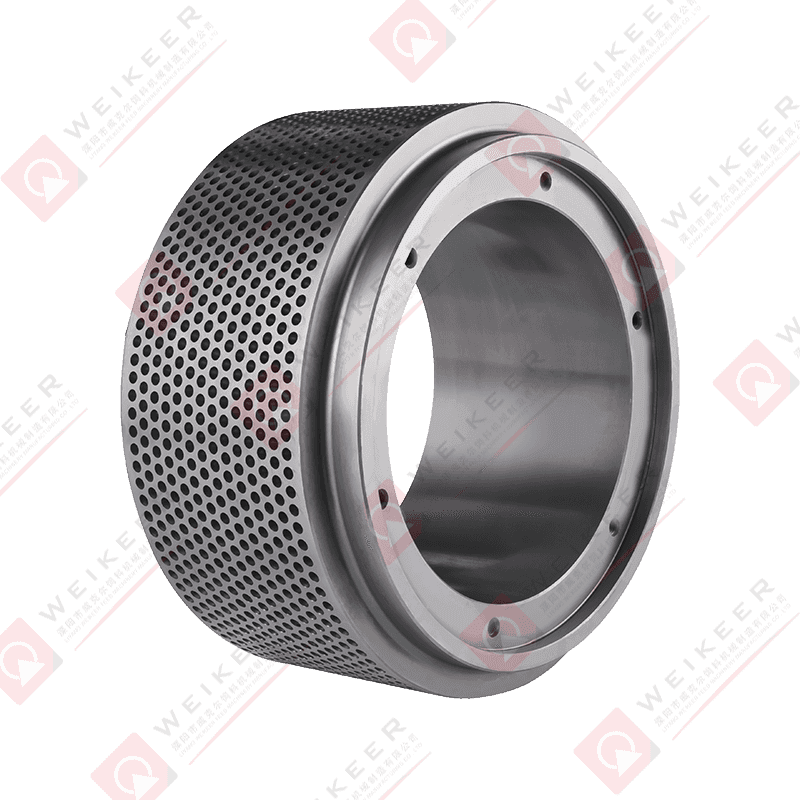
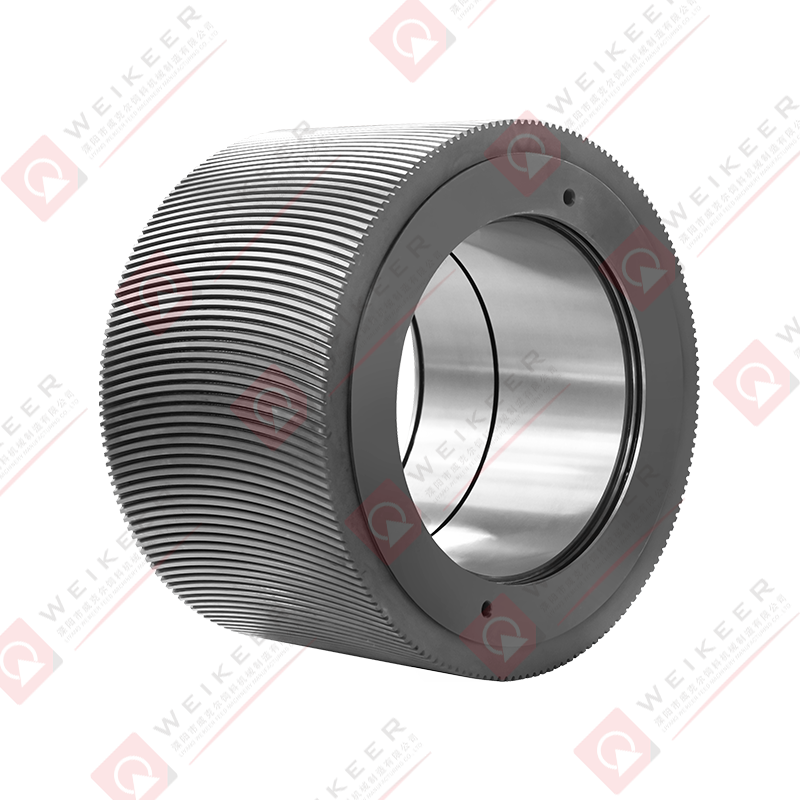
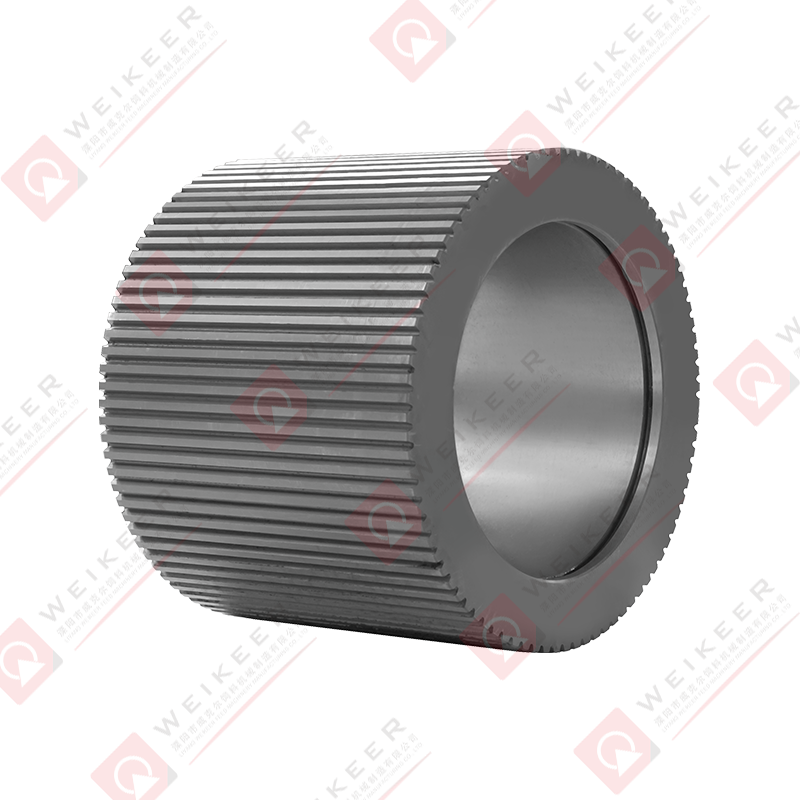
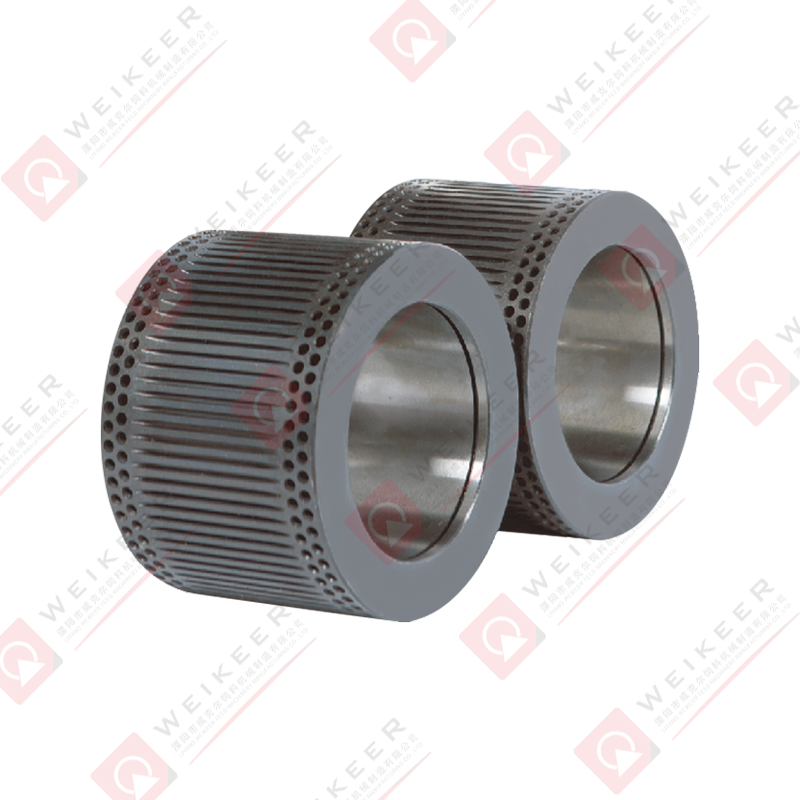
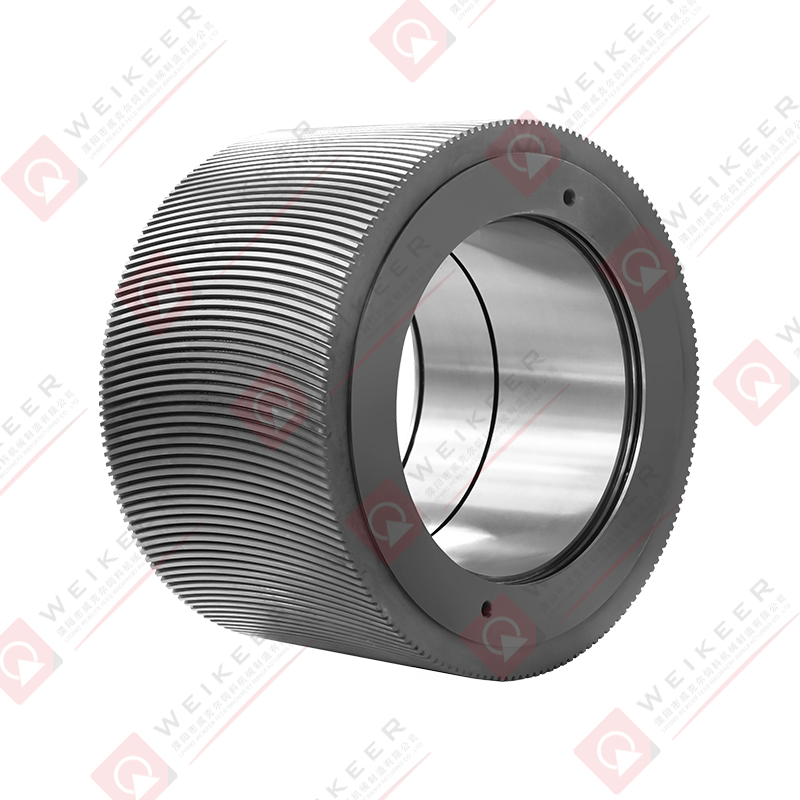
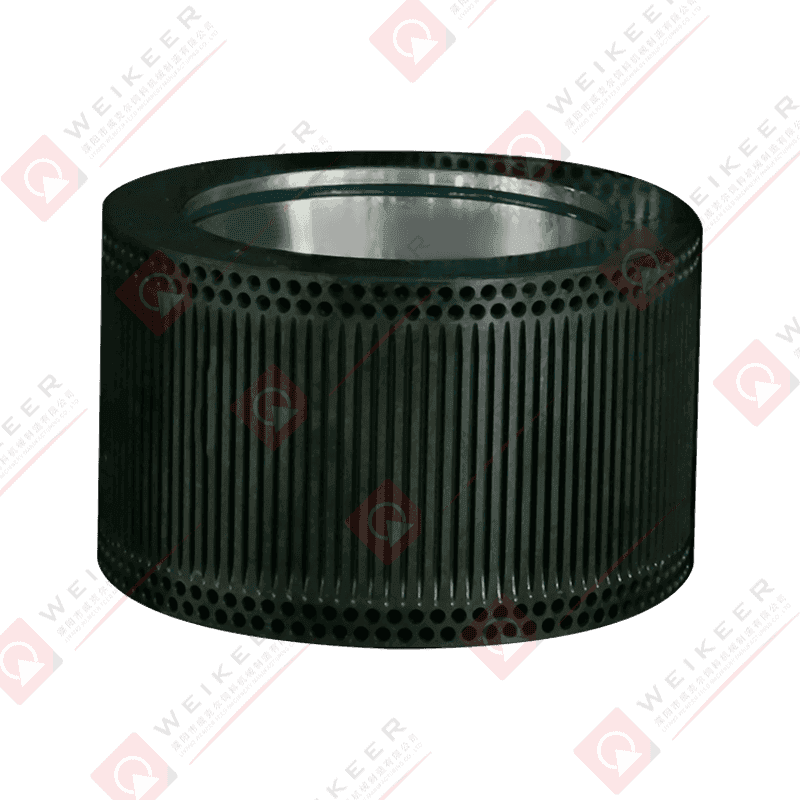
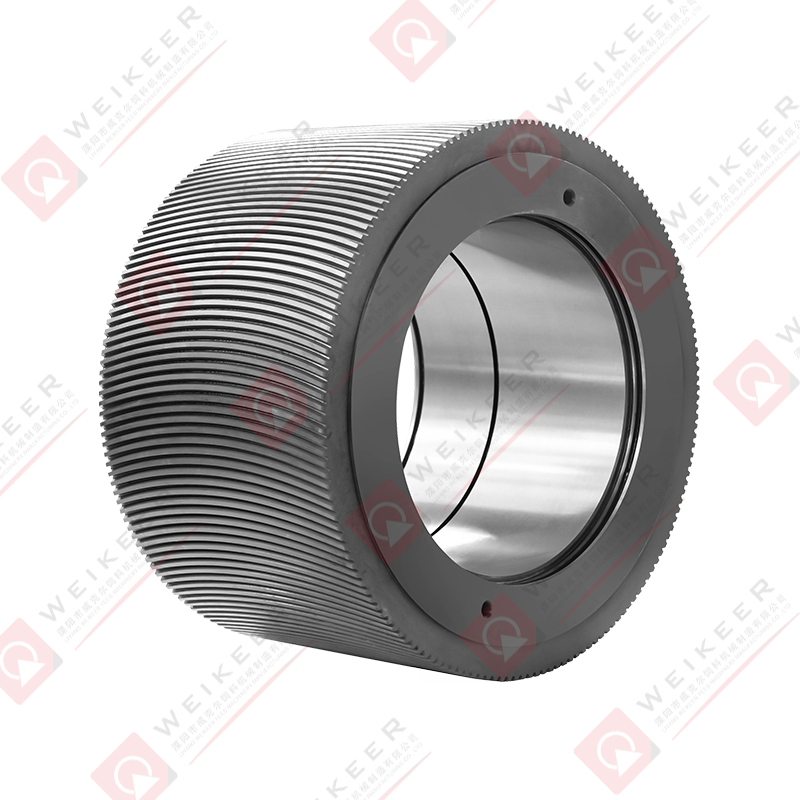
A ring die is the core forming component in a pellet mill, and the screw type stainless steel ring die represents one of the durable and precisely engineered variants available today. Unlike flat die systems, ring die pellet mills feed material through the inside of a cylindrical die, where rollers press the material through tapered holes to form dense, uniform pellets. The screw type refers to the method used to secure the die onto the main shaft — a threaded screw-lock mechanism that ensures the die stays firmly positioned under the intense radial forces generated during pelleting.
Stainless steel construction sets these dies apart from standard alloy steel versions. Grades such as 304, 316, and 316L stainless steel offer resistance to corrosion, oxidation, and chemical attack, making them indispensable for food-grade pelleting, aquafeed production, pharmaceutical applications, and any industry where hygiene standards and material purity are non-negotiable. The combination of a robust screw-lock mount and stainless steel material results in a ring die that delivers consistent pellet quality, extended service life, and compliance with strict production standards.
How the Screw Type Mounting System Works
The screw type ring die mounting mechanism uses a threaded interface between the die and the drive hub or main shaft of the pellet mill. During installation, the ring die is slid onto the hub and secured by tightening a large threaded locking ring or nut, which clamps the die firmly in place through direct mechanical engagement. This design eliminates reliance on keys, pins, or separate clamping plates that can wear or loosen over time.
Under operating conditions, the screw type connection distributes clamping force evenly across the die circumference. This uniform grip prevents the die from shifting radially or axially, which is critical because even minor movement at high rotation speeds can cause uneven roller pressure, die scoring, and inconsistent pellet dimensions. The locking mechanism is also designed for quick release — trained operators can change a worn or damaged die in significantly less time than older bolt-flange systems, reducing line downtime during scheduled maintenance.
It is important that thread engagement is checked at each die change. Any contamination of the threads, partial engagement, or cross-threading weakens the connection and can to catastrophic die loosening during operation. Applying food-safe anti-seize compound to the threads during assembly helps prevent galling and ensures the die can be removed cleanly after extended production runs.
Stainless Steel Grades Used in Ring Die Manufacturing
Not all stainless steel ring dies are made from the same alloy, and selecting the right grade for your specific application directly affects die longevity and product quality. The table below outlines the common grades and their characteristics:
| Grade |
Composition Highlights |
Best For |
| 304 SS |
18% Cr, 8% Ni |
General food processing, animal feed |
| 316 SS |
16% Cr, 10% Ni, 2% Mo |
Saltwater aquafeed, marine environments |
| 316L SS |
Low carbon variant of 316 |
Pharmaceutical, high-temperature CIP wash |
| 17-4 PH SS |
Precipitation hardened, high strength |
High-abrasion applications, hard feeds |
For commercial feed pellet operations involving fish meal, poultry feed, or pet food, 316 stainless steel provides the balance between corrosion resistance and mechanical strength. Precipitation-hardened grades like 17-4 PH are reserved for the abrasive raw materials where surface hardness is paramount.
Key Dimensional Parameters That Affect Pellet Quality
The geometry of the die holes — not just the material — determines pellet density, hardness, throughput, and energy consumption. Understanding the key dimensional parameters allows operators and procurement engineers to specify the correct die for their formulation and target pellet specification.
Die Hole Diameter
The effective hole diameter defines the nominal diameter of the finished pellet. Common diameters range from 1.5 mm for micro aquatic pellets to 12 mm or larger for ruminant or biomass pellets. The hole must be machined to tight tolerances — typically ±0.05 mm — to ensure uniformity across the entire die face. Variation in hole diameter across a ring die results in pellets of inconsistent size, which affects bulk density and downstream handling.
Effective Length and L/D Ratio
The effective length (L) of the die channel — the working depth through which the material is compressed — divided by the hole diameter (D) gives the L/D ratio, one of the important parameters in pellet mill operation. A higher L/D ratio increases compression, producing harder, denser pellets but requiring more energy and generating more frictional heat. A lower L/D ratio produces softer pellets with higher throughput but may result in lower durability. Typical L/D ratios range from 8:1 to 16:1 for livestock feeds and from 10:1 to 20:1 for aquafeeds and pharmaceutical pellets.
Inlet Countersink and Relief Bore
The inlet countersink is a tapered or chamfered entry zone machined at the inner surface of the die. Its angle and depth affect how smoothly the conditioned mash enters the compression channel. A wider countersink reduces inlet resistance and is useful for fibrous or high-fat materials. The relief bore — a widened section behind the inlet — reduces the initial compression load, extending the effective working zone and preventing premature channel blockage in sticky or high-moisture formulations.
Advantages of Stainless Steel Over Alloy Steel Ring Dies
The choice between stainless steel and conventional alloy steel ring dies involves trade-offs in cost, performance, and application suitability. The following points explain why stainless steel is the preferred choice in demanding environments:
- Corrosion resistance: Stainless steel dies withstand exposure to moisture, steam, salt, acidic ingredients, and cleaning chemicals without surface rusting or pitting that would contaminate the product or degrade hole geometry.
- Hygienic surface finish: Stainless steel can be polished to Ra values below 0.8 µm, meeting food contact surface standards. Smooth die channel walls also reduce friction and the tendency for material to stick inside the holes.
- Extended service life in wet conditions: In aquafeed production, where the raw material contains high moisture and salt content, stainless steel dies can outlast alloy steel dies by a factor of three or more, significantly reducing the cost per tonne of pellets produced.
- Regulatory compliance: Industries subject to FDA, EU food safety, or GMP regulations often require stainless steel contact surfaces. Using a certified stainless die ensures the pellet mill complies without additional surface treatments or coatings.
- Cleanability: Stainless steel withstands clean-in-place (CIP) procedures, steam sterilization, and chemical sanitizers that would corrode or weaken alloy steel components over time.
Applications Best Suited for Screw Type Stainless Steel Ring Dies
While screw type stainless steel ring dies are adaptable across many pelleting contexts, they deliver the greatest return on investment in specific application categories where hygiene, corrosion resistance, and dimensional precision are all simultaneously required.
- Aquafeed and fish meal pelleting: High salt and moisture content in marine ingredient formulations corrodes standard dies rapidly. Stainless steel dies maintain hole geometry over long production runs, producing consistently sized floating or sinking pellets.
- Pet food manufacturing: Consumer product regulations and brand quality standards demand pellets with precise shape, density, and surface quality. Stainless ring dies deliver repeatable output compatible with downstream coating, drying, and packaging lines.
- Pharmaceutical and nutraceutical pelleting: Active ingredient pellets for tablet coating or capsule filling require extremely tight dimensional tolerances and zero metal contamination risk. Stainless steel is the only acceptable die material in GMP-regulated environments.
- Specialty biomass and organic fertilizer: When processing wet organic materials at high temperatures, stainless steel resists oxidation and maintains structural integrity where carbon steel dies would warp or corrode internally.
Selecting the Right Screw Type Ring Die for Your Pellet Mill
Purchasing a replacement or upgrade ring die requires matching the die specification to both the pellet mill model and the production requirement. Several critical factors must be confirmed before ordering.
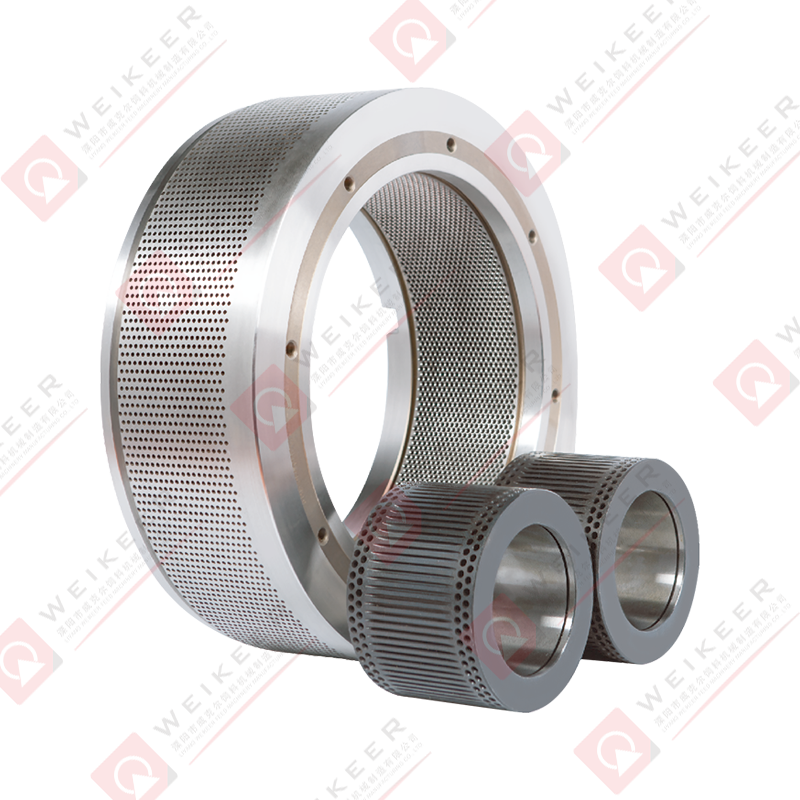
Mill Compatibility and Mounting Thread Specification
The screw type die must match the exact thread pitch, outer diameter, and hub interface of the specific pellet mill model. Major mill manufacturers — including CPM, Bühler, Andritz, Muyang, and Zhengchang — use proprietary or semi-standardized hub designs. Always confirm the mill serial number, model, and the OEM die part number with your supplier to ensure dimensional compatibility. An incorrectly threaded die will not engage properly and poses a serious operational safety risk.
Hole Configuration and Open Area Ratio
The open area ratio (OAR) — the percentage of the die face occupied by holes versus solid material — directly affects throughput capacity and roller load. A higher OAR increases capacity but reduces die strength. For dense, hard-to-press formulations, a lower OAR with a more conservative hole pattern is recommended to prevent die cracking under high compressive stress. Specify the hole diameter, L/D ratio, hole pattern (staggered or inline), and countersink angle when requesting a quotation.
Surface Treatment and Hardness
Although stainless steel offers inherent corrosion resistance, additional surface treatments can extend die life further. Nitriding increases the surface hardness of the die channel walls, reducing abrasive wear from gritty ingredients such as bone meal, mineral premixes, or coarse grain fractions. Electropolishing removes surface micro-roughness, further improving cleanability and reducing the adhesion of sticky feed components inside the holes. Confirm which treatment is applied and its compatibility with food safety requirements before specifying.
Maintenance Practices to Maximize Ring Die Service Life
Even the highest-quality stainless steel ring die will underperform or fail prematurely without proper operational and maintenance practices. Implementing these protocols extends die life and protects pellet quality throughout the production campaign.
- Run-in with oily mash: Always break in a new die with a 20 to 30 minute conditioning run using an oil-mixed mash (such as rice bran with 5% added oil) to coat the die channels and prevent friction-induced overheating during initial production.
- Fill holes before shutdown: At the end of each production run, fill the die holes with oily or waxy blocking material to prevent hardening of residual feed inside the channels, which causes blockages at the next startup.
- Monitor roller gap and alignment: Incorrect roller-to-die clearance causes uneven wear on the inner die face. Maintain the roller gap at the manufacturer's specified setting and check for uniform contact across the die width using engineering blue or contact paper.
- Rotate die periodically: Some operators rotate the die 180° or swap it to an alternate position at mid-life to even out wear patterns caused by asymmetric feed distribution across the die face.
- Inspect and clean the screw thread: Before each reinstallation, clean the locking thread on both the die and the hub with a wire brush, inspect for damage or wear, and apply fresh anti-seize compound. Damaged threads must be repaired or the component replaced before returning to service.



 русский
 Español
 عربى
عربى 中文简体
中文简体