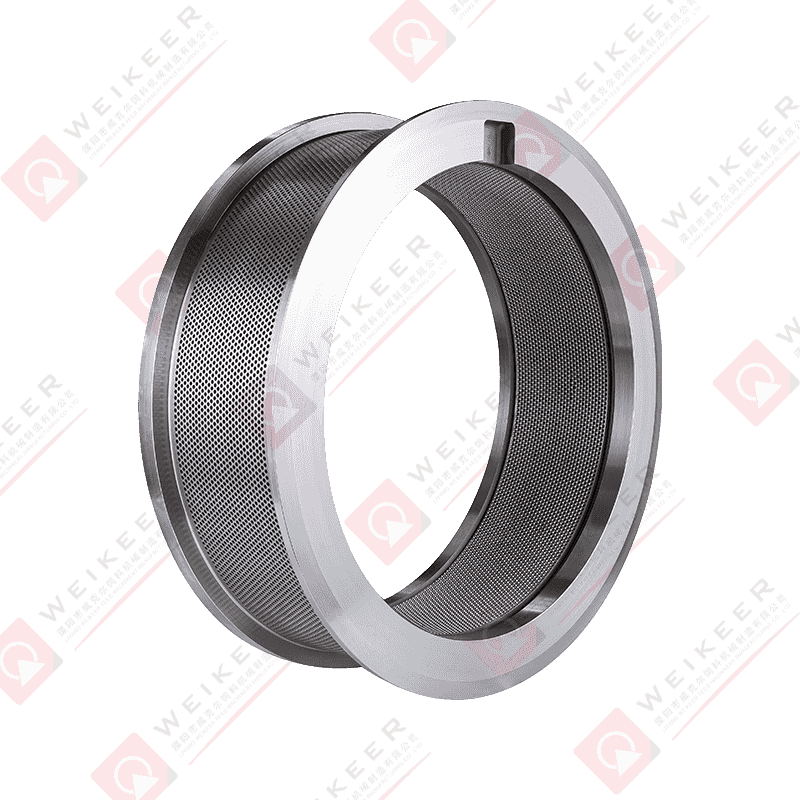
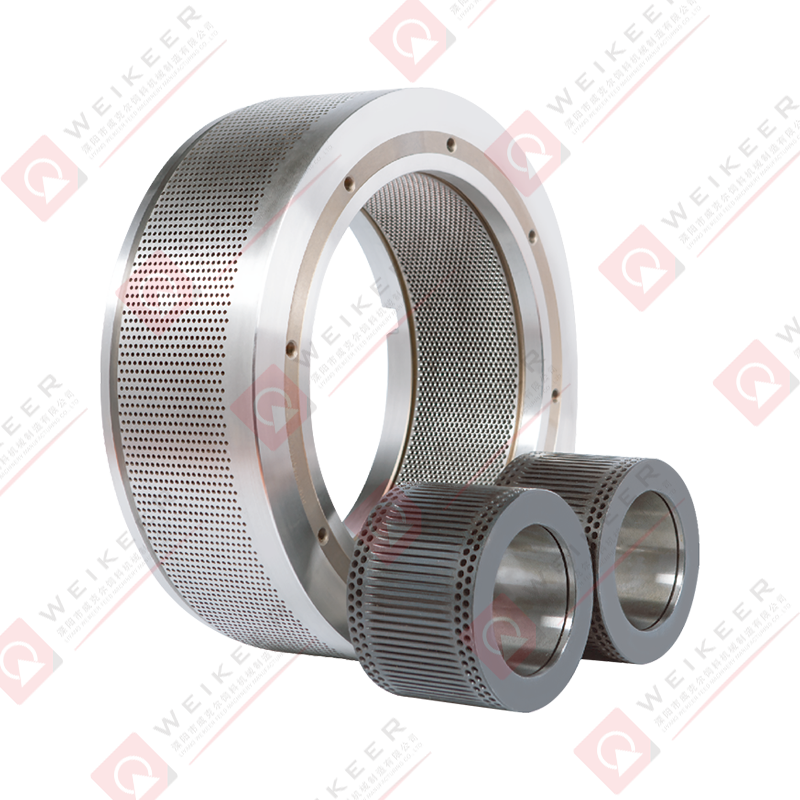
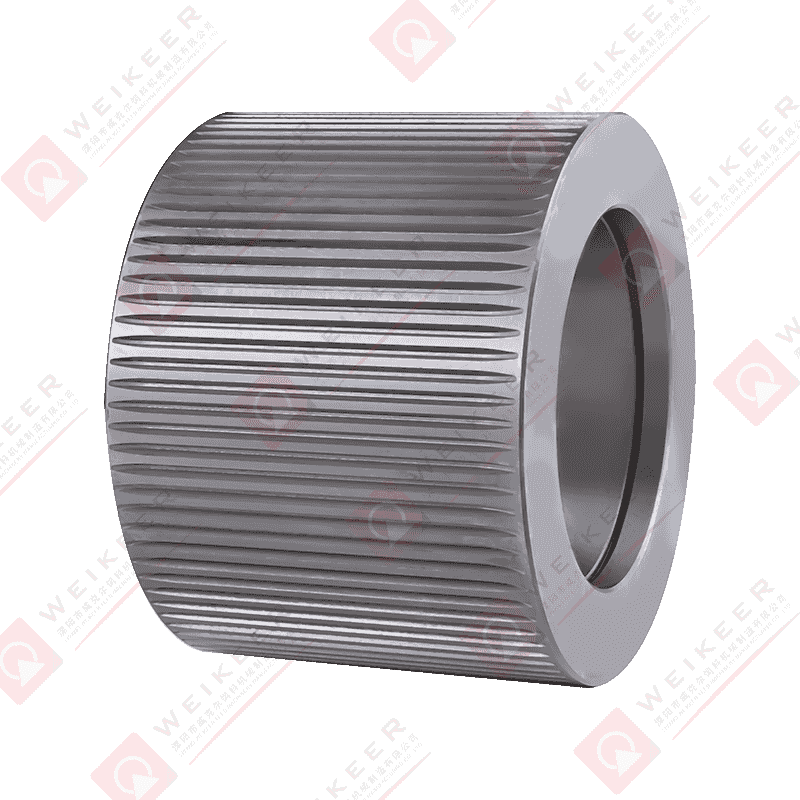
If you work with pellet mills, you know that roller shells and dies are the parts that take the most punishment. They compress, push, and squeeze raw materials into pellets day after day. When you need replacements, the material matters. Bearing steel GCr15 (also known as 100Cr6) has earned a solid reputation for its balance of hardness, toughness, and wear resistance. But finding a supplier who truly understands GCr15 rollers and shells can make all the difference. We’ve been manufacturing pellet mill dies and rollers since 1996, and we’d like to share what we’ve learned along the way.
Why GCr15 Bearing Steel Is a Smart Choice for Rollers and Shells
GCr15 is a through-hardening bearing steel with high carbon and chromium content. When properly heat-treated, it reaches a hardness of about 60–62 HRC, which gives it excellent resistance to abrasive wear. At the same time, it retains enough toughness to withstand the cyclic loads inside a pellet mill. This combination is why GCr15 is often chosen for rollers and shells that will see continuous, high-pressure operation.
Here are a few reasons why GCr15 stands out:
- High wear resistance: The hard carbides in the steel help it resist the abrasive nature of feed ingredients, biomass, and other materials.
- Good dimensional stability: GCr15 holds its shape well under load, so the roller shell maintains its profile longer.
- Proven performance: It has been used in bearing applications for decades, and that same reliability translates to pellet mill components.
Of course, the heat treatment process is critical. A supplier that controls hardening and tempering precisely will deliver a roller shell that lasts. We’ll touch on that later.
Roller Shell Surface Options: Matching the Profile to Your Application
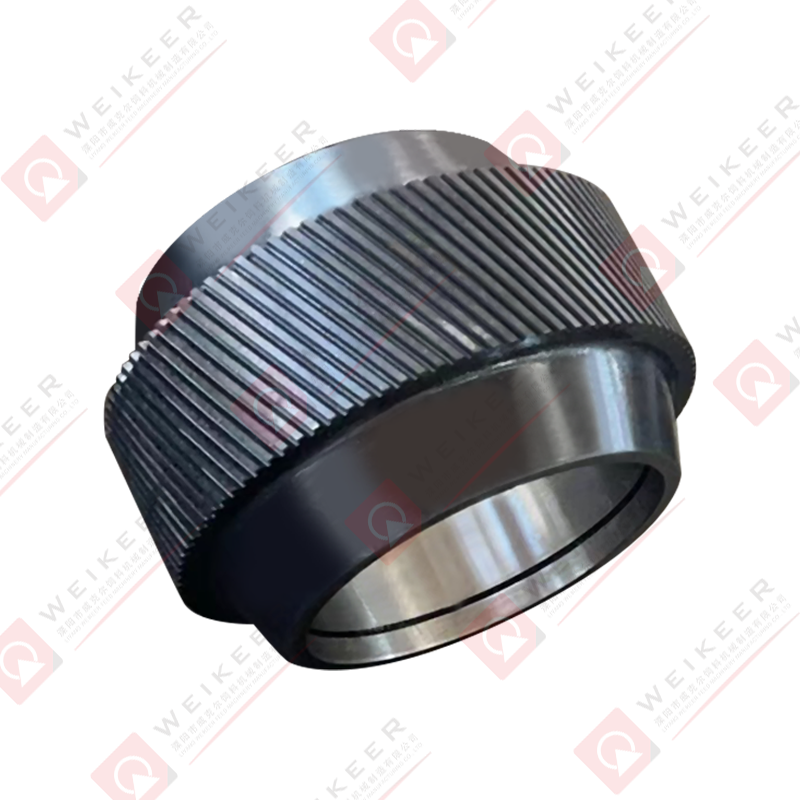
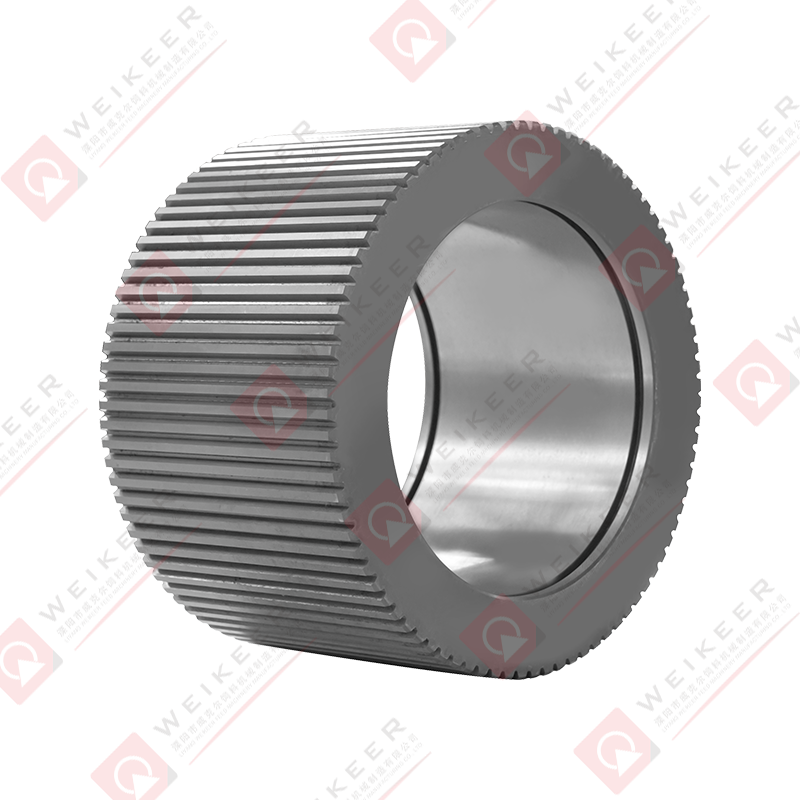
The surface pattern of a roller shell affects how material is gripped and pushed through the die. Different patterns suit different feeds and operating conditions. In our GCr15 line, we offer several surface types, each with its own strengths.
Common GCr15 roller shell surface types and their typical uses.
| Surface Type |
Key Characteristics |
Typical Applications |
| Closed Corrugation and Dimpled |
Combines deep grooves with dimples for aggressive gripping and good material flow. |
High-density feeds, aqua feed, and biomass pellets. |
| Curved Corrugation |
Smooth, curved grooves that provide a balance of grip and gentle handling. |
Livestock and poultry feed, where pellet quality is important. |
| Diagonal Groove |
Angled grooves that help distribute material evenly across the die. |
Mixed feed formulas and applications prone to uneven wear. |
| Corrugated Close End |
Corrugations that stop before the edge, reducing edge wear. |
Operations where roller edges tend to wear quickly. |
| Corrugated Open End |
Corrugations run to the edge, maximizing grip across the full width. |
High-volume production with consistent feed. |
| Dimpled |
Small dimples that increase friction without deep grooves. |
Fine grinding and materials that need extra traction. |
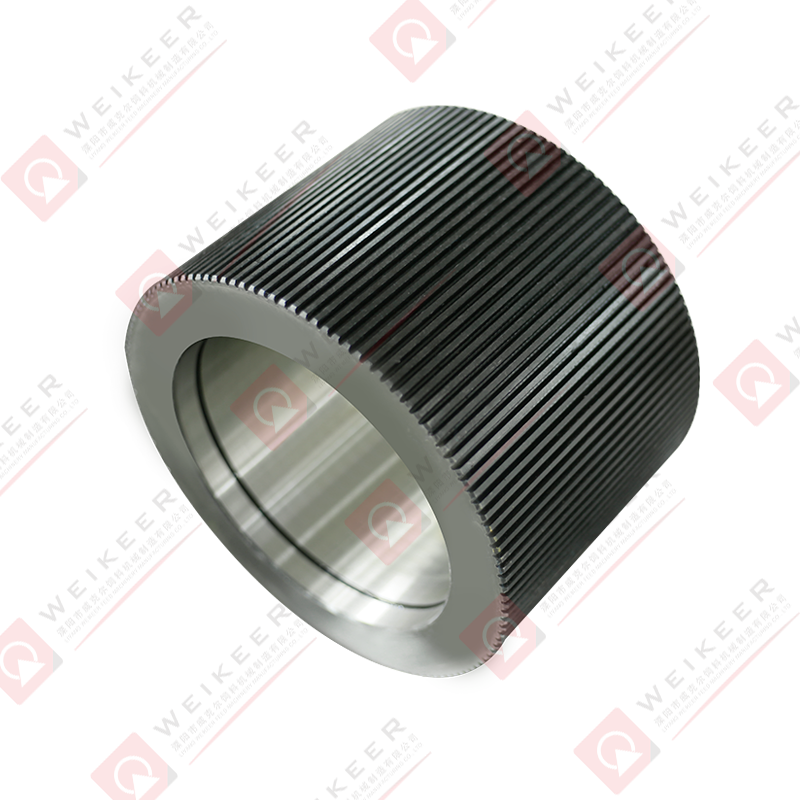
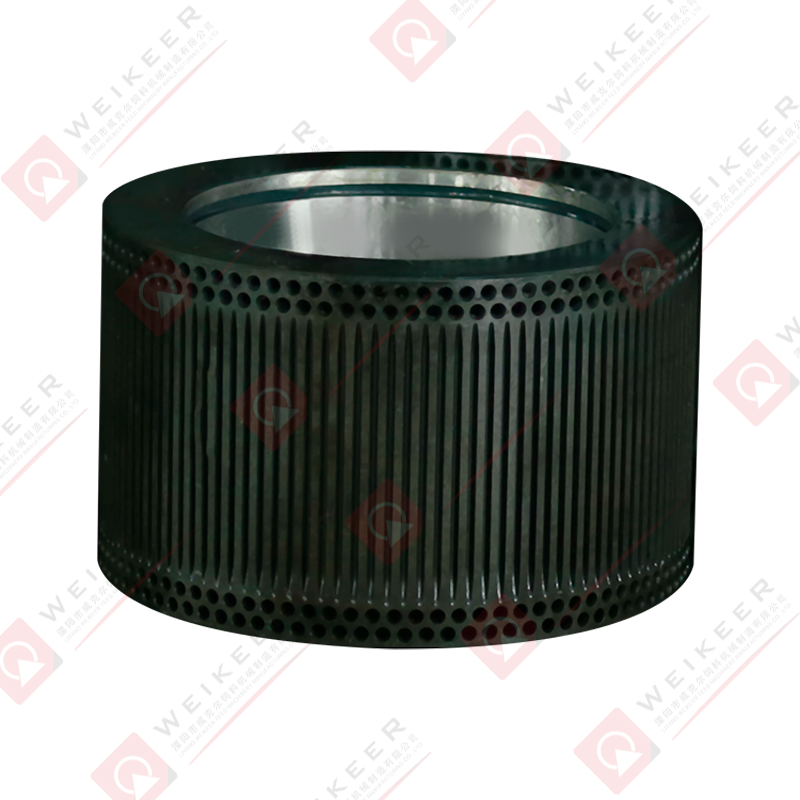
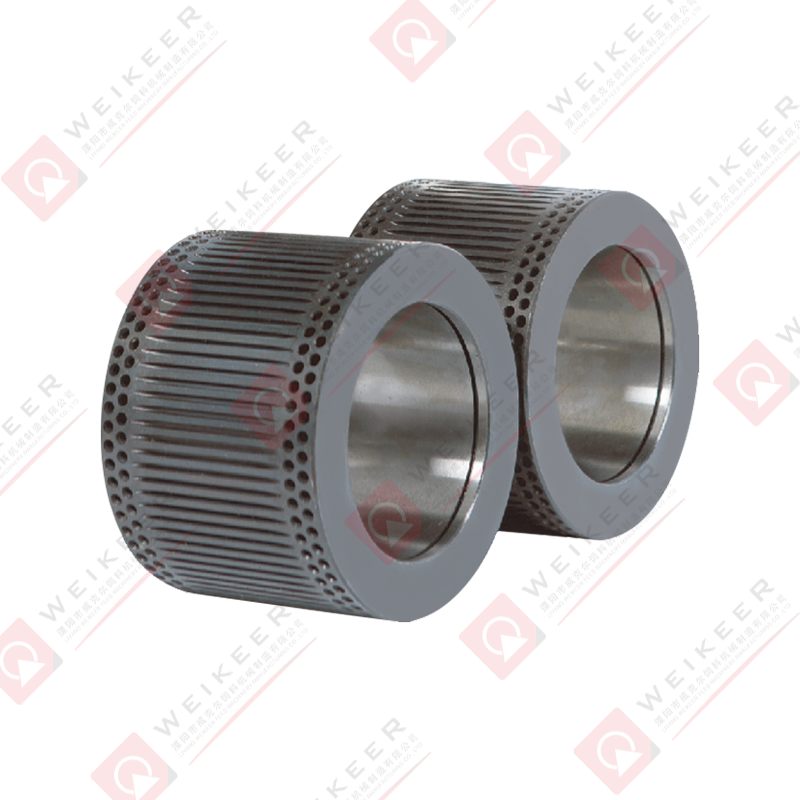
For instance, our closed corrugation and dimpled GCr15 roller shell is a favorite for aqua feed producers who need aggressive material pickup. On the other hand, a diagonal groove design can help spread the load more evenly when your formula changes often.
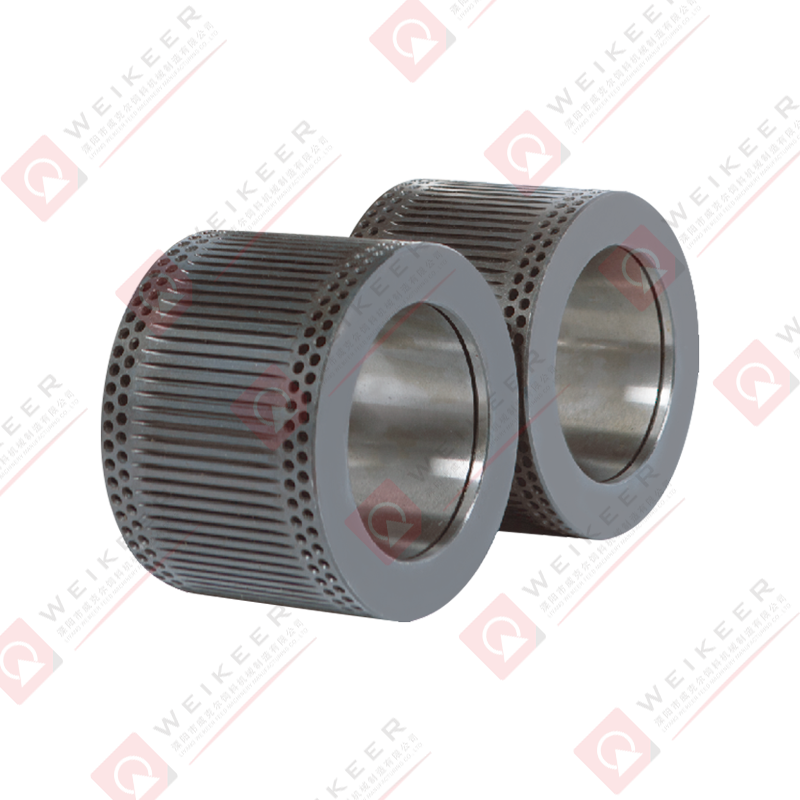 Closed Corrugation and Dimpled GCr15 Pellet RollerMade from GCr15 bearing steel, this roller combines closed corrugation with dimpled traction for aggressive material pickup and fine-particle handling.View Product →
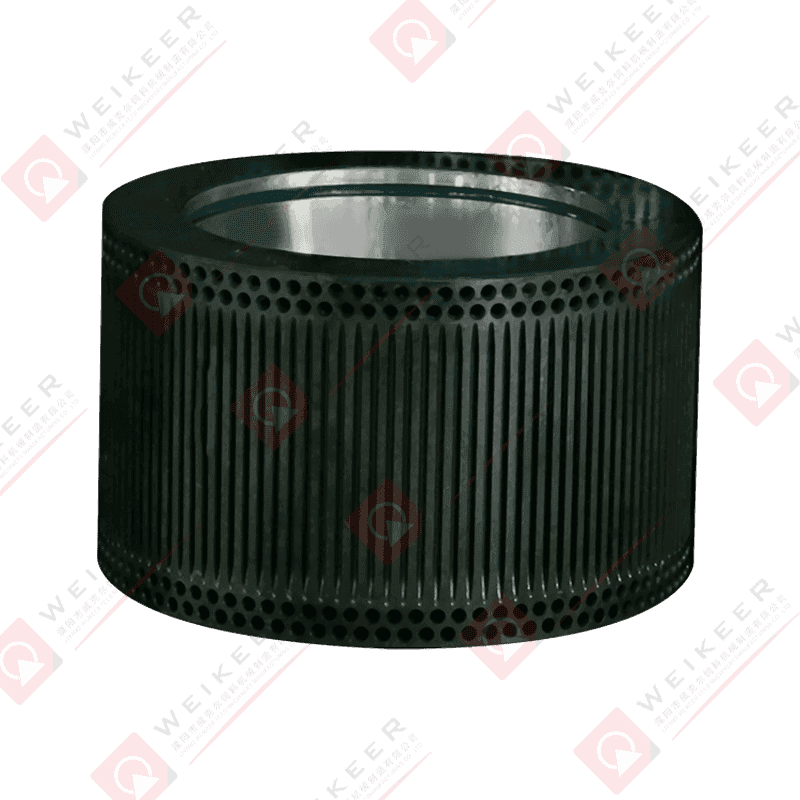
And if you’re dealing with fine particles that need a little extra bite, the dimpled pattern might be just right.
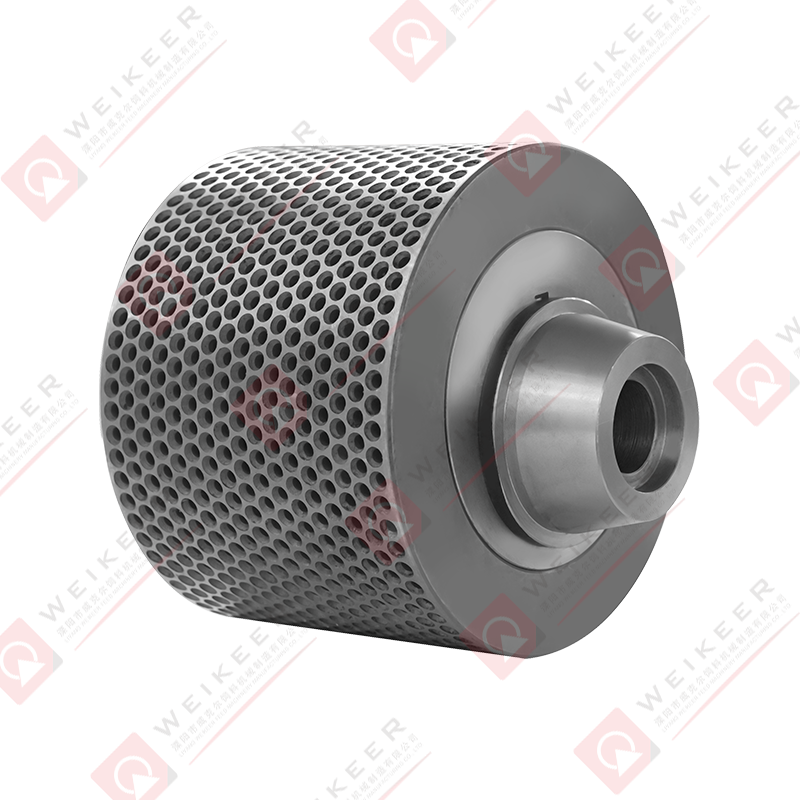 Dimpled Bearing Steel Pellet RollerIts dimpled, closed-end design supports durability and material containment, making it worth considering for fine-particle feed and load-bearing roller applications.View Product →
We also make a curved corrugation version that many livestock feed mills prefer for its gentle handling and consistent pellet quality.
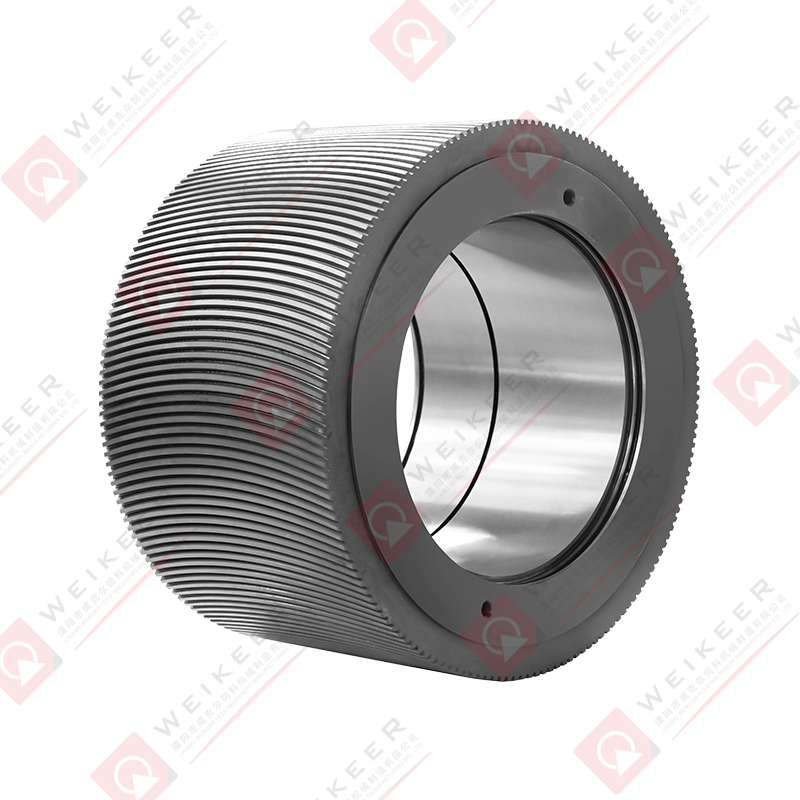 Curved Corrugation GCr15 Pellet RollerMade from wear-resistant GCr15 bearing steel, its curved corrugation improves grip for bulk material handling and suits livestock feed mills seeking gentle, consistent pellet production.View Product →
What to Look for in a GCr15 Roller Shell Supplier
When you’re sourcing GCr15 rollers and shells, the supplier’s experience and process control matter as much as the material itself. Here are the key points we recommend checking:
- Material traceability: Can the supplier provide certificates for the GCr15 steel? Knowing the exact grade and origin helps you avoid surprises.
- Heat treatment expertise: GCr15 needs precise hardening and tempering. Ask about hardness testing and microstructure checks.
- Machining accuracy: The roller shell’s dimensions and surface finish must match your mill. Poor fit leads to vibration, uneven wear, and lost production.
- Compatibility support: A good supplier will help you confirm that the roller shell fits your specific pellet mill model, whether it’s a common brand or an older machine.
- Field experience: Suppliers who have worked with feed mills, biomass plants, and other pellet operations can offer practical advice on surface selection and maintenance.
We’ve been in the pellet mill parts business since 1996, and we’ve learned that these details make the difference between a roller that lasts a few weeks and one that runs for months. Our team includes 26 technicians, and we’ve invested in CNC machining and advanced heat treatment equipment to keep quality consistent. You can read more about our story on our about page.
Getting the Most from Your GCr15 Rollers and Shells
Even the best roller shell won’t last if it’s not set up and maintained properly. Here are a few practical tips from our experience:
- Adjust the gap correctly: Follow the manufacturer’s recommendation for the gap between the roller and the die. Too tight and you’ll wear both parts quickly; too loose and you’ll lose pellet quality.
- Feed evenly: Avoid sudden surges or starved conditions. A steady feed rate keeps the rollers working smoothly.
- Inspect regularly: Check for flat spots, cracks, or uneven wear. Replacing a worn roller early can prevent damage to the die.
- Match with a quality die: The roller and die work as a pair. If your die is worn or poorly made, the roller will suffer. We also manufacture ring dies, so we can help you find a balanced combination.
If you’re unsure which surface type or material is right for your operation, just ask. We’re happy to walk through your application and recommend a solution. You can contact us anytime.
Finding a reliable supplier for bearing steel GCr15 pellet mill rollers and shells doesn’t have to be a gamble. Focus on material quality, heat treatment, machining precision, and the supplier’s willingness to support you after the sale. We’ve been doing this since 1996, and we’d be glad to help you get the right parts for your mill. Feel free to reach out with your questions or requirements.



 русский
 Español
 عربى
 中文简体