Introduction
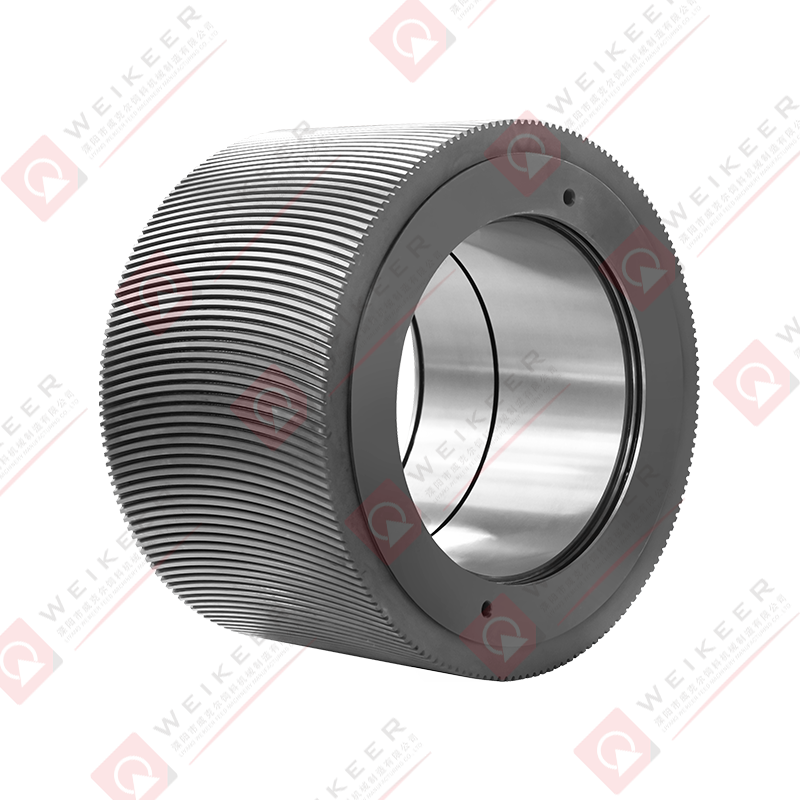
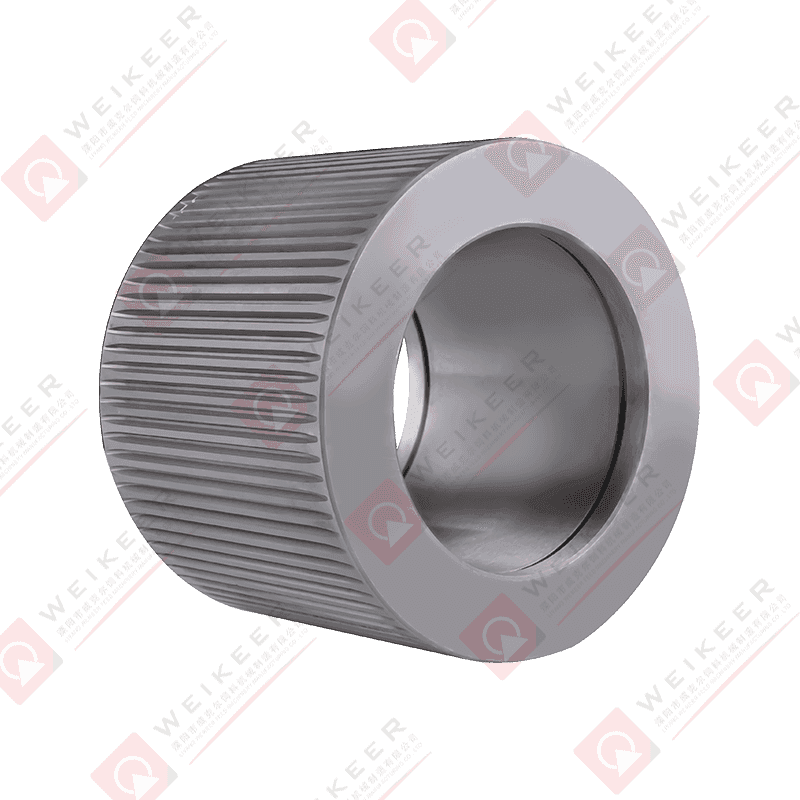
Aqua feed manufacturers require pelletizing equipment that can produce uniform, durable, water-stable feed under demanding production conditions. Fish, shrimp, and other aquatic animals often need pellets with specific diameters, densities, nutritional profiles, and water-resistance characteristics. The ring die is one of the most important components in this process because it determines how the prepared feed mixture is compressed, shaped, and discharged from the pellet mill.
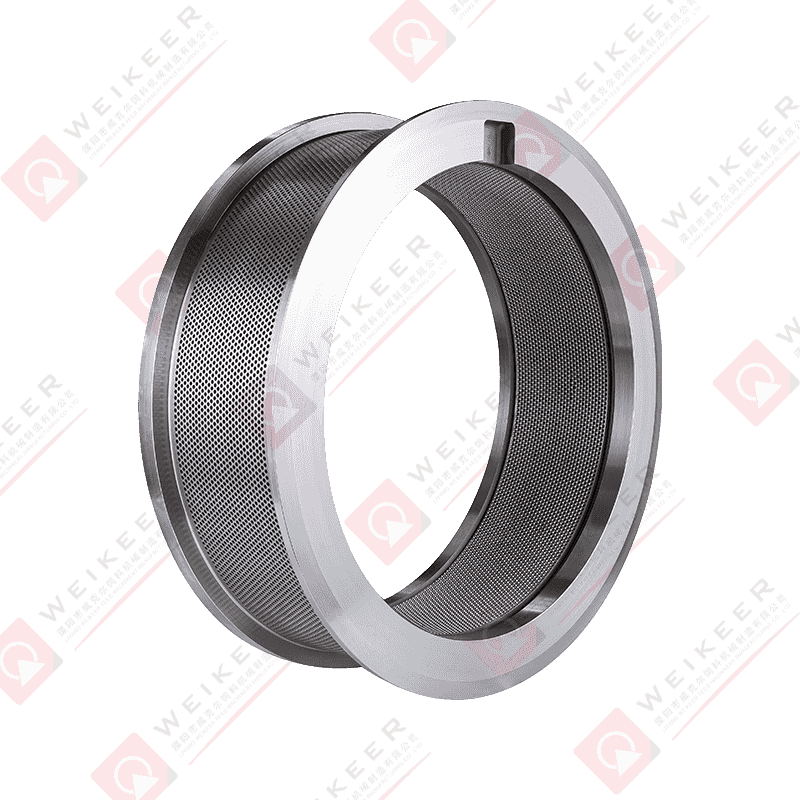
The Aqua Feed Pellet Mill Screw Type Ring Die is designed for aqua feed production lines that require stable compression, accurate hole geometry, dependable output, and long service life. It is suitable for pellet mills used to manufacture feed for species such as tilapia, salmon, catfish, carp, shrimp, and other aquatic animals. The die supports the production of dense and cohesive pellets that can remain intact during handling, transportation, and feeding.
Manufactured by Liyang Weikeer Feed Machinery Manufacturing Co., Ltd., the screw type stainless steel die is developed for compatibility with a wide range of pellet mill models. Its applications include equipment from Famsun, CPM, Taiwan CPP, IDAH, and other related systems. The product can be manufactured according to equipment model, die dimensions, compression requirements, raw material characteristics, pellet diameter, and production capacity.
Compared with ordinary dies intended for general livestock feed, an aqua feed ring die must meet more demanding requirements. Aquatic feed often contains higher levels of oil, protein, starch, minerals, vitamins, and other functional ingredients. The die must therefore support controlled compression and consistent discharge while resisting wear, deformation, corrosion, and blockage. A properly selected screw type ring die helps manufacturers improve pellet uniformity, reduce production interruptions, and achieve better feed utilization.
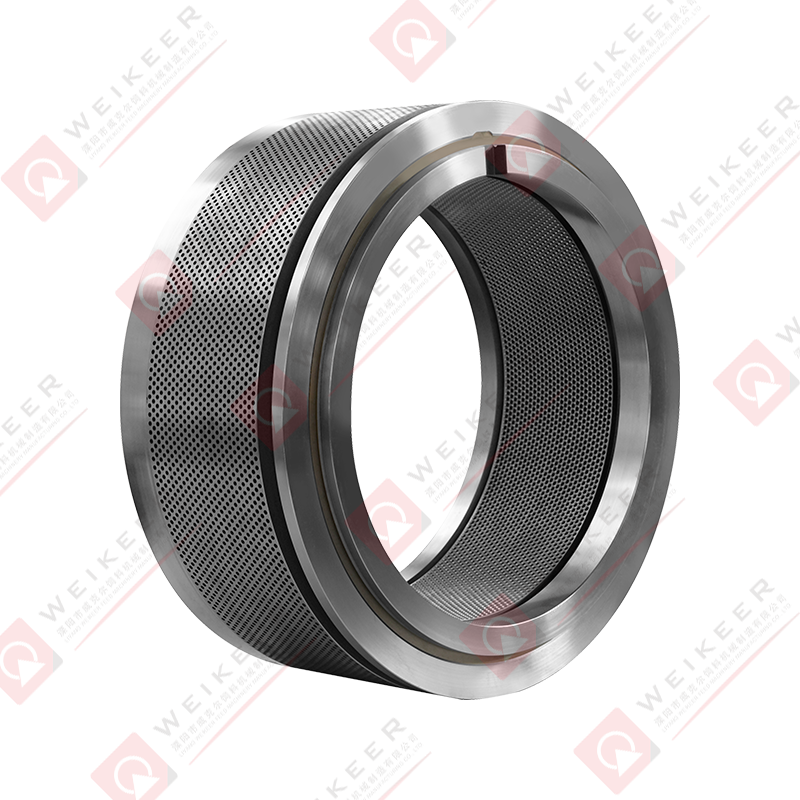
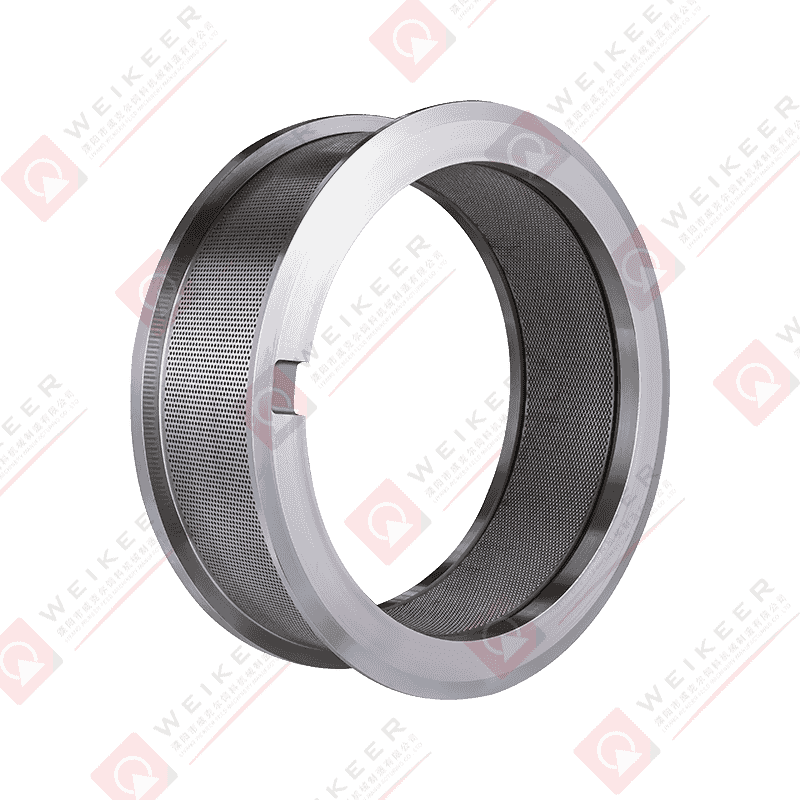
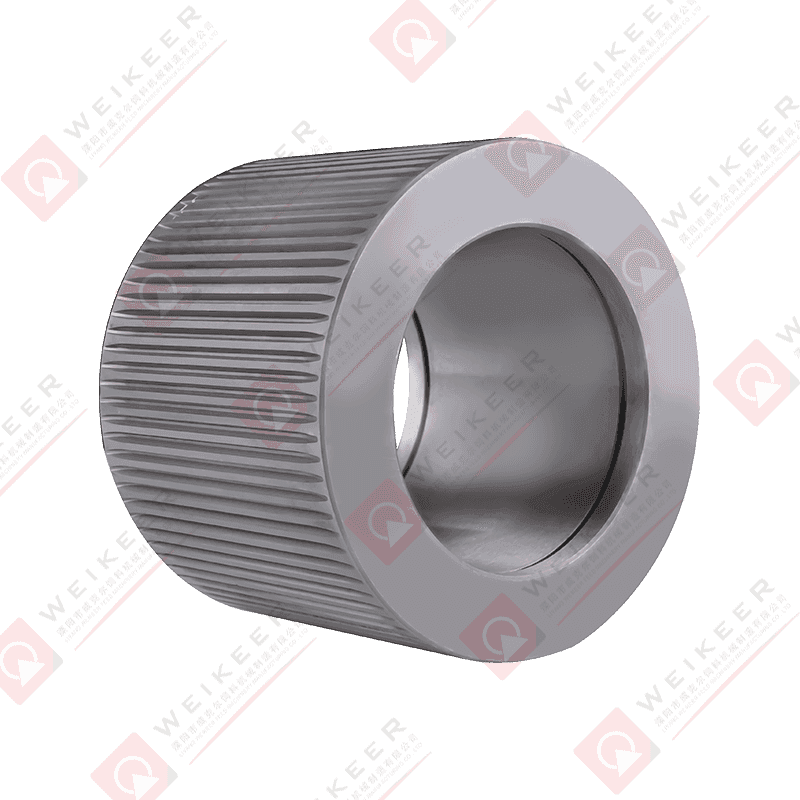
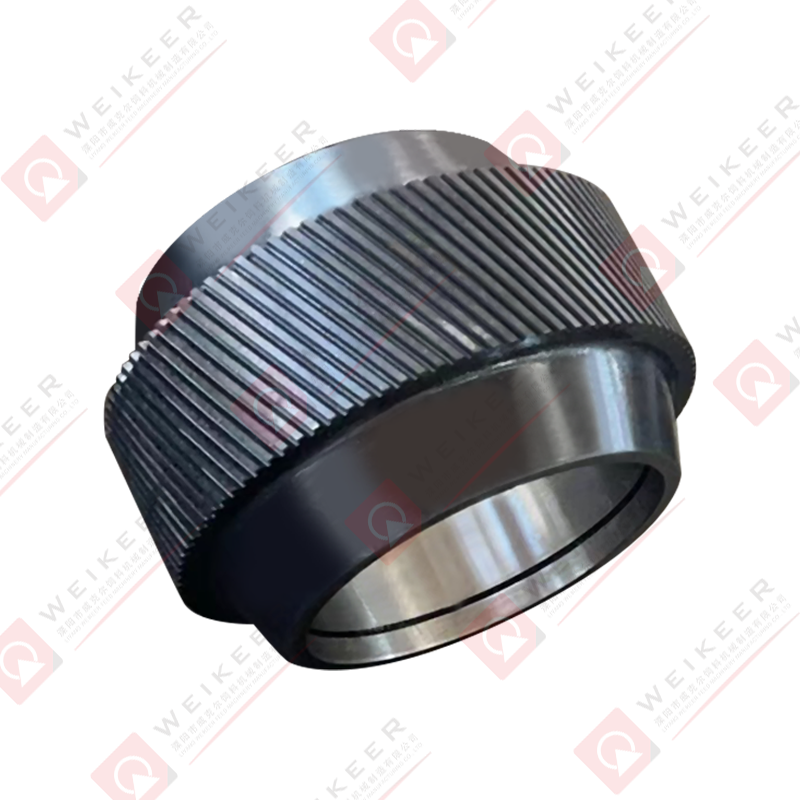
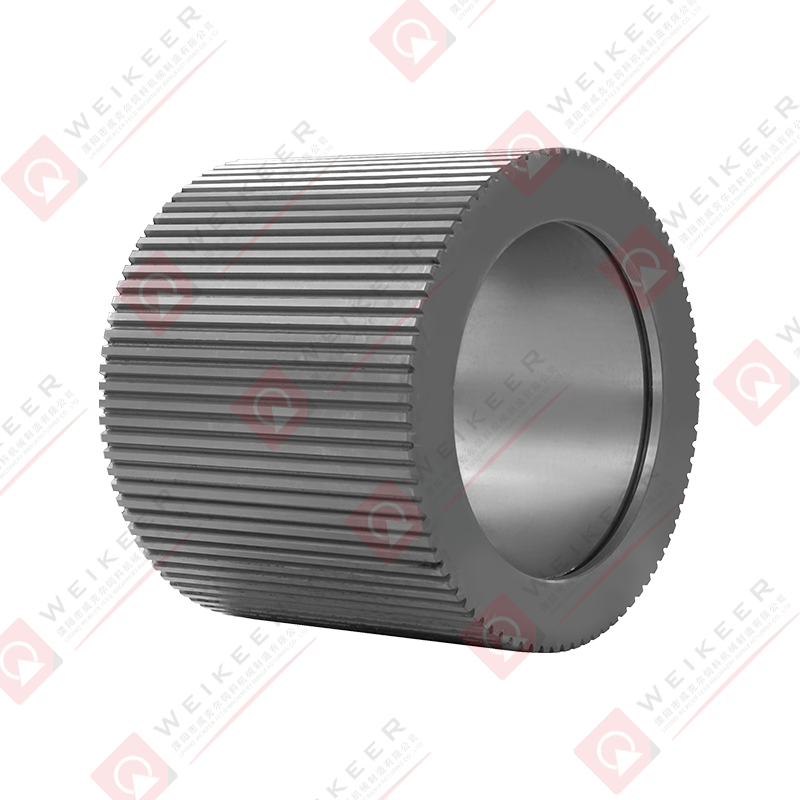
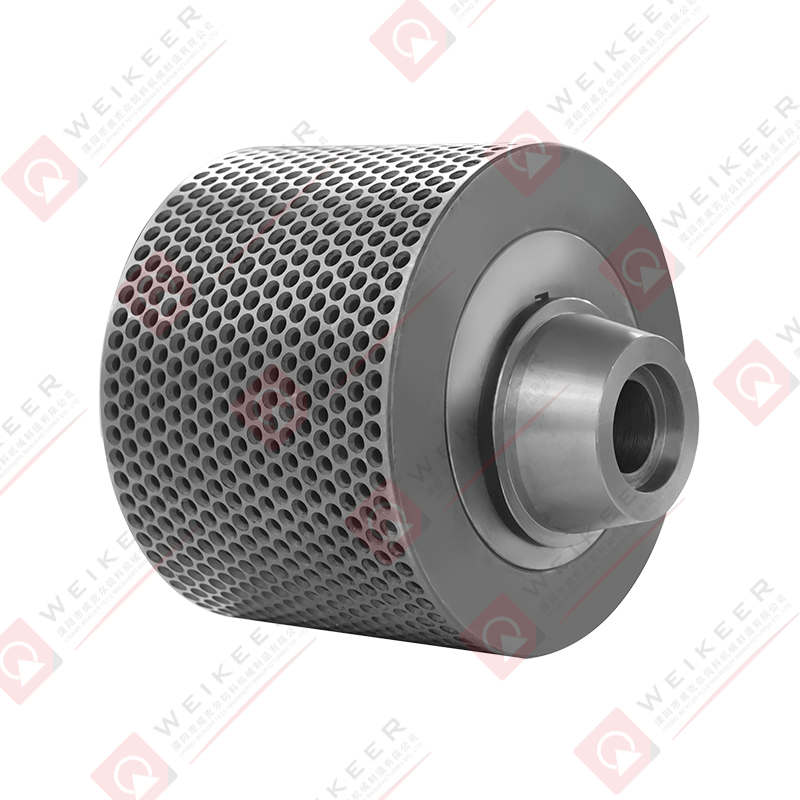
Aqua Feed Pellet Mill Screw Type Ring Die
What Is an Aqua Feed Pellet Mill Screw Type Ring Die?
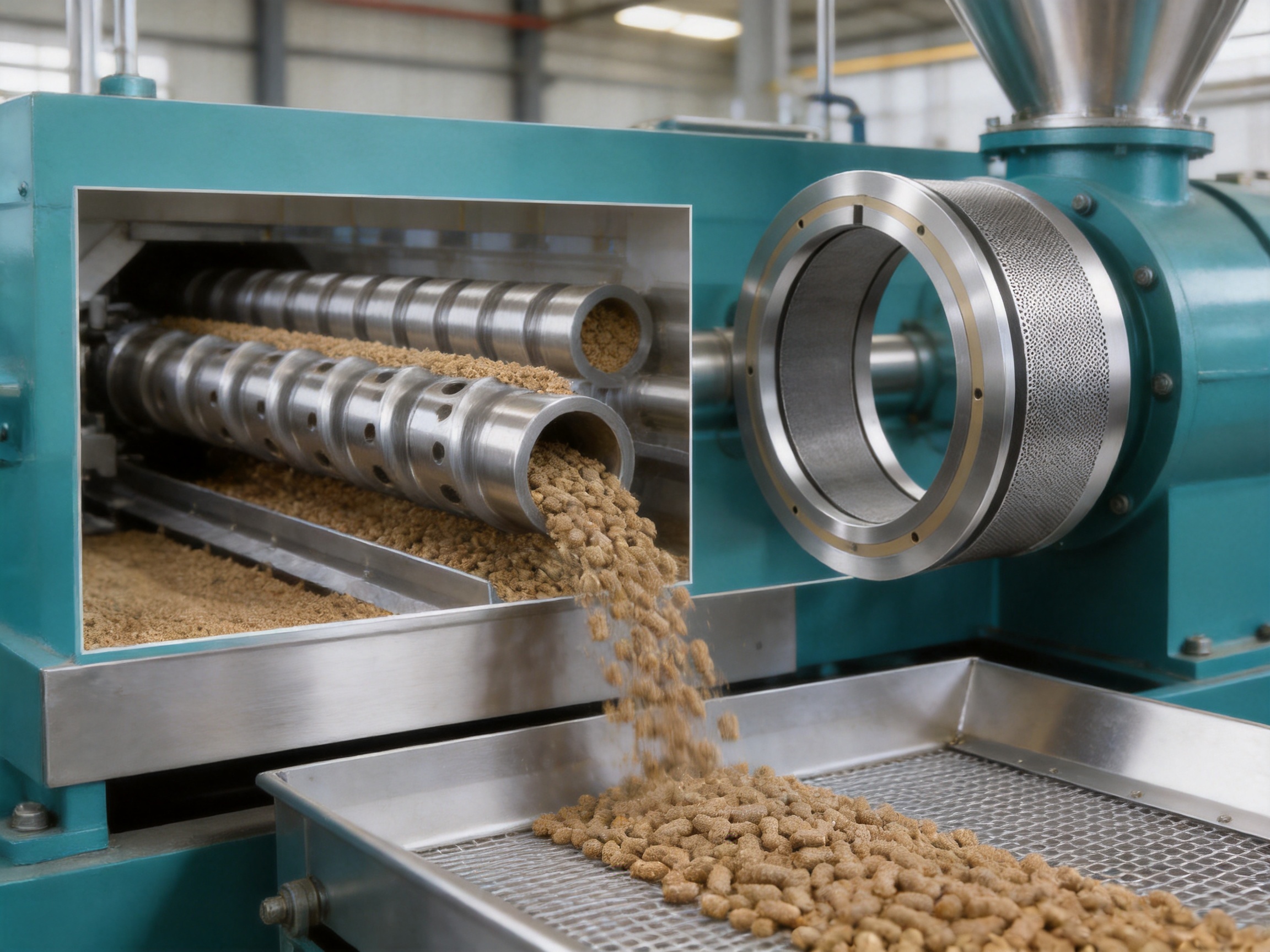
A ring die is a cylindrical metal component installed inside a pellet mill. As conditioned feed material enters the pelletizing chamber, rotating rollers press the material through small holes in the ring die. The compressed material emerges as continuous strands and is cut into pellets by knives positioned outside the die.
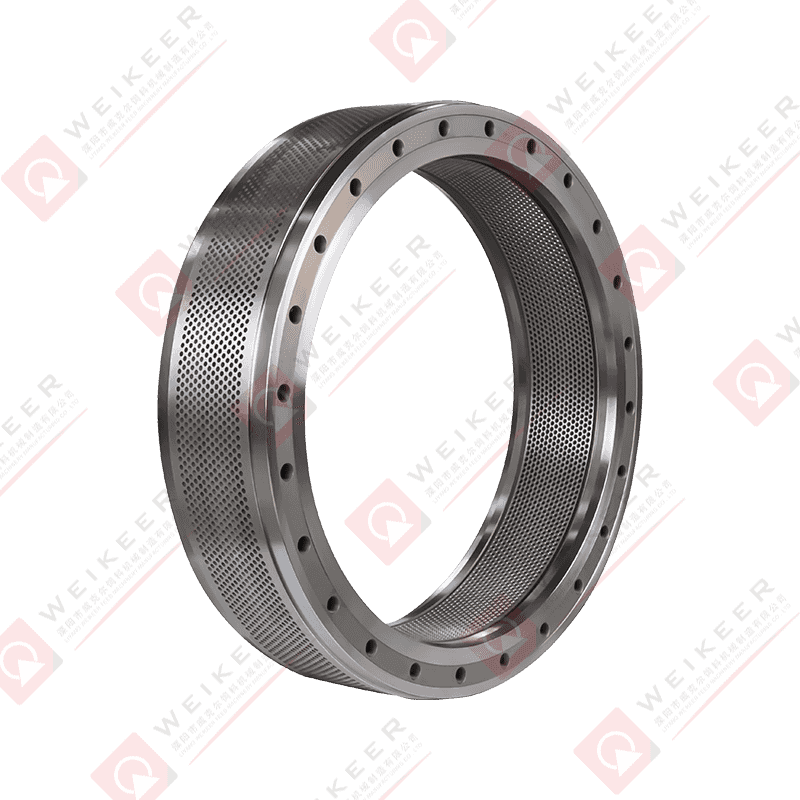
The term “screw type” generally refers to the fastening and installation structure used to secure the ring die to the pellet mill. Screw-mounted dies are designed to be installed and removed through a bolted or screwed connection system. This structure allows the die to be replaced during planned maintenance and can provide secure positioning during high-load production.
The ring die contains numerous accurately machined holes. The hole diameter, effective working length, open area, compression ratio, hole arrangement, and surface condition all influence the final quality of the aqua feed pellet. If the compression ratio is too low, pellets may be soft, fragile, or excessively porous. If it is too high, the production line may experience excessive power consumption, unstable throughput, high die temperature, or frequent blockages.
For this reason, the correct die is not selected only by outside diameter or pellet mill model. A suitable solution must also consider raw material formula, moisture content, conditioning temperature, starch level, fiber level, fat content, pellet diameter, target water stability, and desired production rate.
Role in Aqua Feed Production
Aqua feed pellets must meet different requirements from poultry or livestock feed. Many fish feed products are expected to float for a controlled period, while shrimp feed may need to sink quickly and remain stable on the pond or tank floor. Some products require slow water disintegration, whereas others are formulated for rapid consumption.
The ring die contributes to these performance characteristics by controlling the mechanical compression and physical formation of the pellets. A properly designed die can help produce pellets with consistent density and a smooth surface. These qualities support better feeding behavior and help reduce the amount of uneaten feed released into the water.
Uniform pellets are also important for automatic feeding systems. When pellet size varies significantly, feed conveyors, dosing equipment, and feeders may operate less accurately. Consistent pellet dimensions help improve feed distribution and make it easier for aquaculture operators to control daily feed consumption.
Product Design and Main Construction Features
Stainless Steel Ring Die Body
The main body of the product is manufactured from stainless steel or other suitable alloy materials selected according to operating requirements. Stainless steel is widely used in aqua feed equipment because it provides a combination of mechanical strength, corrosion resistance, and good surface performance.
Feed ingredients may contain minerals, salts, oils, moisture, and additives that can accelerate corrosion on unsuitable materials. A corrosion-resistant die helps maintain dimensional stability and reduces the risk of surface deterioration. It also supports more hygienic production and simplifies routine cleaning.
The final material grade can be selected according to the feed formula, production environment, expected service life, and customer requirements. For high-throughput lines or formulas with more abrasive ingredients, a harder or specially treated material may be recommended.
Precision-Machined Pellet Holes
The pellet holes are machined with close attention to diameter, straightness, spacing, and surface finish. Consistent hole geometry helps reduce variations in pellet diameter and supports a stable discharge pattern around the die circumference.
A smooth hole surface is particularly important during the first operating period. Rough or poorly finished holes can increase friction, create uneven material flow, and cause additional power consumption. Precision finishing allows the feed mixture to pass through the die more smoothly after the die has been properly conditioned.
Hole diameters can be selected for different aqua feed products. Small-diameter holes are commonly used for young fish, fry, larval feed, or certain shrimp products. Larger holes may be selected for mature fish or special feed formulas. The actual choice should be determined by species, feeding method, feed density, formula, and customer production targets.
Compression Ratio and Working Length
The compression ratio is one of the most important parameters in ring die design. It describes the relationship between the effective working length of the hole and its diameter. A higher ratio generally creates greater resistance and more compression, while a lower ratio allows easier material passage.
Aqua feed formulas vary significantly. High-starch formulas may bind more easily and require a different compression design from formulas with high protein, high fiber, or high oil content. Shrimp feed, floating fish feed, sinking fish feed, and specialty aquatic feed may all require different die configurations.
Weikeer can evaluate the customer’s raw material and production conditions before recommending the hole length and compression structure. This approach is more reliable than using one standard die for every feed formula. Correct compression can help balance pellet durability, water stability, energy consumption, throughput, and die service life.
Screw-Mounted Installation Structure
The screw type mounting design allows the ring die to be firmly connected to the pellet mill. Correct installation is essential because the die is exposed to repeated mechanical loads from the rollers, feed pressure, vibration, and temperature changes.
A well-fitted screw-mounted die should sit evenly on its support surface without excessive movement or misalignment. The mounting holes must correspond accurately to the pellet mill structure. The screw material, tightening sequence, torque, and inspection procedure should follow the equipment manufacturer’s operating instructions.
Accurate mounting helps maintain a stable gap between rollers and die. It also reduces the likelihood of uneven wear, local overheating, vibration, and abnormal noise. When a replacement die is supplied according to the correct model and dimensions, maintenance teams can reduce installation time and return the production line to operation more efficiently.
Advantages for Aqua Feed Manufacturers
Consistent Pellet Size
One of the most visible advantages of a precision ring die is improved pellet size consistency. Uniform holes and stable compression allow the pellet mill to form pellets with more consistent diameter and length. This is important for aquaculture because fish and shrimp of different sizes require different feed particle sizes.
Consistent pellets support accurate feeding programs. Operators can estimate feed intake more effectively, reduce sorting by aquatic animals, and improve the performance of automatic feeders. In commercial farms, better feed control may also reduce waste and help maintain water quality.
High Pellet Density and Durability
Aqua feed pellets must withstand conveying, bagging, loading, shipping, and feeding. Pellets that break too easily create fines and dust, which can reduce the usable portion of the product. In water, fragile pellets may disintegrate before the animals consume them.
The high-compression design of the screw type ring die supports the formation of dense and cohesive pellets. When combined with correct conditioning and formula preparation, the die can help improve pellet durability and reduce the generation of fines. The result is a more stable product that can better withstand normal handling.
Pellet quality depends on the entire production line, not only on the die. Steam conditioning, moisture control, grinding fineness, mixer performance, roller adjustment, cooling, and screening all influence the final result. However, the ring die provides the essential forming resistance required to develop the desired physical structure.
Improved Water Stability
Water stability is a critical characteristic of many aqua feeds. If pellets disintegrate too quickly, nutrients may be lost before fish or shrimp consume them. The released organic matter can also increase the nutrient load in ponds, tanks, and recirculating aquaculture systems.
A suitable compression ratio and smooth pellet-hole finish can support the production of cohesive pellets. Depending on the formula and process conditions, manufacturers can adjust die specifications to produce floating, slow-sinking, or sinking pellets with appropriate durability.
The die alone cannot guarantee a specific water-stability time because this property is affected by binders, starch gelatinization, fat addition, moisture, conditioning, cooling, and storage. Nevertheless, a correctly designed ring die gives the production line a strong mechanical foundation for achieving the required result.
Stable Throughput
In a commercial feed mill, production stability is as important as maximum output. A die that causes frequent blockage, uneven discharge, excessive vibration, or rapid wear can create hidden costs through downtime and maintenance.
The Aqua Feed Pellet Mill Screw Type Ring Die is designed to provide a balanced flow path and reliable operation when matched with the correct feed formula and pellet mill. Consistent hole processing helps distribute material more evenly around the die. This can reduce localized loading and support stable production across extended operating periods.
Stable throughput allows operators to plan production schedules more accurately. It also helps maintain consistent conditioning and cooling conditions, which are important for final moisture content and pellet quality.
Reduced Pellet Mill Stress
An unsuitable die can increase the mechanical load on the main motor, rollers, bearings, and drive system. Excessive resistance may result in higher energy consumption and accelerated component wear. A die with an appropriate compression design helps the machine operate within a more balanced load range.
The objective is not always to select the highest possible compression. Instead, the die should provide sufficient resistance to achieve the required pellet density without creating unnecessary pressure. Weikeer’s technical team can use information about the formula, pellet diameter, machine model, and target capacity to support a more practical die selection.
Longer Service Life
Ring dies operate under abrasive, compressive, and thermal conditions. Feed ingredients such as minerals, bran, fiber, and certain additives can gradually wear the hole surfaces. Poor alignment or incorrect roller adjustment can further accelerate wear.
High-quality material selection, accurate machining, heat treatment, surface finishing, and appropriate inspection can extend die service life. Some products may also be supplied with wear-resistant surface treatments or other special treatments designed for high-throughput environments.
Longer service life reduces the frequency of die replacement and helps lower the total cost of ownership. It also improves production planning because maintenance intervals become more predictable.
Advantages Compared with Ordinary or Low-Quality Dies
Many ring dies may appear similar from the outside, but differences in material, machining precision, hole geometry, heat treatment, and inspection can significantly affect their performance. A low-cost die may have an attractive initial purchase price but create additional expenses through lower output, inconsistent pellets, early wear, and frequent adjustments.
More Reliable Hole Geometry
Low-quality dies may have variations in hole diameter, working length, spacing, or surface finish. These differences can lead to uneven material flow and inconsistent pellet formation. Precision machining provides a more uniform resistance pattern and supports more stable operation.
Better Dimensional Matching
A replacement die must match the pellet mill’s mounting structure, working chamber, roller arrangement, and discharge requirements. An incorrect dimensional match can cause installation difficulty, misalignment, vibration, or premature wear.
Weikeer supplies dies for a broad range of pellet mill models and can manufacture products according to customer drawings, samples, machine specifications, or detailed measurements. This flexibility is valuable for feed mills operating older equipment, customized machinery, or multiple brands of pellet mills.
Improved Surface Performance
A carefully finished die surface helps reduce friction during operation. Lower friction can support smoother feed flow, reduce the risk of blockage, and improve the running-in process of a new die. Surface treatment options may be considered when the application involves high production volume or especially abrasive formulas.
Better Support for Formula Changes
Some feed mills use one pellet mill to produce multiple aqua feed formulas. Each formula may have different requirements for compression and hole size. A supplier with technical manufacturing experience can provide several die configurations rather than treating every application as identical.
This approach helps manufacturers select products according to actual production conditions. It may also support more efficient changeover between fry feed, juvenile fish feed, grow-out feed, shrimp feed, and specialty products.
Compatible Pellet Mill Models
The product range includes ring dies designed for numerous machines associated with Famsun, CPM, Taiwan CPP, IDAH, and related equipment. Compatibility should always be confirmed before ordering because the same model family may have different versions, dimensions, mounting arrangements, or production configurations.
| Equipment Brand or Series | Applicable Models and Examples | Typical Selection Considerations |
|---|
| Famsun and related series | MUZL350, MUZL420, MUZL420T, MUZL420TW, MUZL600, MUZL610, MUZL610TW, MUZL1200, MUZL1610, MUZL1610CK15, SZLH535×190, SZLH575×210, SZLH685×245 | Confirm machine version, ring die dimensions, mounting holes, pellet diameter, and compression ratio. |
| CPM | CPM3016-4, CPM3016-5, CPM33020-6, CPM3020-7, CPM3022-6, CPM3022-8, CPM7722-6, CPM7722-8, CPM7726-7, CPM7726-9, CPM7730-8, CPM7930-4, CPM7930-8, CPM77932-12 | Review production capacity, formula characteristics, roller configuration, and required hole pattern. |
| Taiwan CPP | CPP150, CPP200, CPP300 | Check external dimensions, screw arrangement, working width, and pellet specifications. |
| IDAH and related models | IDAH530, IDAH530F, IDAH635D, PM51SA | Confirm the original die reference, installation structure, and required compression performance. |
The listed models are examples of supported equipment references and should not be treated as a substitute for technical confirmation. Before production, the supplier should verify the outside diameter, inside diameter, thickness, working width, hole diameter, compression ratio, screw-hole pattern, keyway or locating structure, and other relevant dimensions.
Customers can provide an equipment nameplate, existing ring die drawing, worn die sample, photographs with measurements, or machine manual information. These details help reduce the risk of ordering an incompatible product.
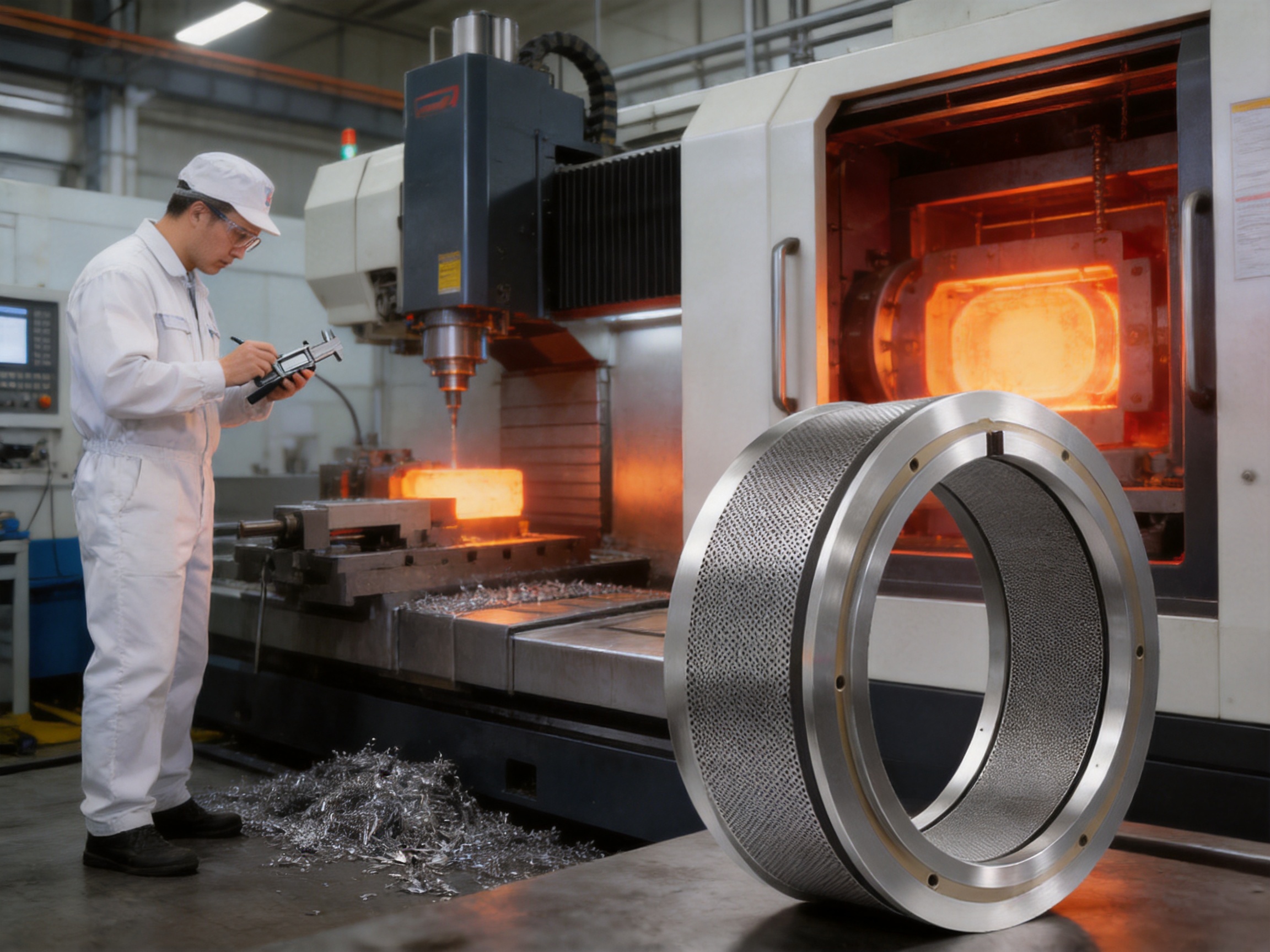
Advanced Manufacturing Process
Technical Review and Product Engineering
The manufacturing process begins with a technical review of the customer’s requirements. Engineers analyze the pellet mill model, die installation structure, raw material formula, pellet diameter, expected capacity, operating speed, and service environment.
This review is important because ring die performance depends on the relationship between the die, rollers, feed formula, and operating parameters. A die intended for high-protein floating fish feed may not be ideal for a high-fiber sinking feed. Similarly, a die for small shrimp pellets may require a different hole layout and working length from a die for large fish pellets.
Engineering drawings are prepared or reviewed before machining. Key dimensions, tolerances, hole spacing, compression geometry, screw locations, and reference surfaces are checked to ensure that the final product can be installed correctly and perform as intended.
Material Preparation
Material quality provides the foundation for die performance. The selected steel must have suitable strength, hardness, toughness, corrosion resistance, and machinability. Material certificates and incoming inspection procedures can be used to verify the basic requirements of the raw material.
Correct material preparation helps prevent problems such as cracking, excessive deformation, uneven hardness, and premature hole wear. For customers operating under severe conditions, material selection can be adjusted according to abrasive ingredients, production hours, cleaning methods, and expected replacement intervals.
CNC Machining
Computer numerical control machining is used to produce accurate external dimensions, internal surfaces, mounting features, and other critical components of the ring die. CNC equipment supports repeatable processing and helps maintain consistency between batches.
The hole pattern is particularly important. The holes must be distributed accurately around the working area so that feed material experiences a balanced resistance. Inaccurate spacing can lead to uneven loading, localized wear, and inconsistent output.
Machining parameters are selected according to the material and the required surface finish. Tool condition, cutting speed, feed rate, cooling, and process sequence can all influence the quality of the finished product.
Hole Drilling and Finishing
After the primary machining stage, the pellet holes undergo additional finishing. Burrs, rough edges, chips, and irregularities must be removed because they can affect feed flow and pellet surface quality.
Hole finishing may include reaming, polishing, deburring, or other suitable processes. The objective is to achieve a smooth and consistent passage from the inner working surface to the outer discharge surface.
For small-diameter aqua feed pellets, hole quality becomes even more important. A minor burr or dimensional variation can represent a significant percentage of the hole diameter and may cause unstable discharge. Careful finishing helps reduce this risk.
Heat Treatment
Heat treatment can be used to improve hardness, wear resistance, dimensional stability, and overall service performance. The exact process depends on the selected material and product design.
A controlled heat-treatment procedure should balance surface hardness with toughness. Excessive hardness without sufficient toughness may increase the risk of cracking, while insufficient hardness may lead to rapid wear. Uniform treatment is also important because uneven hardness can create non-uniform wear around the die.
After heat treatment, the ring die may receive additional machining or correction to restore critical dimensions. This step helps ensure that the final product meets the required installation and operating specifications.
Surface Treatment Options
Some aqua feed applications require additional surface protection. Depending on the customer’s requirements, wear-resistant or corrosion-resistant surface treatments may be considered. Such treatments can be useful for high-throughput production or formulas containing abrasive mineral components.
The choice of surface treatment should be based on actual operating conditions rather than marketing claims alone. Compatibility with the feed formula, cleaning method, temperature, and expected wear mechanism should be evaluated before selection.
Inspection and Quality Control
Quality control is conducted throughout the production process rather than only at the final stage. Inspection may include raw material verification, dimensional measurement, hole diameter inspection, surface-finish evaluation, hardness testing, mounting-feature verification, and final visual examination.
Critical dimensions are checked against approved drawings or customer specifications. The product is also reviewed for cracks, deformation, machining marks, burrs, and other conditions that could affect installation or operation.
Consistent inspection helps reduce batch variation and gives customers greater confidence when replacing multiple dies over time. It also supports traceability and continuous improvement in manufacturing.
Final Cleaning and Packaging
Before shipment, the ring die is cleaned to remove machining residue, metal particles, and protective materials that could affect installation. Suitable rust-prevention measures are applied where required.
Packaging is designed to protect the die from impact, moisture, and movement during transportation. Because ring dies are heavy precision components, secure internal support is important. Proper packaging helps preserve the mounting surface and hole condition until the product reaches the customer.
Manufacturing Strengths of Liyang Weikeer
Liyang Weikeer Feed Machinery Manufacturing Co., Ltd. specializes in the production of feed machinery components, including pellet mill ring dies and press rollers. Its location in Liyang, Jiangsu, provides access to an established feed machinery manufacturing region and a broad supply chain for machining, material processing, equipment servicing, and international logistics.
Experience with Multiple Equipment Brands
Experience with different pellet mill brands allows the company to understand the dimensional and structural variations between machines. This is important for customers operating mixed equipment fleets or purchasing replacement parts for machines that have been in service for many years.
The company can work with model information, drawings, samples, and customer measurements. This allows the manufacturing process to be adapted to the actual equipment rather than relying only on a generic reference.
Customization Capability
Ring dies can be customized according to pellet diameter, hole arrangement, compression ratio, material choice, surface treatment, and mounting configuration. Customization is especially valuable for aqua feed producers because different species and life stages require different pellet characteristics.
Customers may need dies for floating fish feed, sinking fish feed, shrimp feed, crab feed, specialty aquatic feed, or experimental formulas. Each application can be reviewed according to its particular production objectives.
Integrated Production Coordination
Coordinating design, material preparation, machining, heat treatment, finishing, inspection, and packaging within an organized production system helps improve communication and product consistency. It also enables the company to respond more efficiently to technical questions and replacement requirements.
Export-Oriented Service
The company supplies products to customers outside China and can support communication related to machine models, specifications, drawings, packaging, and delivery arrangements. Clear technical confirmation is particularly important for international customers because returning a heavy replacement component can be expensive and time-consuming.
How the Ring Die Improves Feed Mill Efficiency
Efficiency should be evaluated through the complete production process rather than only by hourly output. A die that produces stable pellets, reduces fines, operates for a predictable service period, and minimizes downtime can offer better overall value than a die with a low purchase price but inconsistent performance.
Lower Downtime Risk
Unexpected die failure or blockage can interrupt the pelletizing line and affect upstream mixing and conditioning operations. A correctly manufactured and matched die helps reduce the likelihood of installation problems, uneven discharge, and premature wear.
Reduced Product Loss
Fines and broken pellets represent lost product and may require additional screening or reprocessing. Improved pellet integrity can reduce these losses, especially during conveying, packaging, and transport.
Better Energy Management
Compression resistance directly affects the load on the pellet mill motor. The goal is to achieve sufficient pellet quality without excessive resistance. A properly selected compression ratio can help balance energy consumption and physical pellet performance.
More Predictable Maintenance
When die wear is relatively uniform and service life is predictable, maintenance teams can schedule replacement during planned shutdowns. This is preferable to emergency replacement after severe wear, cracking, or production instability.
Installation and Operating Recommendations
Verify the Die Before Installation
Before installing a new ring die, compare its dimensions and mounting features with the old component or approved drawing. Confirm the outside diameter, inside diameter, thickness, screw-hole position, hole diameter, compression ratio, and locating structure.
Inspect the die for transportation damage, corrosion, burrs, or foreign material. Do not install a component that has visible cracks or severe deformation. Report any discrepancy before beginning installation.
Clean the Mounting Surfaces
The die support surface, mounting flange, screws, and locating components should be clean and free from feed residue, metal particles, oil contamination, and rust. Even a small particle between the die and support surface can create misalignment.
Use the Correct Fastening Procedure
Screws should be tightened according to the pellet mill manufacturer’s recommended sequence and torque. Uneven tightening can distort the die or create an unstable connection. Fasteners should be inspected for damaged threads, stretching, corrosion, or abnormal wear.
Check Roller Adjustment
The gap between the press rollers and ring die must be adjusted correctly. Excessive contact can cause severe wear, overheating, and damage to the working surfaces. Excessive distance may reduce compression and result in poor pellet formation.
Roller surfaces should also be checked for wear and correct alignment. A new die installed with heavily worn or incorrectly adjusted rollers may not deliver the expected performance.
Run-In Procedure
A new ring die should normally be run in using an appropriate mixture of oil, fine feed material, or another approved conditioning material. The exact procedure should follow the pellet mill supplier’s instructions.
Running in helps smooth the working surfaces and establish consistent material flow through the holes. Operators should monitor motor load, die temperature, vibration, noise, and pellet appearance during the initial operating period.
Monitor Production Conditions
Important operating indicators include motor current, production rate, steam pressure, conditioning moisture, die temperature, pellet durability, fines percentage, and water stability. Sudden changes may indicate formula variation, moisture problems, roller wear, blockage, or die damage.
Keeping operating records makes it easier to identify gradual performance changes. These records are also useful when selecting the next ring die or adjusting the compression ratio.
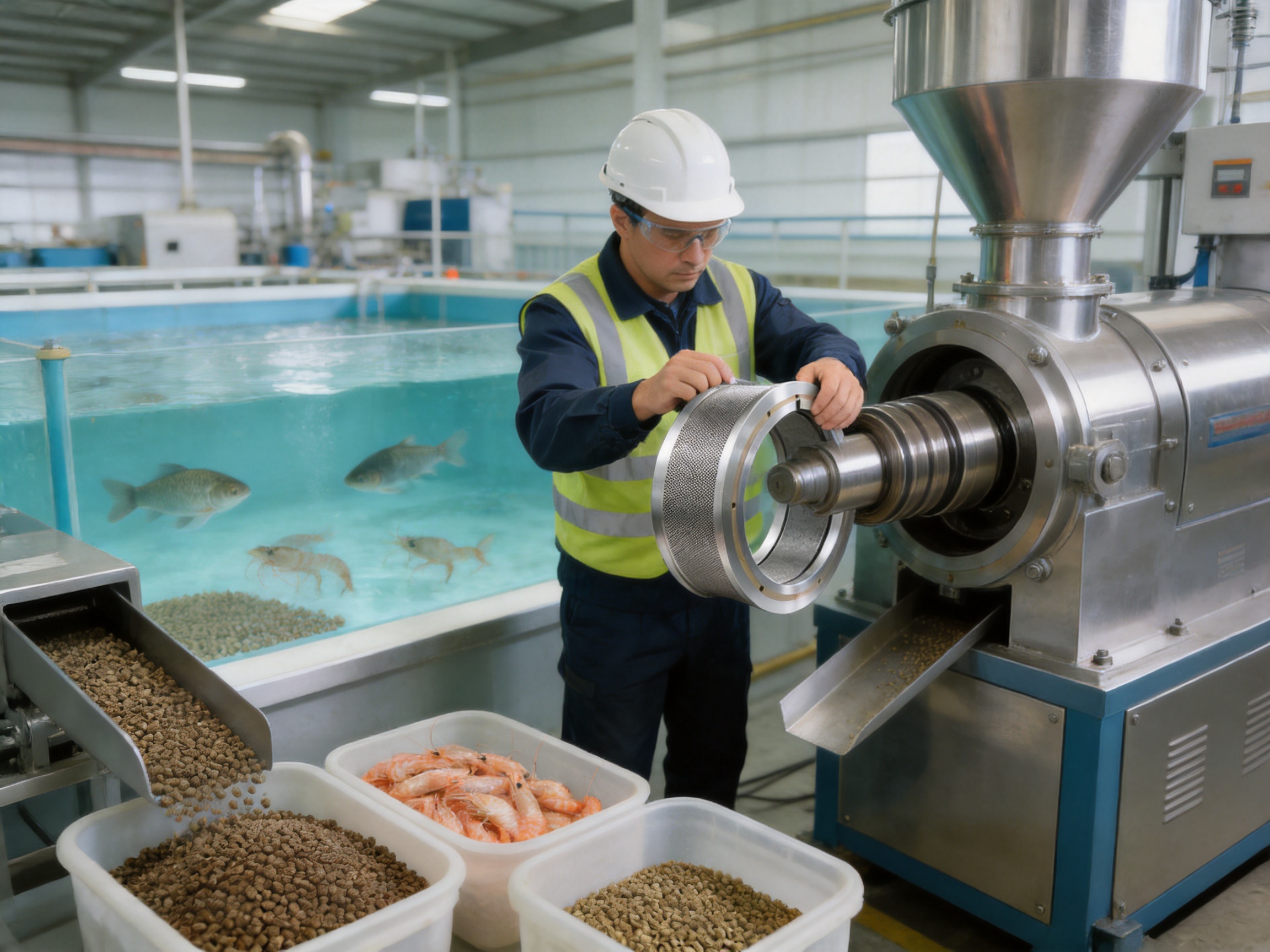
Applications in Aquaculture Feed Production
Fish Feed
The die can be used for feed intended for tilapia, salmon, catfish, carp, trout, and other fish species. Fish feed may be manufactured as floating, slow-sinking, or sinking pellets. The required die design depends on species, fish size, feeding behavior, formula, and target density.
Shrimp Feed
Shrimp feed generally requires small and uniform pellets with good water stability. Pellet integrity is important because shrimp may feed on the pond or tank bottom for an extended period. A suitable die helps form compact pellets with consistent dimensions.
Fry and Juvenile Feed
Young aquatic animals require smaller feed particles. Small-diameter die holes must be manufactured with high precision to avoid blockage and dimensional variation. Proper formula preparation and conditioning remain essential for successful production.
Specialty Aquatic Feed
Some producers manufacture medicated feed, functional feed, high-energy feed, color-enhancing feed, or species-specific products. These formulas may contain additives or ingredients that affect friction, binding, and wear. The ring die can be selected according to the characteristics of the finished product.
Choosing the Correct Ring Die
Customers should provide as much information as possible when requesting a quotation or technical recommendation. Useful information includes the pellet mill brand and model, existing die dimensions, pellet diameter, target production capacity, raw material formula, moisture content, desired pellet type, and operating hours per day.
If the die is used for more than one formula, the customer should identify the main formula and explain the planned product range. A die optimized for one formula may not be the best compromise for another. In some cases, maintaining separate dies for different product categories can improve efficiency and pellet quality.
Customers should also clarify whether they require standard stainless steel construction, enhanced wear resistance, special surface treatment, customized hole patterns, or replacement parts for an older machine. Accurate information allows the supplier to prepare a more reliable technical proposal.
Maintenance and Service-Life Management
Regular inspection helps extend the working life of a ring die. Operators should monitor hole wear, pellet diameter, motor load, throughput, surface condition, and the number of fines in the finished product.
A gradual increase in power consumption may indicate growing friction, material buildup, roller problems, or hole wear. Reduced capacity may result from blockage, formula changes, insufficient conditioning, or die deterioration. These symptoms should be investigated before they develop into major failures.
The die should be cleaned after production when required by the formula and equipment procedure. Residual feed containing moisture, salt, oil, or additives may harden inside the holes or accelerate corrosion. Cleaning methods must be selected carefully to avoid damaging the hole surfaces.
When the die is removed for storage, it should be cleaned, dried, protected from corrosion, and stored on a stable support. Heavy components should not be placed directly on delicate working surfaces. Clear identification of the model, hole diameter, and compression ratio helps prevent confusion during future installation.
Frequently Asked Questions
Q1: What types of feed can this ring die produce?
The ring die is designed for aqua feed production, including fish feed, shrimp feed, fry feed, juvenile feed, and other aquatic animal feed. It may support floating, slow-sinking, or sinking pellets when the die is correctly matched with the formula and processing conditions.
Q2: Can the die be used on different pellet mill brands?
Yes. The product range includes configurations for Famsun, CPM, Taiwan CPP, IDAH, and related pellet mill models. Compatibility must be confirmed using the exact machine model, die dimensions, mounting arrangement, and customer requirements.
Q3: How is the pellet diameter selected?
Pellet diameter is selected according to the species, animal size, feeding method, formula, and production objective. The customer should specify the required finished pellet size when requesting a die. Common requirements may range from very small particles for fry to larger pellets for mature fish.
Q4: Does a higher compression ratio always produce better pellets?
No. A higher compression ratio can increase density and durability, but excessive compression may increase power consumption, die temperature, blockage risk, and mechanical stress. The correct ratio depends on the formula, moisture, starch content, fat level, pellet diameter, and required water stability.
Q5: What information is needed for a customized ring die?
Useful information includes the pellet mill model, original die drawing or sample, outside and inside diameter, thickness, screw-hole pattern, pellet diameter, target output, raw material formula, and required compression ratio. Photographs with accurate measurements may also assist preliminary evaluation.
Q6: How can I reduce the risk of premature die wear?
Use a die made from suitable material, maintain correct roller adjustment, control abrasive ingredients, avoid foreign metal entering the pellet mill, monitor operating load, and follow a proper run-in procedure. Regular cleaning and inspection also help identify wear before it becomes severe.
Q7: Can the die be supplied with wear-resistant treatment?
Some dies can be supplied with wear-resistant or other surface treatments depending on the application. The appropriate treatment should be selected according to formula abrasiveness, production volume, cleaning requirements, and expected service conditions.
Q8: How does the ring die affect water stability?
The die influences compression, density, and pellet cohesion, all of which may affect water stability. However, water stability also depends on ingredients, binders, starch gelatinization, moisture, conditioning, cooling, and storage. The die should therefore be optimized together with the complete process.
Q9: What should be checked when receiving a new die?
Check the packaging, external condition, dimensions, mounting holes, pellet-hole diameter, model identification, and surface condition. Confirm that the product matches the approved technical information before installation.
Q10: Where is the manufacturer located?
Liyang Weikeer Feed Machinery Manufacturing Co., Ltd. is located at No. 12 Zhongdali Road, Xinbei Industrial Park, Daibu Town, Liyang, Jiangsu, China. The company manufactures feed machinery components and provides technical communication for domestic and international customers.
Why Select This Product for a Pelletizing Line?
The Aqua Feed Pellet Mill Screw Type Ring Die combines precision manufacturing, adaptable specifications, broad equipment compatibility, and suitability for high-compression aqua feed applications. Its purpose is not simply to create pellets, but to support a reliable production process in which pellet quality, throughput, energy use, and maintenance requirements remain balanced.
Compared with generic low-cost alternatives, a properly engineered die offers advantages in dimensional accuracy, hole consistency, mounting compatibility, surface finish, and service-life management. These advantages can reduce hidden operating costs and make production results more predictable.
The manufacturing strengths of Liyang Weikeer include experience with multiple pellet mill models, customized design capability, material and process control, precision machining, optional surface treatment, inspection procedures, and export-oriented customer service. These capabilities allow the company to provide products for both standard replacement requirements and more specialized aqua feed applications.
For feed mills producing fish or shrimp pellets, the best result comes from choosing a die based on actual production data rather than selecting only by machine model. When die specifications are matched with the formula, pellet diameter, conditioning process, and operating capacity, the pellet mill can work more efficiently and produce pellets with better uniformity and durability.
Conclusion
The ring die is a central component in aqua feed pellet production. It controls the compression and shaping process that converts prepared feed material into stable, uniform pellets. A high-quality screw type stainless steel die can help improve pellet density, water stability, size consistency, throughput, and overall production reliability.
The Aqua Feed Pellet Mill Screw Type Ring Die is designed for demanding aquaculture applications and can be adapted for multiple pellet mill brands and models, including Famsun, CPM, Taiwan CPP, IDAH, and related equipment. Its precision-machined holes, stainless steel construction, secure screw-mounted structure, optional wear-resistant treatment, and customizable compression design provide practical advantages over ordinary dies.
With correct material selection, CNC machining, heat treatment, hole finishing, dimensional inspection, and protective packaging, Liyang Weikeer Feed Machinery Manufacturing Co., Ltd. provides a dependable source for pellet mill dies and related feed machinery components. The company’s ability to work from machine models, drawings, samples, and customer specifications supports accurate replacement and customized production.
For aquaculture feed manufacturers, selecting the correct die is an investment in the entire production line. A properly matched ring die supports efficient pellet formation, reduces avoidable downtime, and helps manufacturers supply high-quality feed for fish, shrimp, and other aquatic animals.
References
1. Food and Agriculture Organization of the United Nations. Aquaculture Feed and Feeding Practices.
2. Food and Agriculture Organization of the United Nations. Technical Guidance for Responsible Aquaculture Nutrition.
3. American Feed Industry Association. Feed Manufacturing and Pellet Quality Principles.
4. European Feed Manufacturers’ Federation. Good Practices for Compound Feed Production.
5. International Organization for Standardization. General Principles for Quality Management and Manufacturing Control.
6. Pellet Mill Manufacturer Technical Manuals. Ring Die Installation, Roller Adjustment, and Maintenance Procedures.
7. Aquaculture Nutrition Textbooks. Feed Physical Quality, Water Stability, and Feed Conversion Considerations.
8. Industrial Materials Engineering References. Stainless Steel Selection, Heat Treatment, Wear Resistance, and Surface Finishing.



 русский
 Español
 عربى
 中文简体