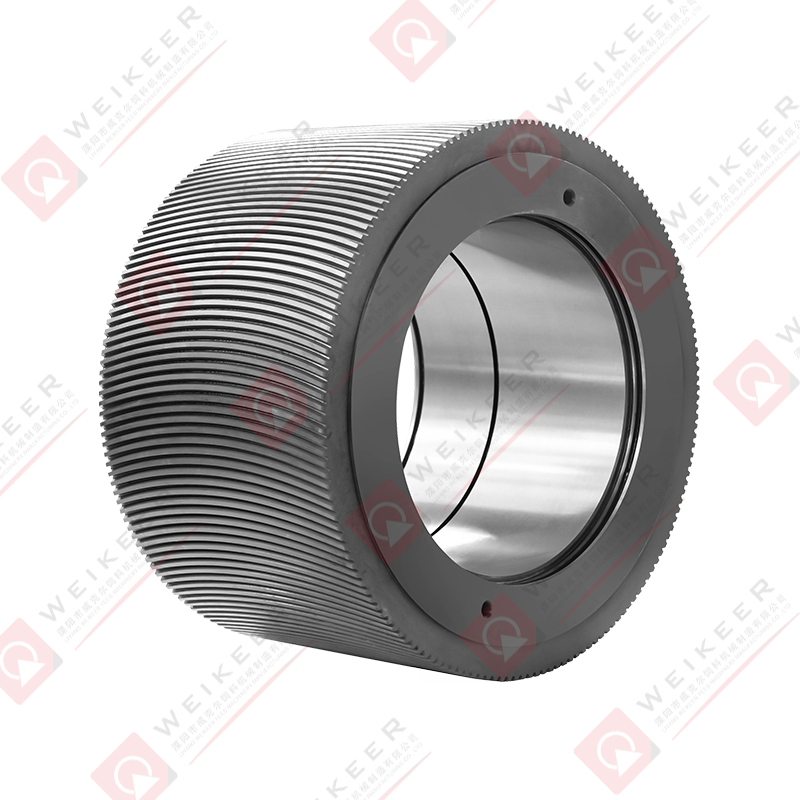
What Is a Ring Die in a Livestock and Poultry Pellet Mill?
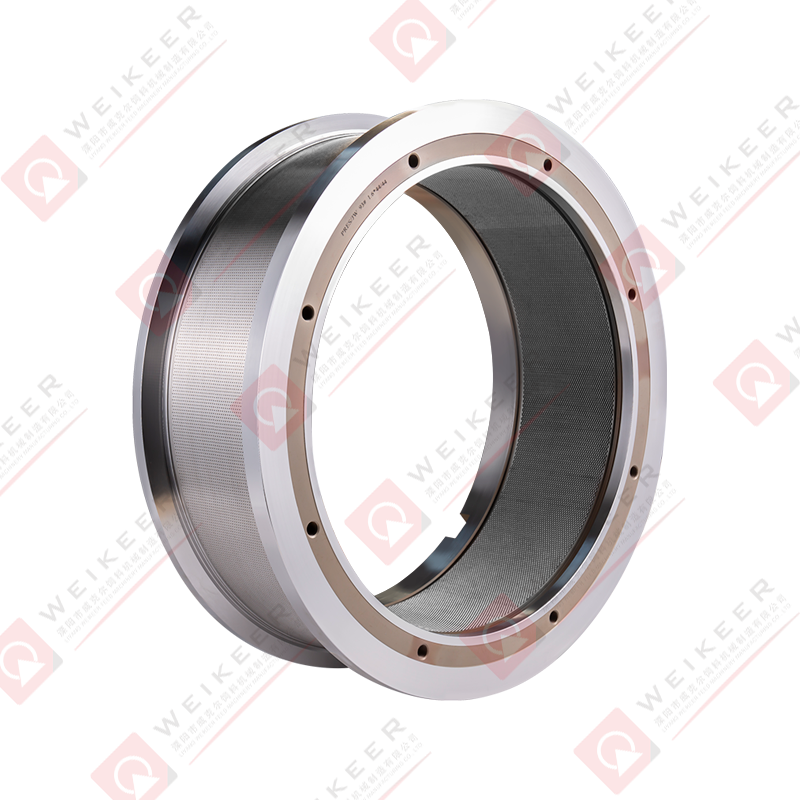
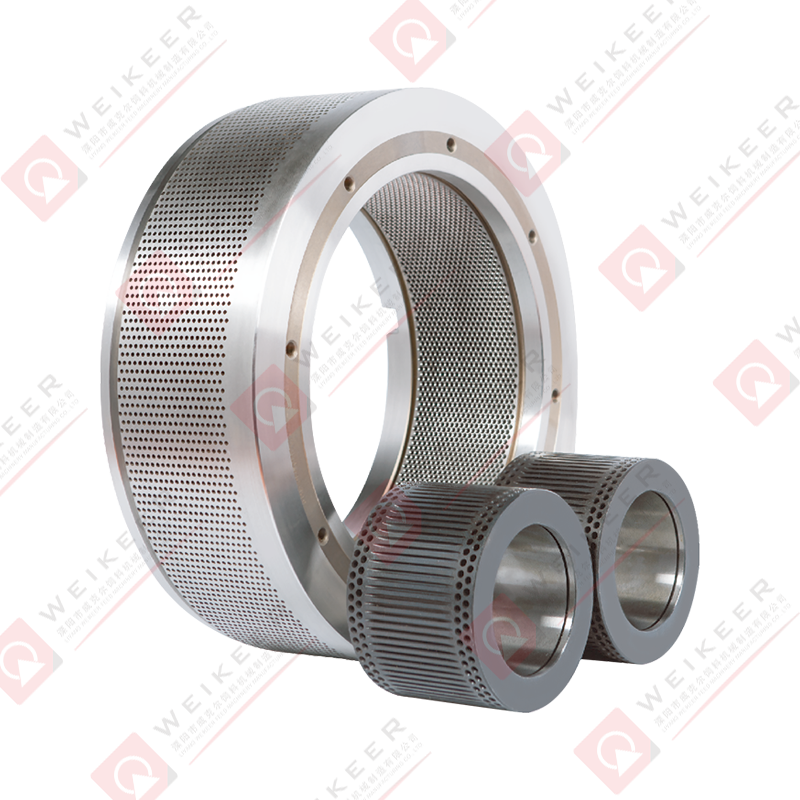
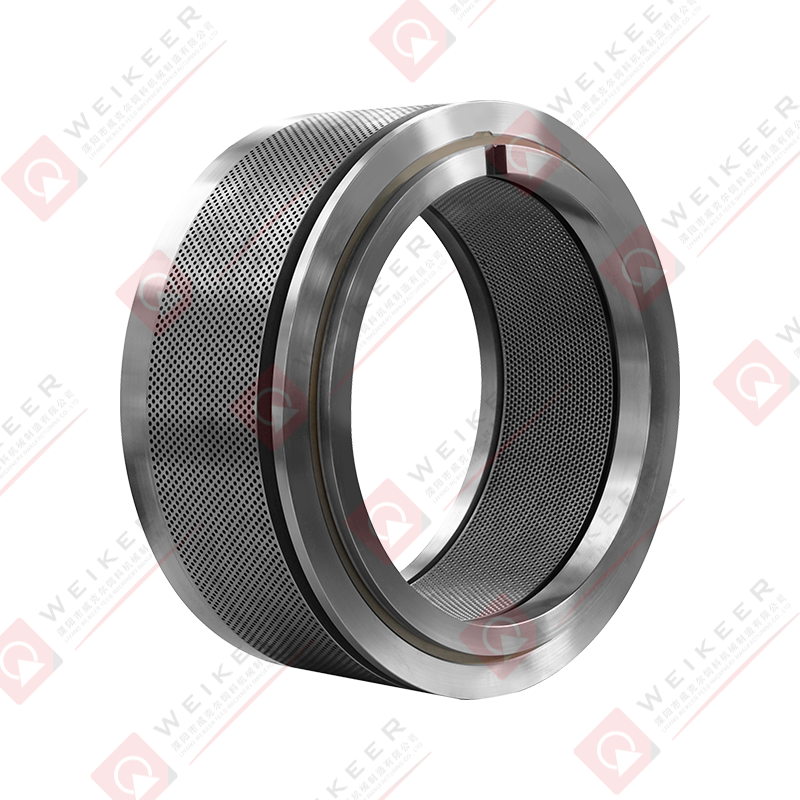
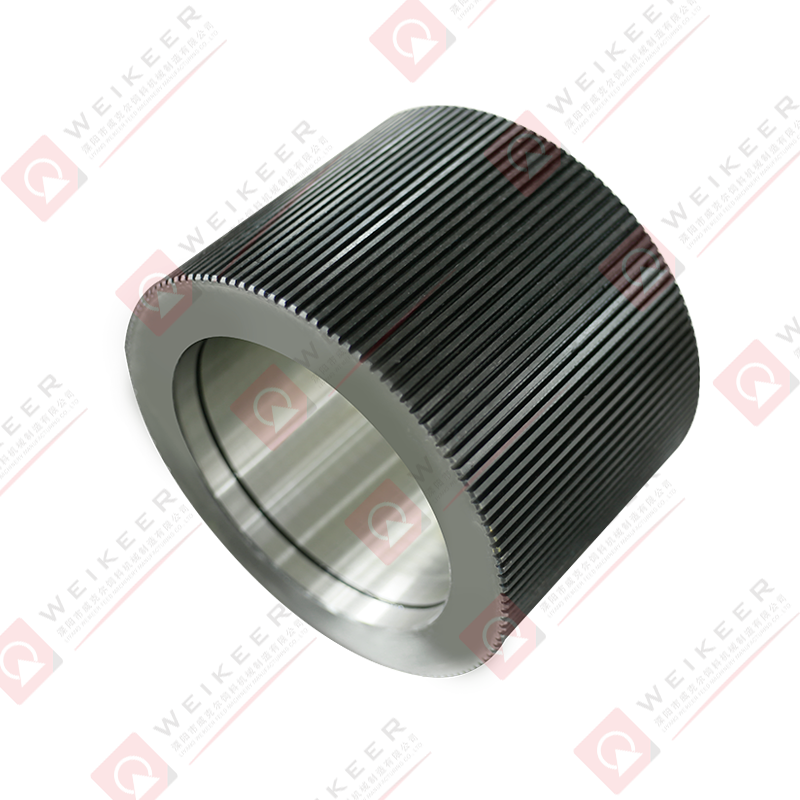
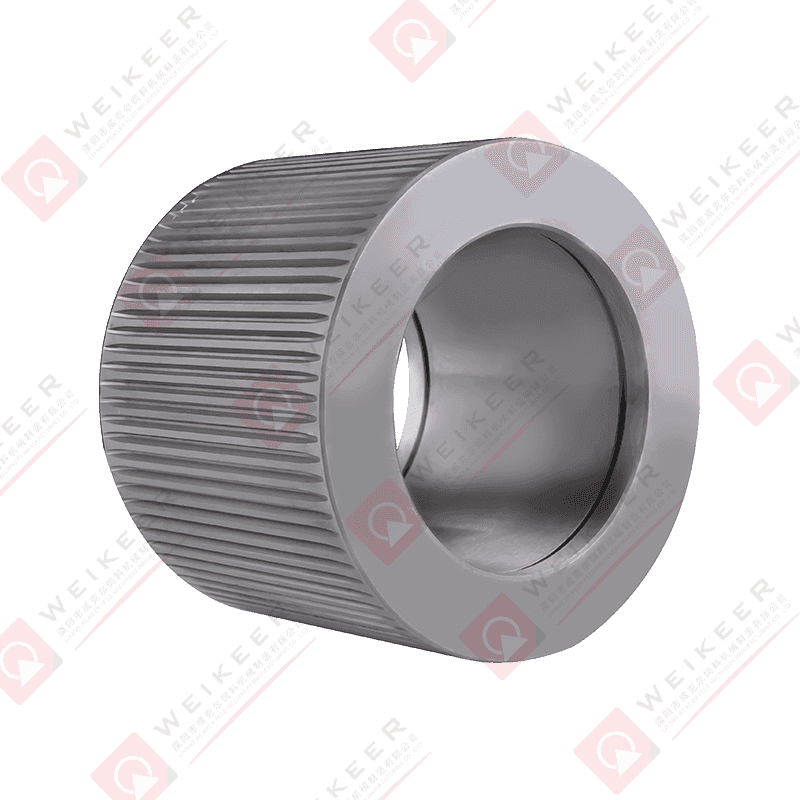
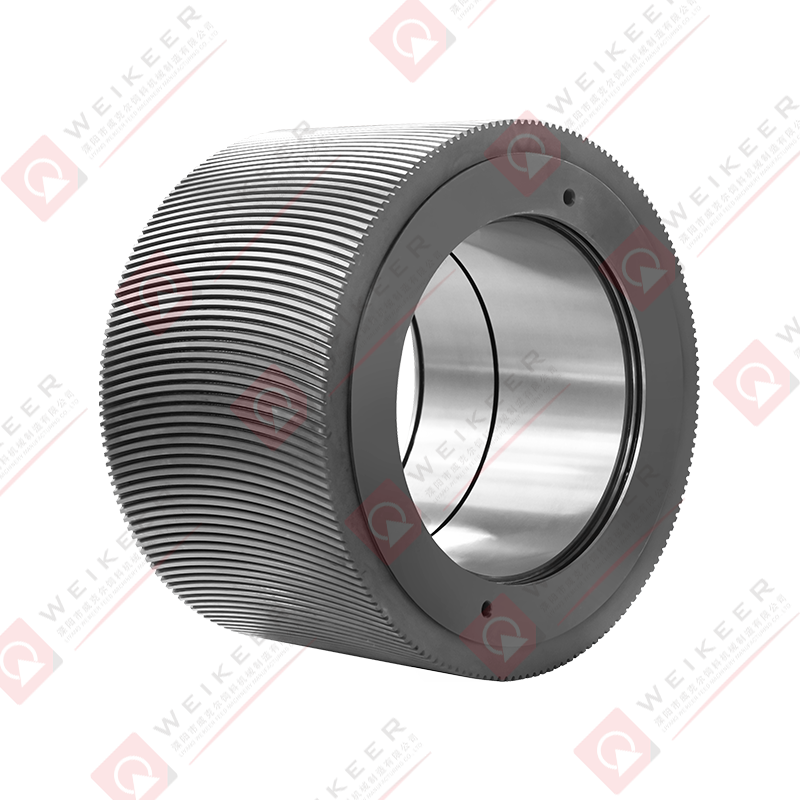
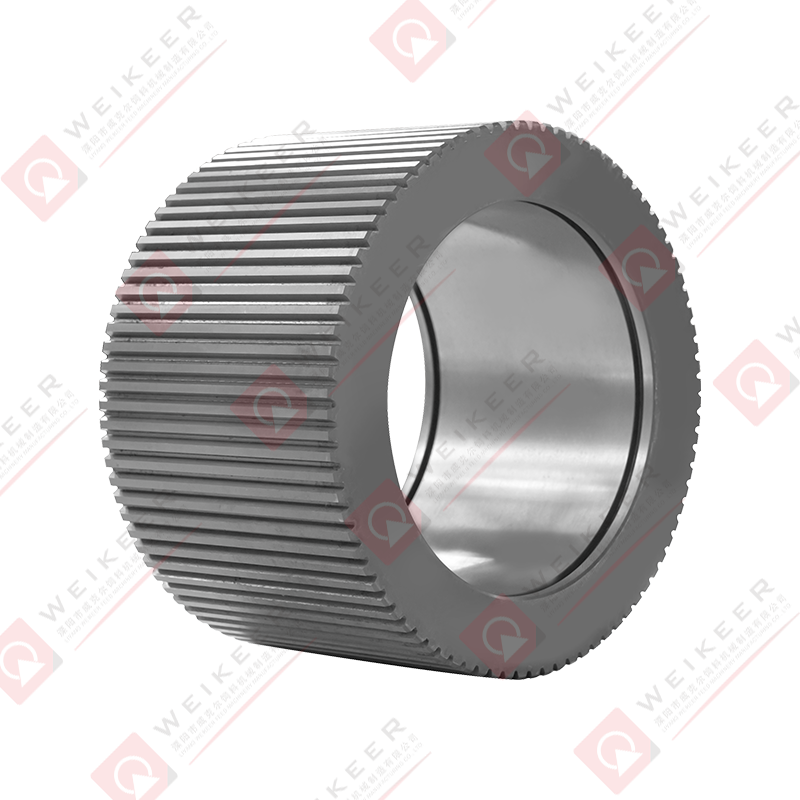
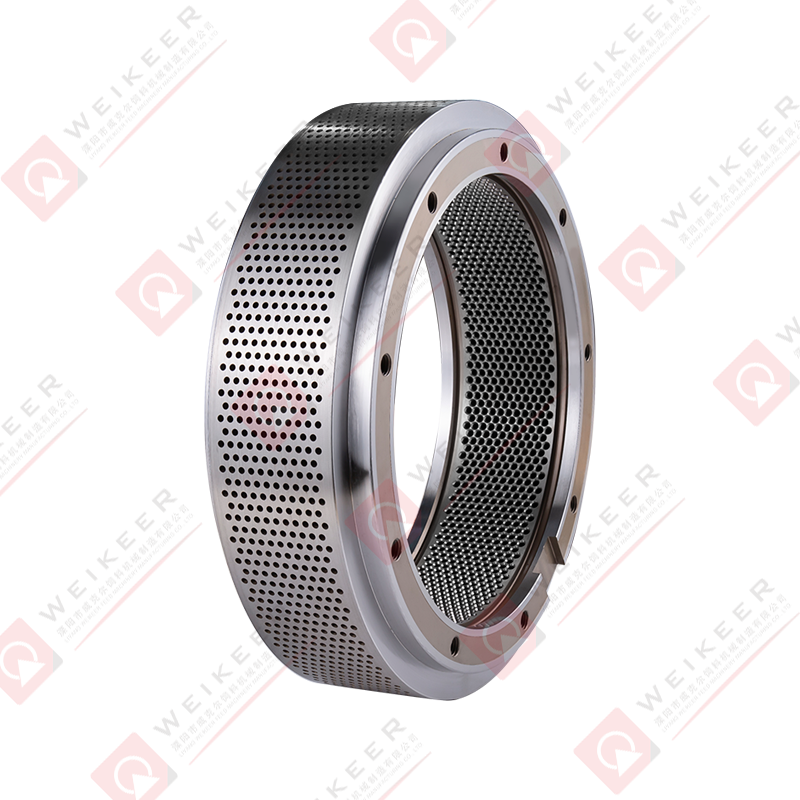
A ring die is the core forming component of a ring die pellet mill, a machine widely used in livestock and poultry feed manufacturing to compress and extrude conditioned mash feed into uniform cylindrical pellets. The ring die is a thick-walled, hollow cylindrical shell with hundreds or thousands of precisely drilled holes — called die holes or channels — arranged around its circumference. As the die rotates, press rollers inside the die compress the feed material against the inner surface, forcing it through the die holes where it is extruded as continuous strands and cut to length by external knives. The resulting pellets have a defined diameter, density, and hardness that directly affect animal feed intake, digestibility, and transportation efficiency.
The term "anchor ring die" refers specifically to ring dies that use an anchor or clamp-ring retention system to secure the die onto the pellet mill's die holder or drive hub. This mounting method uses a precision-machined anchor ring that locks the die firmly against the drive flange, transmitting rotational torque evenly across the die face without relying solely on friction or bolt clamping. The anchor ring design ensures concentricity between the die and the press rollers, which is critical for uniform nip pressure across the die width and for achieving consistent pellet quality across the full production run. Misalignment between the die and rollers causes uneven wear, reduced throughput, and erratic pellet hardness, all of which affect feed conversion ratios in livestock and poultry operations.
How Does the Ring Die Generate Pellet Quality and Why Does Its Design Matter?
The die hole geometry is the single influential design parameter in determining pellet quality, mill throughput, and energy consumption. Each die hole consists of an inlet counterbore or chamfer that guides the feed material into the channel, a working length or effective length through which compression occurs, and in some designs a relief bore at the exit that reduces friction on the extruded pellet. The ratio of the effective hole length to the hole diameter — known as the length-to-diameter ratio or L/D ratio — controls the compression ratio and directly determines pellet hardness and durability.
For livestock and poultry feeds, the L/D ratio varies by species, age group, and ingredient composition. Broiler starter diets, which require relatively soft pellets for young birds with limited beak strength, are typically produced with dies having lower L/D ratios of around 8:1 to 10:1. Layer and breeder diets requiring harder, more durable pellets for longer transport distances and bulk storage use dies with L/D ratios of 12:1 to 16:1. Ruminant pellets for cattle and sheep, which tolerate higher density and must withstand mechanical handling in total mixed ration (TMR) systems, may use even higher ratios. Using a die with an L/D ratio unsuited to the feed formula results in either crumbling, dusty pellets that reduce animal intake or excessively hard pellets that overconsume energy and reduce mill output.
What Materials Are Used to Manufacture Anchor Ring Dies?
The material from which a ring die is manufactured determines its wear life, resistance to corrosion from steam and moisture during feed conditioning, and ability to maintain hole dimensional accuracy over thousands of hours of operation. Feed manufacturing environments are highly abrasive due to the mineral content — particularly calcium, phosphorus, and salt — in livestock and poultry formulas, and the combination of abrasion, moisture, and cyclic mechanical stress places significant demands on die material properties.
Alloy Steel Dies
The majority of ring dies for livestock and poultry feed production are manufactured from alloy steels, commonly chromium-molybdenum (Cr-Mo) or chromium-vanadium (Cr-V) grades that are through-hardened or case-hardened after hole drilling to achieve surface hardness values in the range of 55 to 62 HRC. Through-hardened dies provide uniform hardness throughout the die wall and are preferred for highly abrasive formulas containing high mineral inclusions or coarse fibrous ingredients. Case-hardened dies have a hard outer layer with a tougher core, which provides better impact resistance for formulas that include hard whole grains or granular additives that create sudden pressure spikes in the die holes.
Stainless Steel Dies
Stainless steel ring dies, typically manufactured from 316 or 17-4PH precipitation-hardening stainless steel, are specified for medicated feed production, aquaculture feeds with high moisture content, and operations where cross-contamination between product lines must be minimized through enhanced cleanability. Stainless dies resist pitting corrosion from chloride-containing ingredients and maintain a cleaner hole surface finish over time, reducing the tendency for sticky or high-fat feeds to adhere in the die holes and cause blockages. The trade-off is higher initial cost and marginally lower hardness compared to alloy steel equivalents.
Surface Treatment Options
Several surface treatments are applied to ring dies to extend their working life in specific applications. Chrome plating of the die bore surface and hole interiors improves corrosion resistance and reduces the coefficient of friction, which lowers drive power requirements and reduces heat buildup in the die during operation. Titanium nitride (TiN) coating applied by physical vapor deposition (PVD) adds a thin, extremely hard ceramic layer to the die surface that significantly extends wear life in highly abrasive mineral-rich feeds. Nitriding treatments diffuse nitrogen into the steel surface to create a compound layer and diffusion zone that improves both hardness and corrosion resistance without dimensional distortion.
Key Specifications to Understand When Selecting a Ring Die
When sourcing a replacement or new ring die for a livestock and poultry pellet mill, several dimensional and performance specifications must be matched precisely to both the mill model and the intended feed formula. The following table summarizes the critical parameters and their significance:
| Specification |
Description |
Impact on Performance |
| Die Inner Diameter (ID) |
Internal bore diameter matching the mill's roller assembly |
Must match mill model exactly for correct roller-die clearance |
| Die Outer Diameter (OD) |
External diameter determining die wall thickness |
Thicker walls allow higher L/D ratios without reducing open area |
| Die Width |
Axial working length of the die |
Wider dies increase production capacity for a given hole diameter |
| Hole Diameter |
Determines the pellet diameter produced |
Must match species and age group feed pellet size requirements |
| L/D Ratio |
Effective hole length divided by hole diameter |
Controls pellet hardness, density, and energy consumption |
| Open Area Percentage |
Ratio of total hole area to die working surface area |
Higher open area increases throughput but reduces die strength |
| Inlet Chamfer Angle |
Angle of the entry counterbore guiding feed into the hole |
Affects feed intake efficiency and susceptibility to blocking |
When ordering a replacement die, it is essential to confirm the mill manufacturer, mill model number, and the original die part number if available. Different pellet mill manufacturers — including CPM, Bühler, Andritz, Muyang, and others — use proprietary anchor ring mounting systems with specific tolerances, and a die manufactured to the wrong dimensional standard will not mount correctly on the mill's drive hub regardless of how closely the hole pattern matches.
How Do You Match Ring Die Specifications to Different Livestock and Poultry Species?
Feed pellet specifications vary significantly between livestock and poultry species, and between different production stages within a single species. The ring die must be selected to produce pellets that meet the physical quality requirements of each specific feed category. The following considerations apply when specifying dies for major livestock and poultry applications:
- Broiler and layer poultry: Broiler starter feeds (0–10 days) typically use 2.0 mm to 2.5 mm diameter holes with low L/D ratios to produce soft, easily consumed crumbles. Grower and finisher diets use 3.0 mm to 4.0 mm dies. Layer feeds are often pelleted at 3.5 mm to 4.5 mm with higher L/D ratios for improved pellet durability index (PDI), targeting PDI values above 85% to minimize fines in automatic feeding systems.
- Swine production: Piglet starter feeds require small-diameter pellets of 2.5 mm to 3.0 mm with moderate hardness. Grower-finisher swine diets are typically pelleted at 4.0 mm to 6.0 mm. High-energy swine diets with elevated fat content require dies with well-polished hole surfaces and appropriate chamfer angles to prevent fat-induced blockages during startup.
- Ruminant feeds: Cattle and sheep feeds are typically produced as 6.0 mm to 10.0 mm pellets or as 8.0 mm to 12.0 mm nuts, requiring dies with large hole diameters and robust wall structures. High-fiber ruminant formulas containing roughage, straw, or beet pulp are highly abrasive and benefit from through-hardened alloy steel dies with surface treatments to extend service life.
- Rabbit and small animal feeds: Rabbit pellets are typically 3.5 mm to 5.0 mm in diameter with relatively high L/D ratios to produce the firm, slow-dissolving pellets that match rabbits' selective feeding behavior and reduce waste in rack-style feeders.
How Should Ring Dies Be Installed and Maintained to Maximize Service Life?
Correct installation and systematic maintenance of the anchor ring die are as important as the die's initial specification and material quality. Even a premium-grade die will deliver shortened service life if installed incorrectly or operated without proper maintenance protocols.
Installation Procedure for Anchor Ring Dies
Before installing a new or refurbished ring die, thoroughly clean the die holder and anchor ring mating surfaces to remove any residual feed material, rust, or debris that would prevent accurate seating. Inspect the anchor ring and drive hub contact faces for burrs or raised metal that could cause uneven clamping pressure. Apply a light coat of anti-seize compound to the anchor ring contact faces to prevent galling and facilitate future removal. Install the die onto the drive hub, ensuring the drive keys or lugs engage fully in their corresponding slots. Tighten the anchor ring bolts evenly in a cross pattern to the manufacturer's specified torque value — uneven tightening causes die runout that accelerates roller and die wear. After installation, verify die-to-roller gap settings using the mill manufacturer's feeler gauge procedure before starting production.
Running-In New Dies
New ring dies should always be run in before being used for full production. The standard running-in procedure involves filling the die holes with an oil and fine sand mixture — or a dedicated die seasoning compound — and running the mill at reduced throughput for 20 to 30 minutes. This process polishes the hole walls, removes machining marks, and creates a thin lubricating layer in the holes that significantly reduces the risk of blockages during the hours of production. Skipping the running-in procedure with a new die frequently results in blocked holes, roller slippage, and motor overload during initial startup, particularly with low-moisture or high-fiber feed formulas.
Routine Maintenance Practices
- Fill die holes with an oil and sawdust mixture at the end of each production run to prevent moisture-induced corrosion and feed hardening in the holes during shutdown periods, particularly in humid climates.
- Inspect the die inner bore surface at each die removal for signs of roller tracking marks, which indicate incorrect roller-to-die gap settings or roller bearing wear that needs to be addressed before reinstalling the die.
- Monitor pellet length and hardness trends during production. A progressive increase in pellet hardness without formula changes typically indicates that the die holes are wearing and the effective L/D ratio is increasing, signaling that the die is approaching the end of its service life.
- Record die service hours and production tonnage for each die to build a performance history that supports informed decisions about die replacement timing and supplier evaluation.
- When a die reaches the end of its working life on full-thickness production, evaluate whether regrinding the inner bore surface to restore the roller contact profile can extend its use for lower-specification feeds before final retirement.
What Are the Common Ring Die Failures and How Can They Be Prevented?
Understanding the failure modes of ring dies in livestock and poultry pellet mill service allows feed mill operators and maintenance engineers to take preventive action before failures occur and to diagnose the root cause of failures accurately when they do happen. The frequent failure modes and their primary causes include the following:
- Die hole blockage: Caused by insufficient steam conditioning, inadequate die running-in, high-fat formulas without adequate mixing, or shutdown without hole-filling procedure. Preventable through proper conditioning temperature management and consistent end-of-run maintenance.
- Uneven hole wear pattern: Typically results from incorrect roller gap settings, worn roller bearings causing roller wobble, or die misalignment due to improper anchor ring installation. Results in variable pellet hardness across the die width and accelerated localized wear.
- Die cracking or fracture: Usually caused by tramp metal entering the die zone, severe overloading due to wet or incorrectly conditioned feed, or fatigue from operating with incorrect roller settings over an extended period. Metal detection upstream of the pelleting unit is essential protection against tramp metal damage.
- Corrosion pitting of hole surfaces: Occurs when dies are stored or left idle with moisture-laden feed in the holes. Pitted hole surfaces increase friction, reduce pellet surface quality, and accelerate further corrosion. Prevented by consistent use of oil-based shutdown compounds and dry storage conditions for spare dies.
Establishing a formal die management system that tracks each die's installation date, cumulative production tonnage, maintenance history, and retirement reason provides the data foundation needed to optimize die selection, improve supplier relationships, and progressively reduce the cost per tonne of pellet production across the entire feed manufacturing operation.



 русский
 Español
 عربى
عربى 中文简体
中文简体